
Expand Energy and Energy Transfer: The 2026 Energy Infrastructure Bull Case
The energy infrastructure landscape in 2026 is poised for transformative growth, driven by surging demand from data centers, evolving LNG export dynamics, and a strategic reallocation of capital toward resilient midstream assets. Two names-Expand Energy and Energy Transfer-stand at the forefront of this evolution, leveraging targeted infrastructure investments to address both immediate and long-term energy needs. Their 2026 strategies, anchored in $5–5.5 billion in midstream capital expenditures and distribution resilience, position them as compelling candidates for outsize returns, despite inherent execution and regulatory risks.
Energy Transfer: Midstream Dominance and Data Center Synergies
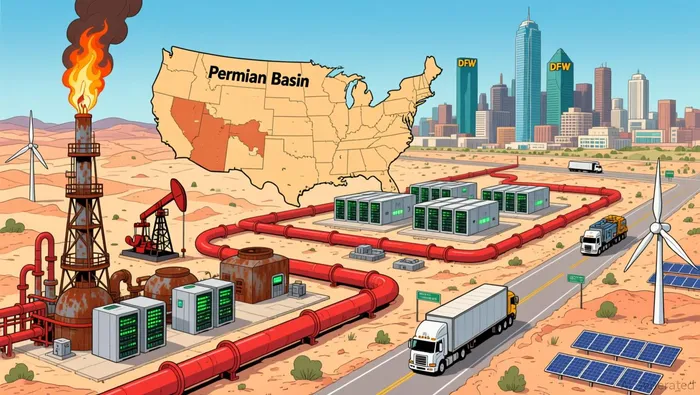
Energy Transfer's 2026 capital expenditure plans, projected at $5.0–5.5 billion, underscore its commitment to fortifying its natural gas network and enhancing distribution resilience. A significant portion of this investment is directed toward the Permian Basin, where the Mustang Draw I and II natural gas processing plants are set to add 450 million cubic feet per day of processing capacity by late 2026. These projects, coupled with the Hugh Brinson Pipeline expansion, aim to transport gas from the Permian to the Dallas-Fort Worth area, directly addressing regional supply bottlenecks and supporting industrial and data center demand.
The company's pivot away from LNG exports-evidenced by the suspension of its Lake Charles LNG project-reflects a recalibration to prioritize projects with stronger risk-adjusted returns. This shift aligns with broader industry trends, as U.S. LNG export volumes are projected to rise to 16+ billion cubic feet per day in 2026, but oversupply concerns in the late 2020s have prompted Energy TransferET-- to focus on midstream infrastructure instead. Notably, the company is expanding its NGL infrastructure, including the Nederland Flexport NGL expansion, to capitalize on growing liquefied petroleum gas demand.
A critical catalyst for Energy Transfer's bull case is its alignment with data center energy needs. The HyperGrid project in Amarillo, Texas-a partnership with Fermi America-exemplifies this. By supplying gas for a 11 GW data center campus and securing feedstock for 2 GW of on-site generation, Energy Transfer is directly addressing the surging power demands of the AI-driven economy. With U.S. data center electricity consumption expected to reach 75.8 gigawatts in 2026, such partnerships position Energy Transfer to capture a disproportionate share of this growth.
Expand Energy: Resilience Through Strategic Acquisitions and Synergies
Expand Energy's 2026 strategy centers on enhancing infrastructure resilience through strategic acreage acquisitions and operational efficiency. The company's $178 million investment in Western Haynesville and Southwest Appalachia-targeting 200+ development locations-supports its production goals while diversifying its resource base. These moves are complemented by a 15-year Sales and Purchase Agreement (SPA) with Lake Charles Methanol, which will serve as its sole gas supplier starting in 2030, ensuring long-term demand visibility.
Expand Energy's focus on capital efficiency is equally compelling. By targeting $600 million in annual synergies by year-end 2026, the company is optimizing costs while maintaining its commitment to lower-carbon energy solutions. This approach aligns with broader industry shifts toward sustainability, as data centers increasingly seek energy sources that balance reliability with environmental stewardship.
Synergies with Data Centers and LNG: A Dual-Driven Bull Case
The interplay between data center energy demand and LNG export growth creates a dual tailwind for both companies. Energy Transfer's midstream projects, particularly the Desert Southwest Pipeline expansion, are designed to meet the southwestern U.S.'s growing gas needs, including data centers in Texas and California. Meanwhile, Expand Energy's long-term SPA with Lake Charles Methanol, though not operational until 2030, signals its readiness to capitalize on the projected tripling of LNG exports by 2030.
Federal policy shifts further bolster this bull case. The reopening of LNG permitting and eased compliance timelines in 2026 have created a more favorable regulatory environment, indirectly supporting Energy Transfer's midstream focus while leaving the door open for future LNG opportunities.
Risks and Mitigations
Execution risks remain, particularly for Energy Transfer's Permian Basin projects, which depend on timely completions and sustained customer commitments. Regulatory scrutiny of midstream expansions could also delay timelines. However, Energy Transfer's leverage goals (4.0–4.5x EBITDA) and focus on projects with mid-teens returns mitigate these concerns. For Expand EnergyEXE--, the 2030 timeline for its Lake Charles Methanol SPA introduces uncertainty, though its near-term acreage acquisitions and cost synergies provide a buffer.
Conclusion
Expand Energy and Energy Transfer are well-positioned to benefit from the 2026 energy transition, leveraging $5–5.5 billion in midstream capex, distribution resilience, and strategic alignment with data center and LNG demand. While risks persist, their disciplined capital allocation and long-term partnerships with high-growth sectors justify a bullish outlook. For investors seeking exposure to the next phase of energy infrastructure innovation, these names offer a compelling combination of resilience and growth.





Comentarios
Aún no hay comentarios