
Executive Stock Sales as a Barometer for Retail and Consumer Discretionary Sector Health
The retail and consumer discretionary sectors have long been sensitive to shifts in corporate leadership sentiment, with executive stock transactions often serving as a proxy for internal confidence-or lack thereof-in a company's long-term prospects. Recent events at Warby ParkerWRBY--, a once-high-flying eyewear retailer, underscore the complexities of interpreting such signals. In December 2025, Co-CEO Neil Blumenthal executed a $3.03 million stock sale, reducing his direct holdings by 72.93% under a Rule 10b5-1 trading plan. This move, coupled with a 1.8% drop in Warby Parker's stock price and disappointing Q3 earnings, has reignited debates about whether insider sales reliably predict long-term equity performance in the sector.
The Warby Parker Case: A Cautionary Tale
Warby Parker's December 2025 stock sale by Blumenthal occurred amid a broader period of market turbulence for the company. The transaction, which sold 100,000 shares of Class A Common Stock at an average price of $30.29, was part of a structured trading plan adopted in March 2025. While Rule 10b5-1 plans are designed to mitigate insider trading risks, they also allow executives to lock in gains during favorable market conditions. The timing of the sale, however, coincided with a 8.2% stock price plunge in December 2025, driven by weak holiday sales, a revised Q4 guidance, and macroeconomic headwinds like a late-year federal government shutdown.
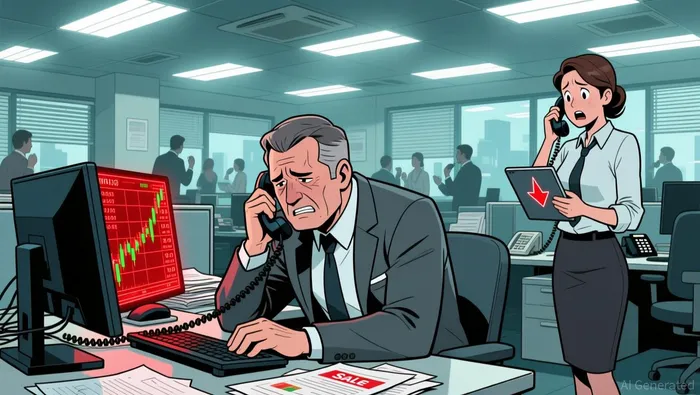
Warby Parker's Q3 2025 results further complicated the narrative. While revenue grew 15.2% year-over-year to $221.7 million, earnings per share (EPS) of $0.06 fell short of estimates. Analysts noted that the company's struggles reflected broader industry challenges, including competition from low-cost rivals like Zenni Optical and the dominance of EssilorLuxottica. The sale by Blumenthal, and a similar one by co-CEO David Gilboa in October 2025, may signal a recalibration of leadership's risk exposure rather than a lack of faith in the company's long-term vision. Yet, the market's immediate reaction-a sharp decline in share price-suggests investors interpreted the transactions as a negative signal.
Sector-Wide Implications: Mixed Signals and Structural Shifts
The Warby Parker case highlights a broader tension in the consumer discretionary sector. While insider sales can reflect strategic portfolio management, they also risk being misread as indicators of operational distress. A Virginia Tech study revealed that corporate executives often time trades to capitalize on spikes in retail investor attention, selling shares when public interest is high and buying when it wanes. This behavior, though legal, underscores the influence of market sentiment on stock price movements, complicating the interpretation of insider transactions as pure signals of corporate health.
The sector's performance in 2025 has been mixed. Home improvement and discount retailing have shown resilience amid inflationary pressures, while luxury and footwear retailers have struggled with pricing resistance and tariff uncertainties. For example, LVMH's ability to raise prices during the pandemic without losing sales volume demonstrated the pricing power of premium brands. In contrast, Warby Parker's reliance on mid-market pricing and e-commerce has left it vulnerable to shifts in consumer spending and promotional activity.
The Predictive Value of Insider Sales: Context Matters
Academic studies on the predictive value of executive stock sales in the consumer discretionary sector remain inconclusive. While performance-based compensation structures have become more prevalent-tying executive incentives to metrics like Total Shareholder Return (TSR) and capital efficiency-there is limited direct evidence linking insider sales to long-term equity performance. A 2026 Deloitte report emphasized the sector's exposure to macroeconomic and technological shifts, such as AI integration and supply chain adjustments, but did not address insider trading as a predictive factor.
This ambiguity suggests that investors should treat insider sales as one of many data points. For Warby Parker, the December 2025 sale must be evaluated alongside the company's strategic initiatives, such as its partnership with Google to develop AI-powered smart glasses. Analysts have raised price targets for the stock, with Piper Sandler maintaining an Overweight rating and a $32 price target. However, near-term stability in online conversion rates and gross margins will remain critical for restoring investor confidence.
Conclusion: A Nuanced Approach to Leadership Sentiment
Executive stock sales are not a definitive barometer for retail and consumer discretionary sector health. While they can reflect leadership's risk appetite or strategic priorities, their predictive value is contingent on contextual factors such as market conditions, trading plan structures, and broader industry dynamics. The Warby Parker case illustrates how insider transactions can be misinterpreted in the absence of a comprehensive understanding of these variables.
For investors, the key takeaway is to approach insider sales with a balanced perspective. In the consumer discretionary sector, where consumer behavior and macroeconomic trends play a dominant role, leadership sentiment is just one piece of the puzzle. A holistic analysis-incorporating financial performance, competitive positioning, and strategic innovation-remains essential for assessing long-term equity prospects.





Comentarios
Aún no hay comentarios