
Exchanges Urge SEC: Reject Exemptions to Preserve Market Fairness
The World Federation of Exchanges (WFE), representing over 70 global exchanges including the New York Stock Exchange and CME GroupCME--, has issued a stark warning to the U.S. Securities and Exchange Commission (SEC), urging it to avoid granting broad regulatory exemptions for crypto platforms offering tokenized stocks. The group argues that such exemptions could erode investor protections and destabilize market integrity by allowing unregulated entities to bypass decades-old safeguards. The letter, sent to the SEC's Crypto Task Force, highlights concerns that tokenized stocks—digital tokens pegged to traditional equities—are often marketed as equivalents to real shares without the same legal rights or oversight according to data from LookOnChain.
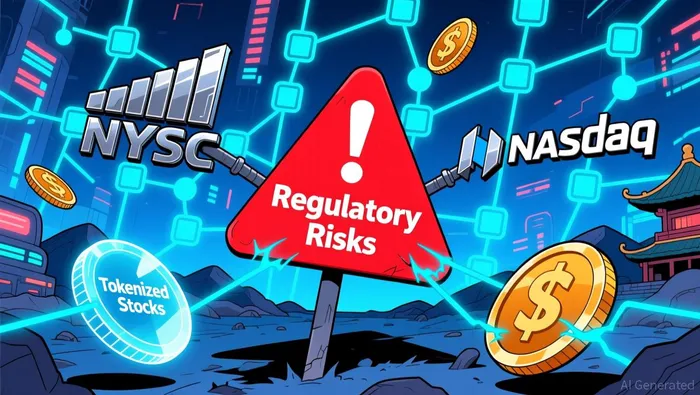 Tokenized stocks, which represent blockchain-based versions of public company equities, have gained traction for their potential to enable 24/7 trading and faster settlements. However, the WFE warns that these products frequently lack critical investor protections such as dividend rights, voting access, and clear custody frameworks. "These mimicked products do not meet the high standards which investors are used to," WFE CEO Nandini Sukumar stated in an August 26 letter to the SEC. The federation emphasized that exemptive relief—a regulatory tool allowing temporary or permanent waivers of securities laws—should only be granted when it promotes fair competition and aligns with public interest according to the WFE's position.
The SEC is currently exploring a sandbox-style framework to grant time-limited exemptions to crypto firms testing tokenized stocks, a move championed by SEC Chair Paul Atkins as a way to foster innovation while maintaining oversight. However, the WFE argues that such a framework risks creating a regulatory arbitrage, where crypto platforms gain an unfair advantage by operating under weaker rules than traditional exchanges. "We and the crypto platforms should be competing on a level playing field," said James Auliffe, head of the WFE's Technology Working Group .
The pushback comes amid rapid growth in tokenized assets, with market capitalization exceeding $2 billion globally as of recent reports. Critics, including securities law expert Tim Fries, warn that without stringent rules tokenized stocks could expose investors to fraud, smart contract vulnerabilities, and limited recourse in disputes. The WFE's stance is echoed by international bodies like the International Organization of Securities Commissions (IOSCO), which warned in November 2025 that tokenization amplifies risks such as data integrity issues and custody failures.
The SEC's deliberations reflect a broader global regulatory shift toward balancing innovation and oversight. While the European Union's Markets in Crypto-Assets Regulation (MiCA) and frameworks in Hong Kong and Singapore have established rules for digital assets, the U.S. remains fragmented, relying on case-by-case exemptions. The WFE advocates for a unified global approach, urging the SEC to mandate transparency, enforce redemption rights, and ensure tokenized products clearly disclose whether they represent ownership or synthetic exposure according to the federation's position.
As the SEC weighs its response, the debate underscores a pivotal moment for capital markets. Proponents argue tokenization can democratize access and reduce transaction costs, but only if it adheres to the same standards as traditional exchanges. With major financial institutions and regulators increasingly aligned against unregulated experimentation, the path forward may hinge on supervised pilots that integrate blockchain without compromising market trust.





Comentarios
Aún no hay comentarios