
The Evolving Legal Risks and Rewards in Crypto Endorsements
The intersection of celebrity influence and cryptocurrency has created a volatile yet lucrative landscape for investors, regulators, and market participants. As the crypto industry matures, the legal frameworks governing celebrity endorsements are evolving rapidly, with profound implications for investor trust and market stability. This analysis examines how jurisdictional differences, regulatory enforcement, and the inherent risks of celebrity-driven promotions shape the crypto ecosystem.
The U.S. Experience: Legal Ambiguity and Investor Skepticism
The collapse of FTX in 2022 and its aftermath have underscored the legal vulnerabilities of celebrity endorsements in crypto. High-profile figures like Tom Brady, Gisele Bündchen, and Larry David faced multidistrict litigation over their promotion of FTX, with plaintiffs alleging they concealed financial ties and downplayed risks. While U.S. District Judge K. Michael Moore dismissed 12 of 14 claims in the case, the surviving claims under Florida and Oklahoma securities laws highlighted the challenges of proving intent in such cases. This outcome reflects a broader trend: courts are grappling with how to apply traditional securities laws to digital assets, where celebrity influence often blurs the line between marketing and financial advice.
The U.S. Securities and Exchange Commission (SEC) has also signaled a nuanced approach. In February 2025, the SEC's Division of Corporation Finance clarified that meme coins-often backed by social media influencers-would generally not be classified as securities under federal law. This shift reduces regulatory scrutiny for projects relying on celebrity endorsements but raises concerns about investor protection. MemeMEME-- coins, which thrive on viral marketing and influencer hype, are inherently speculative, and their exemption from securities laws may exacerbate market instability. Meanwhile, the SEC's anti-touting rules under Section 17(b) of the Securities Act remain a critical tool for holding celebrities accountable when they profit from promoting unregistered securities.
Global Regulatory Divergence: EU, UK, and Asia
Jurisdictional differences further complicate the legal landscape. The European Union's Markets in Crypto-Assets (MiCA) regulation, which took effect in 2025, imposes strict transparency and licensing requirements on crypto service providers, including stablecoin issuers. By mandating 100% asset reserves and enhanced governance, MiCA aims to mitigate risks associated with celebrity-backed projects. However, enforcement challenges persist, as national interpretations of MiCA vary, and cross-border coordination remains fragmented.
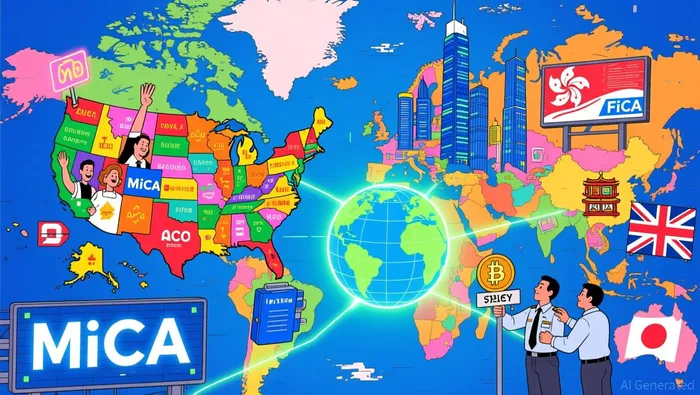
In the UK, the Financial Conduct Authority (FCA) is set to gain broader oversight of crypto activities under the Financial Services and Markets Act 2000, with full implementation expected by 2027. This framework will likely address gaps in influencer marketing regulations, where compliance with advertising standards has been "unacceptably low," according to a 2025 UK parliamentary report. Meanwhile, Asia's regulatory approach is more fragmented but increasingly robust. Hong Kong's Stablecoins Ordinance, introduced in 2025, requires stablecoin issuers to maintain full asset-backed reserves and obtain licenses. Singapore and Japan have similarly advanced stablecoin frameworks, creating a regional benchmark for balancing innovation with investor protection.
Investor Trust: The Double-Edged Sword of Celebrity Influence
Celebrity endorsements can drive short-term fundraising success but often undermine long-term trust. A 2025 study by the FINRA Foundation found that 26% of investors rely on social media influencers, including 61% of those under 35. This demographic, less experienced with financial markets, is particularly vulnerable to misleading promotions. For example, Cristiano Ronaldo's partnership with Binance led to a $1 billion class-action lawsuit in the U.S., as his NFT endorsements were deemed deceptive. Such cases highlight the ethical dilemmas of celebrity involvement: while their influence can legitimize projects, it also creates a false sense of security for investors.
The systemic risks posed by "finfluencers" are equally concerning. Elon Musk's tweets about DogecoinDOGE-- and Dave Portnoy's promotion of the LIBRA meme coin have repeatedly triggered price surges followed by sharp declines. These patterns reflect the speculative nature of celebrity-driven markets, where hype often overshadows fundamentals. Algorithmic detection of pump-and-dump schemes and mandatory disclosure of influencer compensation are critical to addressing these risks, yet enforcement remains inconsistent.
Market Stability: Regulatory Clarity as a Stabilizing Force
Regulatory clarity has emerged as a key factor in stabilizing crypto markets. In the U.S., the 2025 regulatory environment has encouraged institutional adoption, with over 55% of traditional hedge funds now holding digital assets. Clearer guidelines from the SEC and the alignment of decentralized finance (DeFi) with traditional finance (TradFi) have fostered greater confidence among institutional investors. Similarly, Asia's progress in stablecoin regulation has reduced uncertainty, enabling broader participation from financial institutions.
However, cross-jurisdictional enforcement remains a challenge. The EU's MiCA framework, for instance, faces implementation hurdles due to divergent national interpretations. In the UK, draft stablecoin legislation is still in its early stages, while Hong Kong's regulatory sandbox approach balances innovation with oversight. These disparities create opportunities for regulatory arbitrage, where projects exploit laxer jurisdictions to avoid stricter rules.
Conclusion: Balancing Innovation and Accountability
The legal risks and rewards of crypto endorsements are inextricably linked to jurisdictional frameworks and investor behavior. While celebrity influence can drive market growth, it also amplifies the potential for fraud and volatility. Regulators must strike a delicate balance: fostering innovation while ensuring transparency and accountability. The FTX case and the SEC's evolving stance on meme coins illustrate the need for adaptive legal frameworks that address the unique challenges of digital assets.
As the crypto industry moves into 2026, the focus will shift to harmonizing global regulations and enhancing investor education. For investors, due diligence remains paramount. For regulators, the priority is to close loopholes that enable misleading promotions. And for celebrities, the lesson is clear: influence comes with responsibility.






Comentarios
Aún no hay comentarios