
The Evolving Landscape of Crypto Wallet Security and Capital Flight Risks in 2025
The crypto ecosystem in 2025 is defined by a paradox: unprecedented innovation coexists with escalating threats to capital security. As the industry grapples with a record $3.4 billion in thefts this year alone, investors must confront a reality where asset tracking and capital movement patterns are as critical to risk management as market fundamentals. The data reveals a stark shift in cybercriminal tactics, centralized vulnerabilities, and the emergence of sophisticated laundering networks-particularly from state-sponsored actors like North Korea. For investors, understanding these dynamics is no longer optional; it's existential.
DPRK's Dominance in Cybercrime: A New Era of State-Sponsored Theft
North Korea's cybercrime operations have reached a tipping point. In 2025, DPRK-linked actors stole $2.02 billion, a 51% year-over-year increase, pushing their all-time total to $6.75 billion. This surge is not merely quantitative but qualitative: their methods now involve embedding IT workers within crypto firms or deploying advanced impersonation tactics to infiltrate high-value infrastructure. Unlike traditional hackers, DPRK actors favor a 45-day structured laundering cycle, leveraging Chinese-language money laundering services, blockchain bridges, and mixing protocols to obfuscate stolen funds.
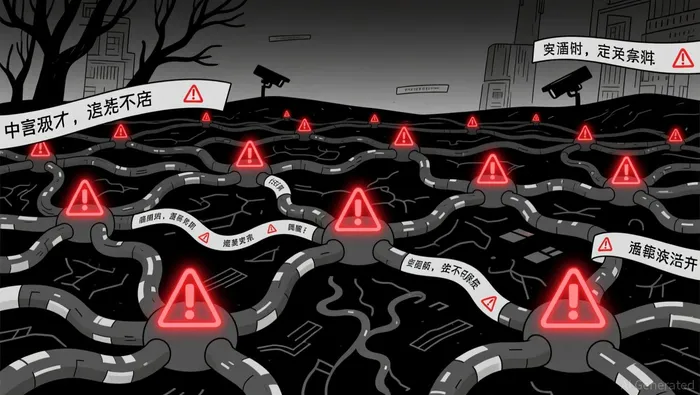
This contrasts sharply with non-state actors, who increasingly rely on lending protocols, KYC-free exchanges, and peer-to-peer (P2P) platforms to liquidate assets. The divergence in tactics underscores a critical insight for investors: state-sponsored thefts are more insidious, requiring multi-layered tracking and countermeasures.
Centralized Services: The New Epicenter of Risk
Centralized services remain the primary target for large-scale thefts. The February 2025 Bybit hack-where $1.5 billion was stolen-accounted for nearly half of the year's total losses. This incident, coupled with a 44% increase in stolen value from centralized service private key compromises in Q1 2025, highlights a troubling concentration of risk.
Exchange inflow patterns further expose vulnerabilities. While personal wallet compromises spiked to 158,000 incidents in 2025, the total value stolen from these attacks ($713 million) paled in comparison to centralized breaches. This shift indicates attackers are prioritizing high-impact targets over volume, a trend that could accelerate as institutional adoption of centralized platforms grows.
DeFi's Security Renaissance: A Glimmer of Hope
Amid the chaos, Decentralized Finance (DeFi) has shown unexpected resilience. Despite a 2025 Total Value Locked (TVL) increase, hack losses were suppressed, partly due to proactive monitoring and governance responses. The Venus Protocol incident exemplifies this: swift community action and transparent tracking enabled fund recovery. For investors, this signals that DeFi's decentralized architecture, when paired with robust security protocols, can mitigate risks inherent in centralized systems.
Investment Implications: Navigating the New Normal
For capital allocators, the 2025 data demands a recalibration of risk frameworks:
1. Prioritize Asset Tracking Tools: Advanced blockchain analytics (e.g., Chainalysis, Elliptic) are no longer optional. Real-time monitoring of wallet inflows/outflows can flag suspicious patterns, particularly the 45-day laundering cycles favored by DPRK actors.
2. Diversify Custody Strategies: Hardware wallets and multi-signature solutions remain non-negotiable. Avoiding KYC-free exchanges and P2P platforms-common exit points for stolen funds-reduces exposure to secondary thefts.
3. Invest in Security-First Protocols: DeFi projects with transparent governance and proactive security audits (e.g., Venus Protocol) offer a compelling risk-reward profile. Conversely, centralized services with weak key management should be approached with caution.
Conclusion: The Cost of Complacency
The 2025 theft landscape is a wake-up call. With state-sponsored actors refining their methods and centralized services remaining vulnerable, investors must treat security as a core competency. The data is clear: capital movement patterns post-hack are not random-they are engineered. For those who adapt, the future holds opportunity. For those who don't, it holds only loss.







Comentarios
Aún no hay comentarios