
The Evolution of Global Supply Chains: Strategic Opportunities in Logistics and E-Commerce Infrastructure
The Digital Transformation of Logistics: A New Era of Efficiency
The integration of digital tools into supply chain management is no longer a competitive advantage but a necessity. Transportation Management Software (TMS) solutions, powered by artificial intelligence (AI), machine learning (ML), and the Internet of Things (IoT), are redefining logistics efficiency. According to a report by Market Research Intellect, TMS adoption has enabled businesses to optimize transportation routes, reduce operational costs by up to 20%, and enhance real-time visibility across supply chains.
Cloud-based and SaaS platforms are further accelerating this transformation. These solutions offer scalability and flexibility, making them particularly attractive to small and medium-sized enterprises (SMEs) that lack the capital for on-premise infrastructure. For instance, cloud integration with ERP and CRM systems ensures end-to-end visibility, fostering collaboration among logistics partners and reducing delays. As global e-commerce continues to grow-projected to account for 24% of total retail sales by 2025- the demand for agile, data-driven logistics systems will only intensify.
Automation as a Catalyst for Resilience and Cost Reduction
Automation is the backbone of modern supply chain innovation. Robotic Process Automation (RPA) and AI-powered tools are streamlining operations from procurement to delivery, mitigating human error and labor shortages. A 2025 study by Dimension Market Research highlights that AI-driven forecasting tools have reduced inventory holding costs by 15–25% for early adopters, while automated warehouses have cut order fulfillment times by up to 40%.
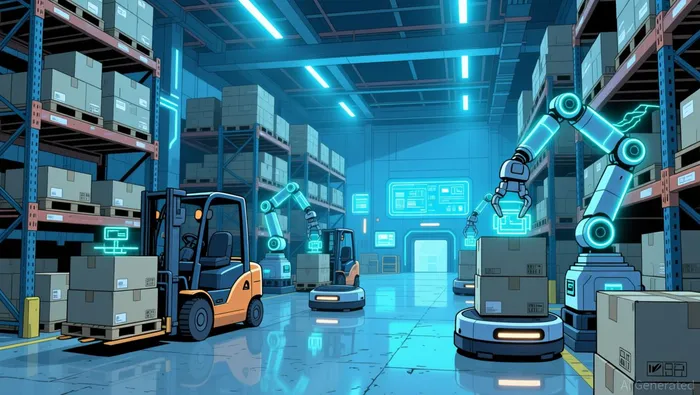 The logistics automation market itself is expanding at a staggering pace. By 2025, the global market was valued at USD 82.69 billion, with a projected compound annual growth rate (CAGR) of 9.90% from 2025 to 2030. The Asia-Pacific region, in particular, is leading the charge, growing at an 11.70% CAGR and accounting for 31.20% of 2024 market revenue. China's Ministry of Transport reports that automation has already reduced logistics costs by 12% nationwide in 2023, with over 50% of large ports adopting automated container handling systems.
Regional Dynamics: Where to Invest in 2025 and Beyond
Asia-Pacific: The Epicenter of Growth
The Asia-Pacific region's logistics automation market is expanding at a 15.1% CAGR, driven by rapid industrialization, e-commerce booms, and urbanization. India, for example, is projected to see its urban micro-fulfillment hubs grow to 35 million square feet by 2027, intensifying demand for high-cube automation. Japan's Ministry of Economy, Trade, and Industry (METI) notes that logistics automation investments are growing at 9.2% annually, spurred by smart factory initiatives and an aging workforce.
North America: Innovation and Government Support
North America's logistics automation market, valued at USD 12,260.6 million in 2023, is projected to grow at a 14.5% CAGR through 2030. The U.S. government's USD 140 million investment in AI research institutes in May 2023 underscores its commitment to fostering innovation. Canada, with its highest regional CAGR, is leveraging automation to address labor shortages and enhance cross-border logistics efficiency.
Europe: Sustainability and Digital Maturity
Europe dominates 38.5% of the 2024 logistics automation market, driven by sustainability mandates and advanced infrastructure. Automated solutions like AS/RS and AI-powered systems are optimizing warehouse operations while reducing carbon footprints. For example, GXO Logistics' partnership with Forum Sport in Spain to implement automated centers highlights Europe's focus on green logistics.
Strategic Investment Opportunities
For investors, the key lies in aligning with technologies and regions poised for exponential growth.
1. Warehouse and Storage Management: This segment, which accounts for 66.8% of the global logistics automation market, remains a high-potential area. Hardware components like AGVs and AS/RS systems are critical for optimizing inventory control and last-mile delivery.
2. Cloud-Based TMS Platforms: SMEs in emerging markets are increasingly adopting SaaS TMS solutions, creating a lucrative niche for providers offering scalable, cost-effective tools.
3. Asia-Pacific E-Commerce Infrastructure: With e-commerce contributing 20% of global retail sales in 2025, investments in micro-fulfillment centers and automated ports in India, China, and Southeast Asia are particularly compelling.
Conclusion: A Future-Proof Investment Strategy
The evolution of global supply chains is not a fleeting trend but a structural shift. As businesses prioritize resilience, speed, and sustainability, long-term investments in automation and regional logistics infrastructure will yield outsized returns. From AI-driven forecasting to cloud-based TMS and automated warehouses, the opportunities are vast-and the time to act is now.







Comentarios
Aún no hay comentarios