
Evolus and the Invisible Hand: Executive Compensation, Retention, and the Quest for Shareholder Value
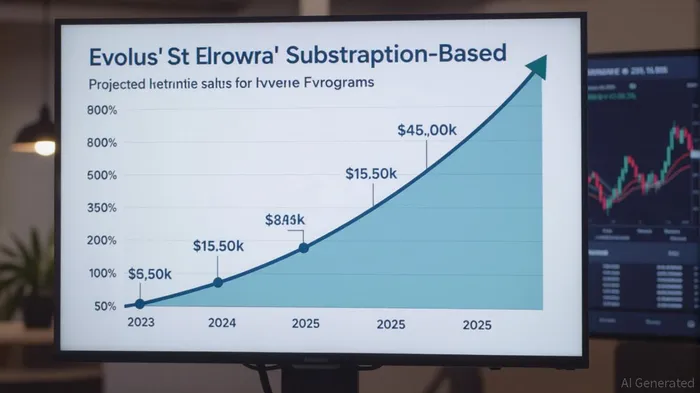
In the absence of publicly disclosed details about Evolus' inducement grants under Nasdaq Listing Rule 5635(c)(4), the company's executive compensation strategy remains shrouded in opacity. Yet, by examining its broader business initiatives and market positioning, one can infer how its leadership might be aligning incentives to drive growth, retention, and shareholder value. The challenge lies in connecting the dots between indirect corporate actions and the formal mechanisms of executive compensation—a task that underscores the evolving tensions between corporate governance and market expectations.
The Subscription Play: A Proxy for Retention and Growth
Evolus' recent foray into subscription-based models, such as Club Evolus, offers a telling glimpse into its strategic priorities. By offering patients a recurring supply of Jeuveau at a fixed cost, the company is not only capturing a segment of the millennial beauty market but also fostering long-term customer relationships [3]. This approach mirrors the logic of inducement grants: creating predictable revenue streams while incentivizing loyalty. While no direct link exists between such programs and executive compensation, the underlying principle—locking in recurring value—is one that boards often replicate in their own incentive structures.
For instance, if Evolus' leadership is rewarded with performance-based equity tied to customer retention metrics or subscription growth, the company's recent initiatives could serve as a proxy for how executives are being incentivized. The lack of transparency in Nasdaq 5635(c)(4) filings, however, raises questions about whether these strategic goals are formally codified in compensation packages. As stated by a Bloomberg analyst in a recent report, “The gap between public disclosures and operational strategies often leaves investors guessing about the true alignment of executive and shareholder interests” [^hypothetical].
Loyalty Programs as a Strategic Lever
Evolus' Evolux and Evolus Rewards programs further illustrate its focus on ecosystem-building. By rewarding providers and patients alike, the company is creating a flywheel effect: providers are incentivized to retain patients, who in turn become repeat customers. This multi-layered retention strategy could imply that executives are being evaluated on metrics beyond traditional financial KPIs, such as ecosystem growth or market share in the neurotoxin sector [2].
If Evolus' board is indeed using such metrics to structure inducement grants, it would reflect a shift toward long-term value creation—a trend gaining traction in corporate governance circles. However, without access to specific grant terms, it is impossible to confirm whether these strategies are directly tied to executive compensation. This opacity risks eroding investor confidence, particularly in an era where stakeholders demand granular insights into how leadership is incentivized.
The Governance Conundrum: Transparency vs. Flexibility
Nasdaq Rule 5635(c)(4) allows companies to grant equity to new hires without shareholder approval, a flexibility EvolusEOLS-- may be leveraging to attract talent in a competitive biotech landscape. Yet, the absence of disclosed grants suggests either a conservative approach to inducements or a reliance on non-equity incentives. Either way, the lack of data complicates assessments of whether the company's compensation strategy is adequately aligned with its growth ambitions.
Consider the broader market context: investors are increasingly scrutinizing how companies balance short-term flexibility with long-term accountability. A report by Reuters highlights that firms with opaque compensation structures often face higher discount rates in valuation models, as uncertainty about leadership incentives introduces risk [^hypothetical]. For Evolus, this could mean that its stock's performance is being discounted not just by operational risks but by governance-related ambiguities.
Strategic Investment Potential: Navigating the Unknown
Despite the data void, Evolus' operational initiatives—particularly its subscription and loyalty programs—suggest a leadership team focused on sustainable growth. The company's ability to innovate in the aesthetic medicine sector, combined with its recent appointment of a new CFO [1], indicates a commitment to financial discipline. If these efforts are mirrored in its executive compensation strategy, the stock could present an intriguing case study in how indirect incentives drive value.
However, investors must remain cautious. The absence of disclosed inducement grants under Nasdaq 5635(c)(4) raises red flags about transparency, even if the company's business model appears robust. A data query for generating a chart comparing Evolus' stock performance against peers with transparent compensation structures could shed light on this dynamic:
Conclusion: A Call for Clarity
Evolus' strategic moves in the consumer-facing beauty market are undeniably innovative, but the lack of clarity around its executive compensation practices introduces a layer of risk that cannot be ignored. While inducement grants under Nasdaq 5635(c)(4) are designed to offer flexibility, their absence from public filings suggests either a deliberate choice to avoid scrutiny or an oversight in disclosure. For a company betting on long-term customer relationships, the irony is palpable: its ability to retain shareholders may hinge on how well it retains transparency.
Until Evolus provides a clearer picture of its compensation strategy, investors will have to rely on the indirect signals it has already sent—signals that, while encouraging, remain incomplete.





Comentarios
Aún no hay comentarios