
Evkeeza® (Evinacumab-dgnb): A Catalyst for Long-Term Growth in Pediatric Hypercholesterolemia and Rare Disease Biotech Markets
In September 2025, the U.S. Food and Drug Administration (FDA) expanded the indication for Evkeeza® (evinacumab-dgnb) to include children as young as 1 year of age with homozygous familial hypercholesterolemia (HoFH), a rare and severe genetic disorder characterized by extremely high low-density lipoprotein cholesterol (LDL-C) levels[1]. This milestone, coupled with robust clinical trial data, positions Evkeeza as a transformative therapy in the pediatric HoFH space and underscores its long-term commercial potential in the broader rare disease biotech market.
Regulatory Momentum and Clinical Validation
The FDA's approval for younger pediatric patients was supported by compassionate use data from six children with HoFH, who demonstrated significant LDL-C reductions without new safety concerns[1]. Additionally, a Phase 3 trial in children aged 5–11 years showed a 48% average reduction in LDL-C levels after 24 weeks of treatment, alongside improvements in apolipoprotein B and lipoprotein(a) levels[2]. These results reinforce Evkeeza's efficacy in a patient population with limited therapeutic options, where traditional lipid-lowering therapies often fail to achieve adequate control.
The regulatory pathway for Evkeeza reflects a broader trend in rare disease drug development: early intervention. By targeting HoFH in infancy and early childhood, Regeneron PharmaceuticalsREGN-- aims to mitigate long-term cardiovascular complications, aligning with the growing emphasis on precision medicine in pediatric rare diseases[1].
Market Dynamics and Competitive Landscape
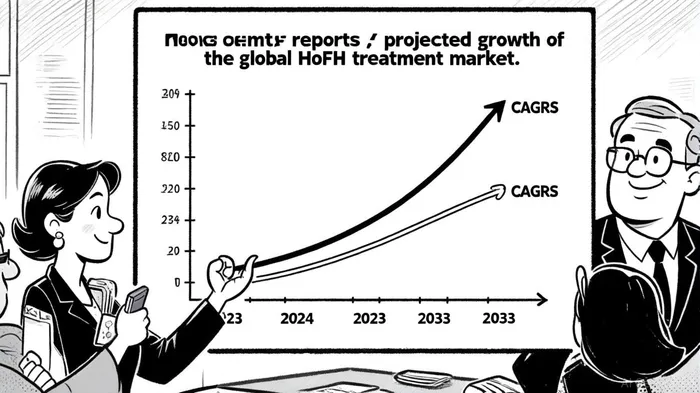
The global HoFH treatment market, valued at approximately $108.05 million in 2024, is projected to grow at a compound annual growth rate (CAGR) of 4.3%, reaching $145.09 million by 2031[6]. However, more aggressive forecasts suggest the market could expand to $3.5 billion by 2033, driven by advancements in genetic screening, orphan drug incentives, and the adoption of novel therapies like ANGPTL3 inhibitors[4].
Evkeeza's unique mechanism—targeting angiopoietin-like protein 3 (ANGPTL3)—differentiates it from existing therapies such as PCSK9 inhibitors and lipoprotein apheresis[1]. This positions RegeneronREGN-- to capture a significant share of the pediatric HoFH market, which is expected to grow from $880 million in 2023 to $1.64 billion by 2033 at a CAGR of 6.2%[3]. Key competitors, including Amgen and Sanofi, are also developing gene therapies and monoclonal antibodies, but Evkeeza's early regulatory approvals and clinical validation provide a first-mover advantage[1].
Pricing, Reimbursement, and Long-Term Growth Drivers
Orphan drug therapies like Evkeeza typically command high prices, with annual treatment costs exceeding $500,000 in some cases[3]. While this restricts access in low-income regions, regulatory incentives such as tax credits and market exclusivity help offset development costs and sustain long-term profitability. In North America, which accounts for 41.7% of the global HoFH market share, reimbursement frameworks are more established, enabling broader adoption[5].
The Asia-Pacific region, however, represents a high-growth opportunity. Improving healthcare infrastructure and rising awareness of rare diseases are expected to drive market expansion in this region, which is projected to grow at the fastest rate[5]. For investors, this underscores the importance of strategic partnerships and localized reimbursement strategies to maximize Evkeeza's global footprint.
Conclusion: A Strategic Investment in Rare Disease Innovation
Evkeeza's regulatory milestones, clinical efficacy, and alignment with unmet medical needs position it as a cornerstone therapy in the pediatric HoFH market. With the rare disease biotech sector projected to grow at a 10.3% CAGR through 2033[4], Regeneron's focus on ANGPTL3 inhibition and early intervention in pediatric patients offers a compelling long-term investment thesis. Challenges such as high pricing and reimbursement complexity remain, but the expanding therapeutic landscape and supportive regulatory environment suggest that Evkeeza will play a pivotal role in shaping the future of HoFH treatment.





Comentarios
Aún no hay comentarios