
Event-Driven Real Estate and Sponsor Partnerships: The Empire State Building Run-Up as a Model for Urban Investment
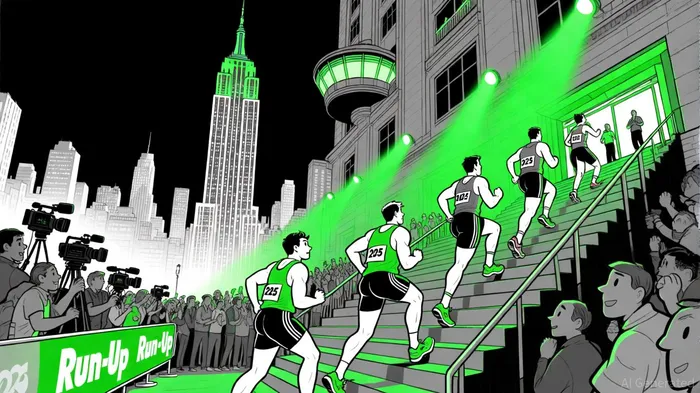
The Empire State Building Run-Up (ESBRU) is more than a high-stakes athletic challenge-it is a strategic catalyst for urban investment, blending brand alignment, community engagement, and real estate value creation. As the 2025 edition of the event, presented by NYU Langone Health and powered by the Challenged Athletes Foundation (CAF), approaches on October 8, its economic and cultural significance extends far beyond the 1,576 steps runners will conquer. This analysis explores how the Run-Up's sponsorships and event-driven momentum intersect with Midtown Manhattan's real estate dynamics, offering insights for investors and urban developers.
Sponsorships as Brand Alignment and Commercial Value Drivers
The ESBRU's presenting sponsors, such as NYU Langone Health and Turkish Airlines, exemplify how high-profile events can amplify brand visibility while aligning with social and health-focused causes. NYU Langone Health, a first-time presenting sponsor in 2025, offers exclusive entries to the Run-Up, leveraging the event's prestige to reinforce its commitment to wellness and community empowerment, according to RunSignup. Similarly, the CAF's role in providing guaranteed charity entries for athletes with disabilities underscores the event's dual mission of athletic excellence and inclusivity, per RunSignup.
A report by FieldDrive explains that event sponsorships generate value through media exposure, audience engagement, and brand equity. For instance, the Run-Up's global media coverage-projected to reach millions via live streams and press-creates a high-impact platform for sponsors to connect with diverse audiences. This aligns with broader trends in sports marketing, where brands prioritize cause-related partnerships to enhance their public image, as noted by Lindenwood. The Run-Up's charitable focus, particularly through the CAF, further differentiates it from purely commercial events, fostering emotional resonance with participants and spectators alike (RunSignup).
Real Estate Synergies: The Empire State Building's Economic Ecosystem
The Empire State Building's role as a cultural and commercial anchor in Midtown Manhattan is critical to understanding its real estate implications. As of Q4 2024, Empire State Realty TrustESRT-- (ESRT) reported a 94.2% occupancy rate for its portfolio, with tenants like Booking Holdings and Carolina Herrera expanding their footprints, according to the Retrofit Playbook. This resilience contrasts with the broader Manhattan office market, where vacancies hover around 20% post-pandemic, as noted in the Retrofit Playbook. The building's sustained appeal is partly attributed to its iconic status, bolstered by events like the Run-Up, which draw global attention and reinforce its identity as a must-visit destination, as highlighted on ESBNYC.
Data from the Empire State Building's Observatory operations further highlights its economic clout. Third-quarter 2023 revenue reached $37.6 million, a 14% year-over-year increase, per RunSignup. This tourism-driven income not only supports the building's maintenance but also indirectly benefits surrounding real estate by sustaining foot traffic and commercial activity in Midtown. For investors, the Run-Up's ability to attract elite athletes, media, and tourists underscores the building's role as a "destination asset," a term used in real estate to describe properties that generate recurring revenue through tourism and cultural events (ESBNYC).
Strategic Urban Development and Long-Term Value Creation
The Run-Up's impact extends beyond immediate economic gains. ESRT's ESB 2.0 initiative, aimed at achieving carbon neutrality by 2035, demonstrates how event-driven real estate can integrate sustainability into its value proposition, according to the Retrofit Playbook. By retrofitting the building with energy-efficient systems and electrification strategies, ESRTESRT-- aligns with global ESG (Environmental, Social, and Governance) investment trends, attracting eco-conscious tenants and investors. This forward-looking approach is critical in a market where 41% of Midtown tenants now operate hybrid work models, a trend noted by the Retrofit Playbook, necessitating flexible, future-ready spaces.
Moreover, the Run-Up's influence on Midtown's identity as a vibrant, mixed-use district cannot be overstated. While office-to-residential conversions, such as the 5 Times Square redevelopment, address post-pandemic shifts in work habits, as reported by New York YIMBY, events like the Run-Up maintain the area's commercial vitality. By drawing international participants and media, the Run-Up reinforces Midtown's reputation as a global hub, indirectly supporting property values through sustained demand for retail, hospitality, and office spaces (ESBNYC).
Future Outlook: Navigating Challenges and Opportunities
Despite its successes, the Run-Up and Midtown's real estate market face challenges. U.S. tariffs and global supply chain disruptions have complicated retrofit projects, delaying material procurement and raising costs, as the Retrofit Playbook observes. Additionally, the "post-event hangover" phenomenon-where property values dip after major events-remains a risk if the Run-Up's momentum fails to translate into long-term investment (ESBNYC).
However, the Run-Up's integration of digital marketing and influencer campaigns offers a blueprint for resilience. A case study on ESBNYC documents that ESRT's digital-first strategy has sustained the building's appeal to both domestic and international visitors. This approach, combined with the Run-Up's charitable and athletic focus, positions the event as a sustainable driver of urban investment.
Conclusion
The Empire State Building Run-Up exemplifies how high-profile urban events can drive commercial value through strategic sponsorships and real estate synergies. For investors, the event underscores the importance of aligning with culturally resonant, cause-driven initiatives that enhance brand equity and property desirability. As Midtown continues to evolve, the Run-Up's role in sustaining the area's vibrancy-while adapting to hybrid work trends and sustainability goals-positions it as a model for event-driven real estate investment.





Comentarios
Aún no hay comentarios