
Event-Driven Consumer and Tech Sector Opportunities in 2026: Leveraging Global Festivals for High-Potential Investments
The global festival landscape is undergoing a transformative shift, driven by the convergence of tourism, augmented reality (AR) gaming, and experiential retail. As consumers increasingly prioritize immersive experiences over material goods, investors are presented with a unique opportunity to capitalize on the economic ripple effects of large-scale events. By analyzing the 2026 festival ecosystem-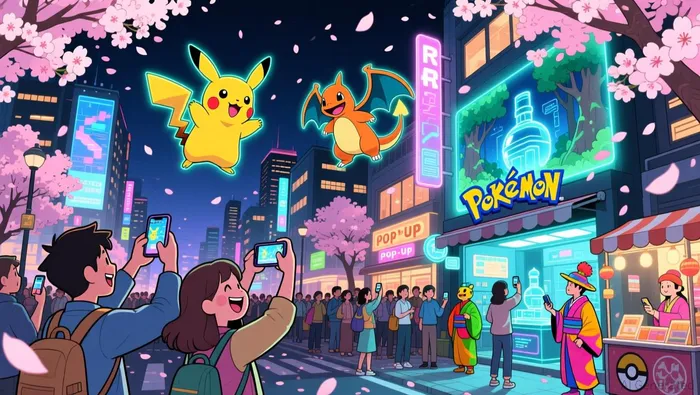 spanning the Pokémon GO Fest, the National Cherry Blossom Festival, and Baltimore's cultural calendar-this article identifies high-potential markets for strategic investment in tourism, AR gaming, and experiential retail.
Tourism: The Festival-Driven Travel Boom
The live events sector is projected to reach $2 trillion by the end of the decade, fueled by millennials and Gen Z travelers who prioritize experiences. The 2026 FIFA World Cup and America 250 celebrations are poised to catalyze this growth, with the U.S. Travel Association forecasting 70.4 million international inbound visits in 2026. The National Cherry Blossom Festival in Washington, D.C., exemplifies this trend. Previous editions generated over $200 million in visitor spending, and 2026's expanded programming-aligned with the U.S. 250th anniversary-anticipates doubling attendance. Such events not only drive direct tourism revenue but also stimulate ancillary industries, from hospitality to local retail.
Baltimore's 2026 cultural calendar further underscores this dynamic. With festivals like Artscape, AFRAM, and the Caribbean Carnival, the city is positioning itself as a hub for culturally rich, community-driven tourism. These events are expected to attract both domestic and international visitors, creating a fertile ground for investments in travel infrastructure and themed retail experiences.
AR Gaming: The Next Frontier of Immersive Entertainment
Augmented reality is redefining how festivals engage audiences, with Pokémon GO Fest 2026 serving as a flagship example. The event's 10th-anniversary celebrations in Tokyo, Chicago, and Copenhagen will feature citywide AR gameplay, blending real-world exploration with digital interactivity. Niantic's recent AR+ mode, which enhances depth perception and scaling, hints at the technological sophistication driving user engagement. The 2024 Pokémon GO Fest generated $200 million in economic impact for host cities, suggesting that 2026's expanded format could yield even greater returns.
Investors should also consider the Virtual Entertainment Event Market, projected to grow at a 20% CAGR, reaching $50 billion by 2028. Platforms that integrate AR and VR for hybrid events-such as virtual concerts and interactive storytelling-are attracting strategic capital. The success of Pokémon GO Fest demonstrates how AR gaming can transform festivals into scalable, revenue-generating ecosystems, offering opportunities in app development, hardware, and data analytics.
Experiential Retail: Blending Commerce and Storytelling
The rise of experiential retail is reshaping consumer expectations, with festivals acting as a catalyst for innovation. Baltimore's 2026 retail strategies highlight this shift, as brands like Boll & Branch and the PGA Tour Superstore prioritize immersive, community-centric experiences. The Experiential Retail Market, valued at $84.94 billion in 2023, is projected to grow at a 14.02% CAGR through 2032, driven by AI-driven personalization and AR integration.
The National Cherry Blossom Festival also exemplifies this trend. While no AR features have been confirmed for 2026, the festival's "America in Bloom" theme and Blossom Block initiative emphasize storytelling and cultural engagement. Retailers leveraging similar strategies-such as hyper-local narratives and mobile passes-can convert tourism into economic impact, as seen in the Travel Retail Market's projected $181.2 billion valuation by 2032.
Strategic Investment Insights
- Tourism Infrastructure: Invest in destinations hosting high-impact festivals, such as Washington, D.C., and Baltimore, where event-driven travel is expected to grow at 5.8% annually.
- AR Gaming Platforms: Target companies developing scalable AR/VR solutions for hybrid events, as the Virtual Entertainment Event Market expands.
- Experiential Retail Hubs: Prioritize retail concepts that integrate digital tools (e.g., AR try-ons, AI personalization) with physical spaces, particularly in cities with robust cultural calendars, as detailed in market reports.
Conclusion
The 2026 festival ecosystem represents a nexus of consumer behavior, technological innovation, and economic growth. By aligning investments with the rising demand for immersive experiences, investors can position themselves at the forefront of tourism, AR gaming, and experiential retail. As events like the National Cherry Blossom Festival, Pokémon GO Fest, and Baltimore's cultural calendar redefine the value of live experiences, the opportunities for strategic capital allocation are both vast and timely.







Comentarios
Aún no hay comentarios