
Evaluating VDE as a Strategic Play in the Energy Transition Era
The energy transition is reshaping global markets, creating both challenges and opportunities for investors. Amid this transformation, the Vanguard Energy ETF (VDE) has emerged as a key player for those seeking exposure to traditional energy stocks. With a 0.10% expense ratio and $9 billion in assets under management (AUM) as of September 2025, VDEVDE-- offers a compelling blend of cost efficiency and broad market access. However, its role in an energy landscape increasingly influenced by uranium hedging tools like the SprottSII-- Physical Uranium Trust (SPUT) and the rise of clean energy ETFs demands closer scrutiny.
ETF Structure and Cost Efficiency: VDE’s Competitive Edge
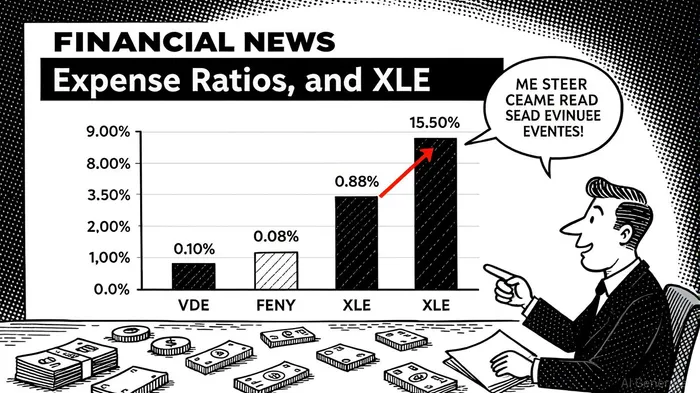
VDE’s structure as a low-cost, diversified ETF positions it as a benchmark for energy sector investing. Its 0.10% expense ratio [1] is slightly higher than the 0.08% charged by the Fidelity MSCI Energy ETFFENY-- (FENY) and the 0.08% gross expense ratio of the Energy Select Sector SPDR Fund (XLE) [2][3]. While FENY and XLE edge out VDE on cost, VDE’s broader exposure to U.S. energy firms—including oil, gas, and coal producers—offers a more balanced portfolio for investors wary of sector-specific volatility [1].
The fund’s low-cost structure aligns with Vanguard’s reputation for minimizing fees, making it an attractive option for long-term investors. According to a report by MorningstarMORN--, VDE’s expense ratio remains competitive despite rising demand for niche energy transition products like uranium-focused instruments [2]. This cost efficiency, combined with its $9 billion AUM, ensures liquidity and stability, critical factors in a sector prone to rapid shifts.
Energy Transition Dynamics: VDE’s Position Amid Shifting Priorities
The energy transition has accelerated the appeal of clean energy ETFs such as the iShares Clean Energy ETF (ICLN) and the Invesco Solar ETF (FIF), which focus on renewables and decarbonization. However, VDE’s emphasis on traditional energy stocks reflects a different but equally valid strategy. As noted by analysts at Bloomberg, VDE’s performance remains tied to U.S. oil production and policy developments, such as regulatory changes and infrastructure spending [1].
This positioning contrasts with uranium hedging tools like SPUT, which offer direct exposure to a commodity central to nuclear energy—a sector gaining traction as a low-carbon alternative. SPUT, a closed-end trust, allows investors to hold physical uranium and recently regained its net asset value (NAV) after trading at a discount for much of 2025 [4]. Unlike VDE, which tracks equities, SPUT’s structure provides a direct hedge against uranium supply constraints and price swings, a critical advantage in a market facing structural deficits [4].
Uranium Hedging Tools and the Evolving Energy Landscape
The introduction of options trading on SPUT by the Bourse de Montréal in September 2025 marks a pivotal development for uranium investors [5]. This innovation, absent in traditional energy ETFs like VDE, enables sophisticated risk management for utilities and traders navigating the nuclear energy boom. As John Ciampaglia of Sprott Asset Management highlights, uranium’s role in the energy transition is expanding, driven by reactor life extensions and small modular reactor (SMR) projects [4].
While VDE offers indirect exposure to energy infrastructure, SPUT’s direct commodity link makes it a more precise tool for investors targeting nuclear energy’s growth. However, VDE’s diversified equity portfolio provides downside protection during oil price slumps—a scenario where uranium’s volatility could amplify losses for SPUT holders. This duality underscores the importance of portfolio diversification, with VDE and SPUT serving complementary roles in a well-structured energy strategy.
Forward-Looking Assessment: VDE’s Suitability for Energy-Focused Portfolios
For investors prioritizing cost efficiency and broad energy exposure, VDE remains a stalwart. Its 0.10% expense ratio and $9 billion AUM ensure it is both affordable and liquid, outperforming many peers in accessibility [1]. However, its reliance on traditional energy equities exposes it to the risks of decarbonization policies and the rise of renewables.
In contrast, uranium hedging tools like SPUT options offer a unique niche in the energy transition, particularly for those betting on nuclear energy’s resurgence. Yet, these instruments lack the diversification and regulatory clarity of ETFs like VDE. A balanced approach—pairing VDE’s stability with SPUT’s specificity—could optimize returns while mitigating sector-specific risks.
As the energy transition unfolds, VDE’s strategic value lies in its ability to adapt. While it may not capture the full potential of uranium or renewables alone, its role as a cost-effective, diversified energy proxy ensures its relevance in portfolios seeking both resilience and growth.
Source:
[1] Vanguard's VDE ETF: Decoding the $9 Billion Bet on Energy [https://www.ainvest.com/news/vanguard-vde-etf-decoding-9-billion-bet-energy-2509/]
[2] FENY Fidelity MSCIMSCI-- Energy Index ETF [https://etfdb.com/etf/FENY/]
[3] XLE: The Energy Select Sector SPDR® Fund [https://www.ssga.com/us/en/intermediary/etfs/the-energy-select-sector-spdr-fund-xle]
[4] Uranium Update with Bloor Street Capital [https://sprott.com/insights/uranium-update-with-bloor-street-capital/]
[5] Bourse de Montréal Lists Options on Sprott Physical Uranium Trust [https://finance.yahoo.com/news/bourse-montr-al-lists-options-120000050.html]





Comentarios
Aún no hay comentarios