
Evaluating the Sustainability and Yield Potential of PennantPark Floating Rate Capital Ltd.'s $0.1025 Monthly Distribution
The High-Yield BDC Landscape and PFLT's Position
High-yield business development companies (BDCs) like PennantPark Floating Rate Capital Ltd. (PFLT) have long attracted income-focused investors seeking returns above traditional fixed-income assets. PFLTPFLT--, a non-traded BDC specializing in floating-rate senior secured loans, has maintained a monthly distribution of $0.1025 per share since at least 2023, translating to an annualized yield of 14.12% as of September 2025, according to PFLT's dividend history. This yield, however, demands rigorous scrutiny of its sustainability amid evolving interest rate dynamics and operational costs.
Financial Metrics and Distribution Coverage
PFLT's third-quarter 2025 financial results provide critical insights. The company reported net investment income (NII) of $24.6 million, or $0.25 per share, for the quarter ended June 30, 2025, according to the Q3 2025 press release. Annualizing this figure yields $1.00 per share, which falls short of the $1.23 annual distribution. However, Core NII, a non-GAAP metric excluding one-time expenses like $2.9 million in credit facility amendment costs and $1.2 million in incentive fee offsets, stood at $0.27 per share, the press release noted. This suggests that PFLT's ongoing operations generate sufficient income to cover the distribution, albeit with a narrow margin.
The company's expense ratio remains a key uncertainty. While 2024 data indicated an expense ratio of 5.3% of revenue, according to PFLT financials, 2025 figures are inconsistent. Q2 2025 expenses totaled $36.9 million, driven by rising interest costs and management fees, according to the Q2 2025 results. Total non-interest expenses for 2025 were reported at $109 million, per MarketBeat. Without precise revenue figures, calculating the 2025 expense ratio is speculative, but the trend of increasing borrowing costs-linked to a leverage ratio of 1.29x as of June 30, 2025, per the company's press release-suggests upward pressure on expenses.
Leverage and Debt Composition: Balancing Risk and Return
PFLT's debt portfolio, totaling $2,403.5 million as of June 30, 2025, is structured to mitigate interest rate risk. The company holds a mix of floating-rate instruments, including a $298.9 million credit facility and asset-backed debt maturing through 2037, as described in the Q3 2025 press release. This aligns with its strategy to benefit from rising rates, though recent Federal Reserve rate cuts could temporarily reduce borrowing costs. The leverage ratio of 1.29x is moderate for a BDC, balancing growth potential with capital preservation.
However, the weighted average yield on debt investments fell to 10.4% in Q3 2025 from 11.5% in 2024, per the company's Q3 filing, reflecting a shift in portfolio composition or market conditions. This decline, coupled with higher interest expenses, could strain NII if not offset by operational efficiencies or yield enhancements from new investments.
Strategic Initiatives and Distribution Sustainability
PFLT's recent partnership with Hamilton Lane to form a joint venture targeting middle-market loans signals a strategic pivot to expand its investment universe, as noted in the Q3 2025 press release. This initiative could diversify revenue streams and bolster NII, though execution risks remain. Additionally, the company's $474.6 million term debt securitization in Q2 2025, reported by Nasdaq, highlights its proactive approach to liquidity management, which is critical for maintaining distribution levels during economic downturns.
As a BDC, PFLT is legally obligated to distribute at least 90% of its taxable income to avoid corporate-level taxes, according to the company's press release. This structure inherently supports distribution sustainability but requires consistent NII generation. The Q3 2025 Core NII of $0.27 per share, combined with a net asset value (NAV) of $10.96 per share reported in the press release, suggests the company has sufficient capital to fund distributions without eroding its equity base.
Risks and Considerations
Investors must weigh several risks:
1. Interest Rate Sensitivity: While floating-rate loans insulate PFLT from rate hikes, recent Fed cuts could reduce borrowing costs, potentially improving margins. Conversely, a reversal in policy could pressure yields.
2. Credit Risk: The company's portfolio includes 155 companies with an average investment size of $15.5 million, according to the Q3 filing, exposing it to defaults in a stressed economy.
3. Expense Volatility: Rising interest expenses and one-time costs (e.g., credit facility amendments) could erode NII, necessitating distribution cuts if not offset by revenue growth.
Conclusion: A High-Yield BDC with Cautionary Caveats
PFLT's $0.1025 monthly distribution remains attractive for income seekers, supported by a Core NII of $0.27 per share and a diversified debt portfolio. However, the narrow coverage ratio and rising expenses underscore the need for operational discipline and strategic execution. Investors should monitor the company's 2025 10-K filing for updated expense ratios and leverage metrics, as well as the performance of its Hamilton Lane joint venture. For now, PFLT's yield potential is credible but warrants close attention to macroeconomic and operational developments.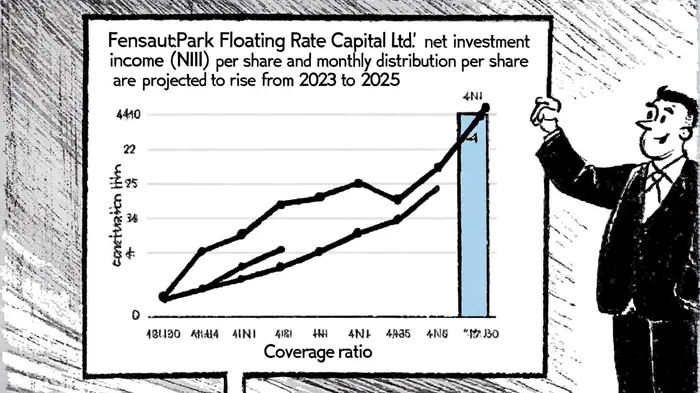





Comentarios
Aún no hay comentarios