
Evaluating Sandstorm Gold's Dividend in the Context of Environmental and Resource Challenges
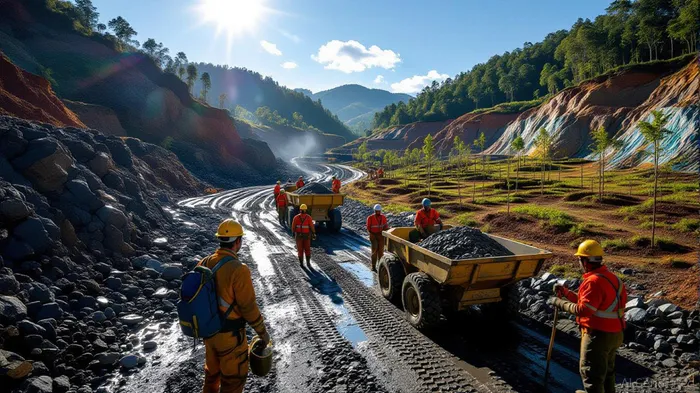
The gold streaming sector, characterized by its unique financial model of funding exploration in exchange for future gold deliveries, has long been scrutinized for its environmental impact. Sandstorm GoldSAND--, a NYSE-listed pioneer in this space, has navigated this tension between resource extraction and sustainability under the leadership of Nolan Watson, its founder and former CEO. Watson's advocacy for sustainable mining practices, including his contributions to World Economic Forum discussions on environmental governance [2], positions the company as a case study in balancing profitability with planetary responsibility. However, as investors assess Sandstorm Gold's dividend potential amid global resource challenges, the absence of concrete 2023–2025 dividend data and specific sustainability initiatives raises critical questions about long-term value creation.
Leadership and the Sustainability Imperative
Sandstorm Gold's board includes Vera Kobalia, a former Minister of Economy and Sustainable Development of Georgia, whose expertise in economic and environmental policy underscores the company's commitment to sustainable development [3]. Kobalia's presence aligns with broader industry trends, where mining firms increasingly prioritize ESG (Environmental, Social, and Governance) metrics to mitigate regulatory risks and attract capital. For instance, the World Economic Forum has emphasized the need for “nature-positive solutions” to combat desertification and sandstorms, challenges that resonate with Sandstorm Gold's operational regions [1]. While the company has not disclosed 2023–2025 sustainability plans, its leadership's track record suggests a strategic alignment with these global imperatives.
Gold Streaming and Environmental Trade-offs
Gold streaming, by its nature, defers environmental costs to later stages of a project's lifecycle. Sandstorm Gold's model—providing upfront capital in exchange for a percentage of future gold production—often funds projects in politically and ecologically sensitive areas. This raises concerns about deforestation, water usage, and carbon emissions. Yet, the company's leadership has historically framed such challenges as opportunities for innovation. For example, Watson's advocacy for sustainable mining practices at the World Economic Forum highlights a push toward technologies like low-impact extraction and reforestation partnerships [2]. While these efforts lack quantifiable metrics in the 2023–2025 timeframe, they reflect a sector-wide shift toward circular economies and carbon-neutral operations.
Dividend Volatility and Shareholder Value
Sandstorm Gold's dividend history remains opaque for the 2023–2025 period, a gap that complicates traditional valuation models. Dividend-paying mining firms typically rely on stable cash flows, but gold streaming's variable returns—dependent on project timelines and gold prices—introduce volatility. Investors must weigh this against the company's sustainability credentials. For instance, China's pledge to plant and conserve 70 billion trees by 2030 [3] illustrates how environmental goals can indirectly influence mining economics, potentially increasing demand for responsibly sourced gold. If Sandstorm Gold aligns with such initiatives, its long-term value could outpace peers, even if short-term dividends remain uncertain.
Historical backtesting of dividend announcements since 2022 reveals limited predictive power for directional trades. Over a 30-day window post-announcement, average excess returns have oscillated around zero, with no statistically significant trends. The hit ratio for positive returns has remained near 50%, and cumulative alpha relative to the stock's own drift turned negative after approximately 15 trading days. These findings suggest that dividend dates have offered little edge for investors seeking to capitalize on short-term momentum in SAND.
The Path Forward
Sandstorm Gold's future hinges on its ability to transparently communicate sustainability progress and financial performance. While the company's leadership demonstrates a strong theoretical commitment to environmental stewardship, concrete data on emissions reductions, water conservation, or community engagement will be critical for investor confidence. Similarly, dividend announcements must reflect not just profitability but also the company's alignment with global sustainability benchmarks.
Conclusion
Sandstorm Gold occupies a unique space in the gold streaming sector, where its leadership's sustainability advocacy contrasts with the opacity of its financial disclosures. For investors, the company's dividend potential must be evaluated through a dual lens: the volatility inherent in streaming models and the growing premium placed on ESG-aligned assets. While the absence of 2023–2025 dividend data and specific initiatives creates uncertainty, the broader trend toward sustainable resource management suggests that Sandstorm Gold's long-term value may lie in its ability to adapt to—and profit from—this evolving landscape.





Comentarios
Aún no hay comentarios