
Evaluating the Risks and Resilience of Decentralized Wallet Providers in a Post-Hack Era
The crypto ecosystem has entered a new phase of maturity-and vulnerability. In 2025 alone, over $3.4 billion has been stolen from decentralized wallet providers and exchanges, with personal wallet compromises accounting for 37% of total stolen value according to Chainalysis data (excluding the ByBit breach). These figures are not just numbers; they represent a systemic crisis of trust in the infrastructure underpinning digital assets. For investors, the question is no longer if a hack will occur but how prepared a provider is to withstand and recover from one.
The Escalating Threat Landscape
The past two years have seen a dramatic shift in the nature of cyberattacks targeting decentralized systems. While financially motivated actors remain a primary threat-North Korean hackers stole $2.02 billion in 2025 alone-state-sponsored and geopolitically driven attacks are now a growing concern. The Nobitex breach in June 2025, linked to regional cyber operations, exemplifies this trend, highlighting how digital warfare is increasingly weaponized against crypto infrastructure.
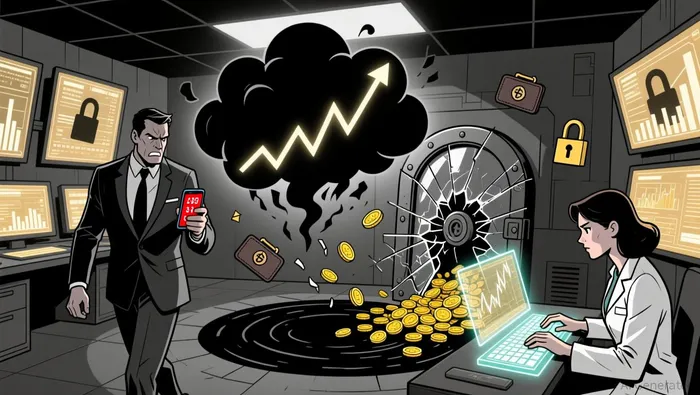
Simultaneously, the methods of attack have evolved. Phishing and wallet drainer scams surged in 2025, with nearly $1.93 billion stolen in the first half of the year. These attacks exploit human error and social engineering, often bypassing even technically robust systems. Meanwhile, "wrench attacks"-physical coercion to access private keys-have shown a correlation with Bitcoin price movements, indicating opportunistic targeting during high-value periods.
Investor Due Diligence: A Framework for Risk Mitigation
In this environment, investor due diligence must extend beyond traditional financial metrics. The ByBit breach, which resulted in a $1.5 billion loss, exposed critical weaknesses in decentralized systems, including unregulated cross-chain bridges and over-the-counter (OTC) brokers. To avoid similar pitfalls, investors should prioritize the following criteria:
Compliance with Industry Standards:
Providers must adhere to frameworks like SOC 2 Type 1 & 2, ISO 27001, and Cyber Essentials according to security experts. These standards ensure robust data security, encryption practices, and disaster recovery protocols. For example, secure key and seed phrase generation, coupled with offline storage in multiple locations, are now table stakes.Penetration Testing and Anomaly Detection:
Regular penetration testing, mandated by regulations like PCI DSS and GDPR, is critical to identifying vulnerabilities before they are exploited. AI-driven anomaly detection systems can further enhance real-time threat monitoring, a necessity given the speed of modern attacks.Disaster Recovery Solutions:
The Yearn Finance breach serves as a cautionary tale: poor disaster recovery planning led to significant losses. Investors should look for platforms with features like automatic asset extraction, which broadcasts pre-signed transactions to transfer assets from compromised wallets into backup wallets.Regulatory Alignment:
The U.S. and EU are adopting divergent regulatory approaches, with the EU pushing for a unified framework for crypto assets and the U.S. relying on enforcement actions. Investors must evaluate how a provider navigates these evolving landscapes, particularly as global consistency in regulation becomes a priority.
The Cost of Inaction
The financial and reputational costs of a breach are staggering. Phemex's January 2025 hack, which resulted in $85 million in losses, triggered a 12% drop in its token price within 48 hours. Similarly, the ByBit breach eroded investor confidence across the sector, contributing to a 15% decline in DeFi platform usage in Q1 2025. These incidents underscore the market's sensitivity to security failures-a reality that investors must internalize.
Looking Ahead: Innovation as a Defense
Emerging technologies are beginning to address these challenges. Post-quantum cryptography is gaining traction as a safeguard against quantum computing threats, while real-time information-sharing platforms are improving threat intelligence across the industry. Investors who prioritize providers adopting these innovations will be better positioned to navigate the next phase of the crypto security arms race.
Conclusion
The post-hack era demands a paradigm shift in how investors evaluate decentralized wallet providers. While the risks are undeniable, the tools to mitigate them are increasingly available. By prioritizing compliance, proactive testing, and technological innovation, investors can build resilience into their portfolios-and, more importantly, into the broader crypto ecosystem.






Comentarios
Aún no hay comentarios