
Evaluating the Risks of Politically Motivated Shareholder Proposals: The Case of Microsoft's Proposal 9
The Proposal and Its Critics
Proposal 9 demands that MicrosoftMSFT-- publish a report assessing whether its cloud and AI services contribute to human rights violations in conflict-affected regions, with a specific focus on contracts with Israel's Ministry of Defense. ADL and JLens argue that the measure is not a genuine governance initiative but a politically motivated campaign to stigmatize Microsoft's business relationships, as the ADL and JLens opposition post notes. They emphasize that the proposal disproportionately targets Israel while ignoring other conflict zones, undermining its credibility as a balanced corporate responsibility effort.
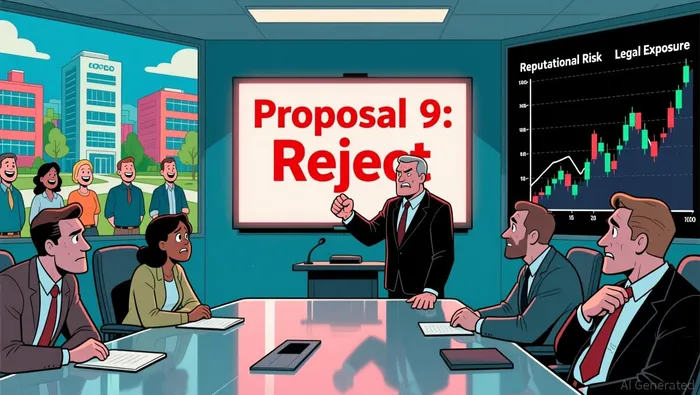
Microsoft's Board of Directors has also recommended rejecting the proposal, citing risks to the company's financial stability, legal compliance, and brand reputation, as noted in the ADL and JLens opposition post. The board warns that such politically driven demands could expose the company to litigation under U.S. anti-boycott laws and erode trust in its services, particularly in the Intelligent Cloud segment-a $100+ billion revenue driver in FY 2025, according to the JLens Proxy Statement.
Financial and Governance Implications
The Intelligent Cloud segment, which includes Azure and AI services, is the backbone of Microsoft's growth strategy. ADL and JLens argue that Proposal 9 could destabilize this segment by fostering perceptions of political bias, deterring enterprise clients who prioritize vendor neutrality, as noted in the JLens Proxy Statement. For instance, multinational corporations may hesitate to adopt Microsoft's AI tools if they perceive the company as entangled in geopolitical controversies.
Legal risks are equally concerning. U.S. anti-boycott laws prohibit companies from participating in secondary boycotts against specific countries. By singling out Israel, Proposal 9 could inadvertently expose Microsoft to regulatory scrutiny, creating compliance costs and operational friction, as noted in the JLens Proxy Statement. Furthermore, reputational damage from inflammatory allegations-such as those sourced from organizations like Human Rights Watch-could dilute Microsoft's brand equity, a critical asset in the tech sector, as noted in the JLens Proxy Statement.
The Governance Dilemma
This case underscores a broader governance challenge: How do boards balance stakeholder demands with strategic priorities? Politically motivated proposals like Proposal 9 risk diverting attention from substantive governance issues, such as board diversity, executive compensation, and environmental sustainability. By framing the debate around geopolitical conflicts, critics argue that such proposals exploit shareholder influence to advance ideological agendas, potentially undermining the board's fiduciary duty to act in shareholders' best interests, as noted in the ADL and JLens opposition post.
For investors, the lesson is clear: Vigilance is required to distinguish between proposals that enhance corporate accountability and those that weaponize governance for political ends. JLens and ADL's opposition to Proposal 9 reflects a commitment to preserving Microsoft's governance integrity-a stance that aligns with long-term value creation, as noted in the JLens Proxy Statement.
Conclusion
Microsoft's Shareholder Proposal 9 exemplifies the growing tension between corporate governance and political activism. While shareholder engagement is a cornerstone of democratic capitalism, proposals that conflate ethical concerns with partisan agendas risk creating more harm than good. For investors, the priority must remain on initiatives that strengthen transparency, mitigate operational risks, and safeguard the company's competitive edge. In this context, rejecting politically motivated proposals like Proposal 9 may be the most prudent path to protecting shareholder value.





Comentarios
Aún no hay comentarios