
Evaluating the Risks of Non-Custodial Wallets in a Post-Security-Breach Era
The DeFi (Decentralized Finance) ecosystem has emerged as a transformative force in global finance, offering unprecedented autonomy and accessibility. However, the rapid adoption of non-custodial wallets-digital tools that grant users sole control over private keys-has introduced a new frontier of risk. As security breaches in this space escalate in frequency and financial impact, investors must critically assess how these vulnerabilities shape the long-term viability of DeFi investments.
The Escalating Threat Landscape
Non-custodial wallets, while designed to eliminate centralized points of failure, expose users to unique risks. A critical vulnerability lies in private key management: if keys are lost or stolen, assets are irretrievable. According to a report by Halborn, off-chain attacks-such as compromised accounts-dominated the threat landscape in 2024, accounting for 56.5% of all DeFi attacks and 80.5% of funds lost. By 2025, access control vulnerabilities alone were responsible for 59% of total losses exceeding $1.6 billion in stolen funds. These figures underscore a troubling trend: attackers are increasingly exploiting operational security weaknesses rather than directly targeting smart contracts.
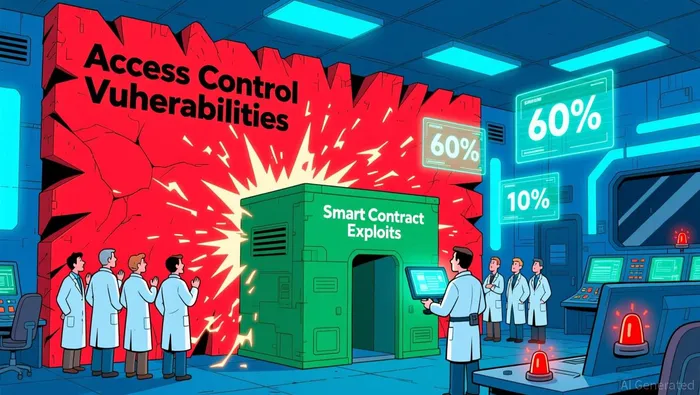 Private key compromises, once a niche threat, have surged from 0% to 20% of incidents between 2023 and 2025. This shift highlights the growing sophistication of adversaries, who now prioritize social engineering, phishing, and supply-chain attacks to bypass user-level defenses. For institutional investors, the implications are stark: even the most robust smart contract code cannot mitigate risks if user practices remain lax.
Institutional Preparedness: Progress and Gaps
In response to these challenges, institutional adoption of DeFi risk management protocols has nearly doubled, rising from 21% in 2023 to 48% in 2025. Modern frameworks emphasize AI-driven tools for real-time threat detection and compliance mechanisms to address governance and smart contract risks. However, confidence in these systems remains low. Only 5% of risk managers express strong confidence in their ability to evaluate blockchain technology risks, revealing a critical gap between technological advancements and institutional expertise.
This disconnect is particularly concerning given the complexity of DeFi ecosystems. For instance, securing non-custodial wallets requires more than auditing smart contracts; it demands holistic protection of oracles, APIs, and market conditions. Yet, many institutions remain underprepared to address these interconnected vulnerabilities.
Mitigation Strategies for a Post-Breach Era
To navigate this landscape, investors and developers must adopt a multi-layered approach to risk management. Key strategies include:
1. Enhanced Authentication: Implementing hardware security modules, multi-factor authentication (MFA), and privileged access controls can significantly reduce the risk of account compromises.
2. Advanced Wallet Solutions: Multi-sig and multi-party computation wallets, though underutilized, offer robust protection by distributing key management across multiple parties. Cold storage for key assets further minimizes exposure to online threats.
3. Operational Safeguards: Mitigating flash loan exploits requires adaptive measures such as borrowing caps and time delays on governance actions.
4. Transparency and Monitoring: Real-time monitoring systems and transparent security disclosures enable early detection of breaches, preventing cascading losses.
Conclusion: Balancing Innovation and Security
The DeFi revolution hinges on a delicate balance between innovation and security. While non-custodial wallets empower users, they also amplify exposure to systemic risks. For investors, the path forward lies in rigorous due diligence: prioritizing platforms with proven risk management frameworks, advocating for industry-wide transparency, and staying informed about evolving threat vectors. As the 2025 data demonstrates, the financial stakes are no longer theoretical-proactive risk mitigation is not just prudent, but essential.







Comentarios
Aún no hay comentarios