
Evaluating the Long-Term ROI of Public-Private Partnerships in Webster, NY's Industrial Zone Revitalization
Key Projects and Investments
The cornerstone of Webster's revitalization strategy is the $9.8 million FAST NY grant awarded to the Webster Economic Development Alliance (WEDA) to transform the former Xerox campus into a shovel-ready industrial hub. This grant funds critical infrastructure upgrades, including road improvements, sewer expansion, and electrical system enhancements, which are essential for attracting energy-intensive industries according to project documentation. Complementing this effort is the multi-phase Sandbar Waterfront Revitalization Project, which has already driven property value increases through shoreline protection and recreational amenities as reported by city officials.
These projects align with Governor Kathy Hochul's broader economic agenda, which emphasizes infrastructure readiness to accelerate development timelines and attract high-tech manufacturing as detailed in official announcements. By reducing barriers to entry for developers, Webster has created a 300-acre site with nearly one million square feet of industrial space 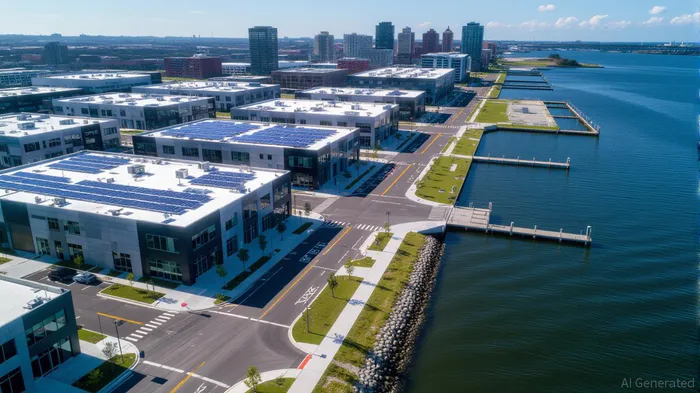 projected to be completed by 2025.
Immediate Outcomes and Long-Term ROI Metrics
The immediate economic impact of these initiatives is evident. The $650 million fairlife® dairy facility, for instance, is expected to generate 250 new jobs by 2025 according to facility projections. Additionally, infrastructure improvements have spurred a 10.1% increase in residential property values, reflecting broader economic uplift as cited in property assessment reports.
Looking beyond 2025, the long-term ROI of these PPPs is supported by projections of sustained job creation and tax revenue growth. By 2030, Webster anticipates a significant appreciation in industrial property values, driven by its strategic focus on advanced manufacturing and renewable energy sectors as projected by economic analysts. The city's proximity to major transportation routes, including I-390 and the Rochester International Airport, further enhances its appeal for logistics and e-commerce firms according to regional transportation studies.
Strategic Positioning and Sector Diversification
Webster's success lies in its ability to diversify its economic base while maintaining sector sustainability. The redevelopment of the Xerox campus has attracted industries such as semiconductor supply chains and food and beverage production as detailed in industry reports. This diversification reduces reliance on single-industry vulnerabilities and ensures long-term resilience.
Moreover, energy infrastructure modernization supports New York State's climate goals while lowering operational costs for businesses according to energy sector analysis. By integrating mixed-use zoning and blight removal efforts, Webster has created a walkable, mixed-use environment that enhances both residential and commercial appeal as noted in urban planning documents.
Comparative Insights and Broader Implications
While direct comparative studies with similar regions remain limited, Webster's approach mirrors successful PPP models in upstate New York. The city's emphasis on "shovel-ready" sites and infrastructure readiness aligns with state-level initiatives that prioritize rapid deployment of capital to stimulate growth as highlighted in official policy briefs. By 2030, Webster is projected to outperform many secondary markets in job retention and tax revenue generation, thanks to its proactive infrastructure investments according to economic modeling.
Conclusion
Webster, NY, demonstrates how strategic PPPs can yield substantial long-term ROI in industrial zone revitalization. Through targeted infrastructure grants, sector diversification, and strategic location advantages, the city has created a sustainable economic ecosystem. As it moves toward 2030, Webster's model offers a compelling blueprint for other municipalities seeking to balance growth with environmental and economic resilience.







Comentarios
Aún no hay comentarios