
Evaluating Insider Trading Signals in the Life Sciences Sector: Strategic Positioning and Risk-Rebalancing in Biotech Equities
The life sciences sector, particularly biotechnology, remains a hotbed for insider trading due to its reliance on material nonpublic information (MNPI) such as clinical trial outcomes, FDA approvals, and M&A activity. Recent academic studies and regulatory enforcement actions underscore the dual role of insider trading signals: as both a risk to market integrity and a potential tool for strategic investment positioning. For investors navigating this high-stakes landscape, understanding how to interpret insider transactions—while mitigating associated risks—is critical.
Academic Insights: The Mechanics of Insider Trading Signals
Insider trading in biotech is shaped by unique dynamics. Pankratov's 2024 model highlights how insiders and followers exploit information asymmetry, with followers capturing nearly all profits when trading occurs with minimal noise[1]. This is particularly relevant in biotech, where MNPI is abundant and often time-sensitive. For instance, Hübbert and Nordén's research reveals that insiders are more likely to trade on dark markets when engaging in illegal activity, a behavior linked to negative abnormal returns[1]. Such findings suggest that while insider transactions can signal confidence in a company's prospects, they also require scrutiny for anomalies like dark market activity.
Peer influence further complicates the picture. Steiner's work demonstrates that insiders in life sciences firms increase trading activity after observing similar behavior in product-market peers[1]. This “herding” effect is amplified in smaller firms, which often lack the resources to detect or deter such practices. Meanwhile, Zhang and Du Pon's analysis of institutional investor cliques shows that larger networks dilute the value of insider information, as trading frequency and volume rise[1]. These insights highlight the need for investors to contextualize insider activity within broader industry trends.
SEC Enforcement: A Harsher Regulatory Climate
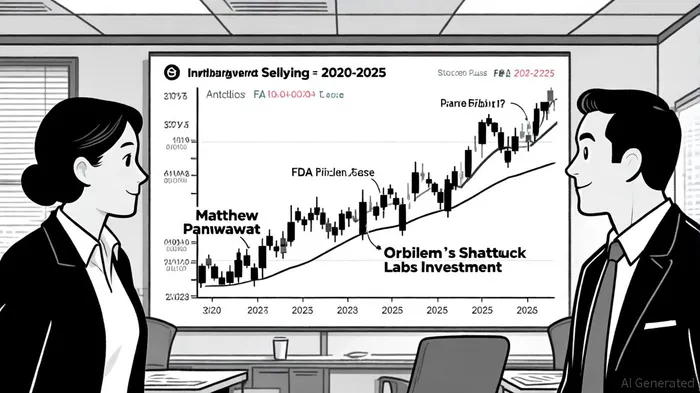
The U.S. Securities and Exchange Commission (SEC) has intensified its focus on biotech insider trading. In 2024 and 2025, the agency secured high-profile cases against individuals like Sai-Hong Ignatius Ou, a Nuvalent oncologist who traded on nonpublic clinical trial results[1], and Matthew Panuwat, who engaged in “shadow trading” by purchasing call options in Incyte CorporationINCY-- after learning of a Medivation-Pfizer merger[1]. These cases reflect the SEC's expanded interpretation of Rule 10b-5, which now encompasses indirect leaks of MNPI.
Advanced surveillance tools like ARTEMIS and collaborations with the FDA have enabled the SEC to detect patterns such as pre-announcement trading around regulatory decisions[1]. For example, the SEC's 2022 reforms—mandating quarterly disclosures of Rule 10b5-1 trading plans and annual summaries of insider policies—have increased transparency, particularly in biotech, where MNPI events are unpredictable[2]. However, as seen in the Nader Pourhassan case (former CEO of CytoDyn), regulatory scrutiny has not eliminated abuses[3].
Strategic Positioning: Leveraging Insider Signals for Alpha
Despite regulatory risks, insider transactions can inform strategic investment decisions. Case studies illustrate this duality. Dr. Mona Ashiya, a General Partner at OrbiMed, achieved a 131% return on a $5.47 million investment in Shattuck Labs by leveraging her institutional expertise and board position[2]. Similarly, insider buying in Aardvark Therapeutics ($23.4 million post-IPO) and Gilead Sciences' increased stake in Arcus Biosciences reflect confidence in early-stage pipelines[2].
Quantitative models further refine this approach. Platforms like Quiver Quantitative and QuantConnect aggregate insider data to identify patterns, such as correlations between insider purchases and pre-announcement stock price movements[4]. For instance, biotech stocks with positive Phase III results saw an average 14% price increase 120 days before public disclosure[5]. AppliedXL's AI-driven systems even detect subtle clinical trial shifts, offering investors an edge in risk-rebalancing[5].
Risk-Rebalancing Frameworks: Navigating Regulatory and Market Volatility
Biotech investors must balance the potential of insider signals with the sector's inherent volatility. The 2022 SEC reforms, including mandatory cooling-off periods for Rule 10b5-1 plans and enhanced option grant disclosures, have forced companies to align internal controls with governance frameworks like COSO[6]. A case study of a global biotech firm demonstrated how systematic governance improvements reduced financial reporting errors and improved operational efficiency[6].
However, regulatory changes alone cannot eliminate risks. The Panuwat case underscores the need for robust compliance programs, particularly as the SEC expands its enforcement scope to include third-party trading[3]. Investors should also consider macroeconomic factors, such as AI-driven R&D efficiencies and constrained capital access, which shape biotech pipelines[7].
Conclusion: A Nuanced Approach to Insider Signals
Evaluating insider trading signals in biotech requires a multifaceted strategy. While academic models and enforcement trends highlight the risks of MNPI exploitation, they also reveal opportunities for informed positioning. Investors must contextualize insider activity within regulatory shifts, industry dynamics, and quantitative insights. As the SEC's focus on traditional enforcement persists, the life sciences sector's ability to adapt—through transparency, governance, and innovation—will remain pivotal to both compliance and competitive advantage.





Comentarios
Aún no hay comentarios