
Evaluating the Impact of the Upbit Security Breach on Crypto Exchange Security and Investor Confidence
The November 2025 Upbit security breach, which resulted in the theft of approximately $30–37 million in Solana-based assets, has become a pivotal case study in the evolving dynamics of crypto exchange security and investor trust. This incident, occurring during a high-profile $10.3 billion merger with Naver Corp., exposed systemic vulnerabilities in hot wallet infrastructure and reignited debates about the fragility of centralized custody models. For investors, the breach underscores the urgent need to reassess risk management strategies and prioritize platforms with robust security frameworks.
The Breach and Its Immediate Consequences
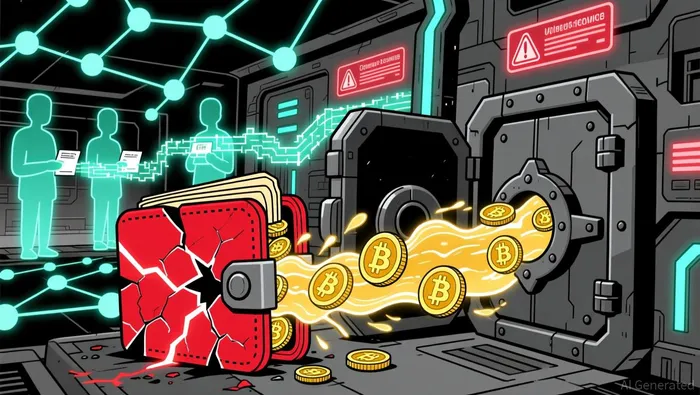
The attack targeted Upbit's Solana hot wallet, exploiting a vulnerability that allowed attackers to infer private keys from public blockchain data under specific conditions. The stolen assets included high-liquidity tokens like SOLSOL--, USDCUSDC--, and BONKBONK--, with the attackers employing multi-chain laundering techniques to obscure the trail. Upbit's response-suspending SolanaSOL-- transactions, transferring remaining assets to cold storage, and reimbursing users from corporate reserves-highlighted both the exchange's operational resilience and the growing reliance on financial solvency to maintain trust according to financial reports. However, the breach also amplified concerns about the recurrence of state-sponsored cyberattacks, particularly given the suspected involvement of North Korea's Lazarus Group, a group previously linked to Upbit's 2019 EthereumETH-- hack.
Investor Confidence and Strategic Shifts
The breach has had a profound impact on investor behavior, particularly in the custody and security sectors. According to a report by OneSafe, SMEs and institutional investors are increasingly prioritizing platforms that demonstrate strong security practices, such as cold storage for the majority of assets and automated detection systems. The incident also accelerated the adoption of self-custody solutions, with hardware wallets and multi-signature wallets gaining traction as alternatives to centralized exchanges.
Regulatory scrutiny has further intensified, with South Korea's Financial Services Commission launching an on-site investigation into Upbit's compliance with anti-money laundering (AML) and know-your-customer (KYC) protocols. This has prompted broader industry discussions about the need for uniform security standards, particularly in multi-chain environments where vulnerabilities are more complex. For investors, the breach serves as a cautionary tale about the risks of over-reliance on centralized custodians and the importance of diversifying custody strategies.
Market Performance and Investment Trends
Despite the breach, the crypto custody sector attracted significant venture capital in Q4 2025. According to Galaxy Digital, infrastructure-focused startups and AI-integrated blockchain projects secured $4.6 billion in Q3 2025, with later-stage deals capturing 56% of capital. Notable investments included Tetra Trust, which raised $10 million to enhance digital asset storage solutions, and Pointsville, a platform bridging traditional finance with crypto, which secured $10 million in Series A funding. These developments reflect growing institutional confidence in custody infrastructure, driven by regulatory clarity and the maturation of the crypto market.
However, the broader market faced turbulence, with Bitcoin dropping below $90,000 in late November 2025 amid macroeconomic uncertainties and geopolitical risks. Despite this, Grayscale's Q3 2025 analysis noted positive returns across all six crypto sectors, with stablecoin adoption and institutional-grade custody solutions emerging as key themes. The breach, coupled with the $1.5 billion Bybit hack in February 2025, has reinforced the need for robust security protocols, with Chainalysis reporting that cumulative crypto thefts reached $2.17 billion by mid-2025.
Strategic Implications for Investors
For investors, the Upbit breach highlights three critical strategic considerations:
1. Prioritize Cold Storage and Multi-Signature Wallets: The vulnerability of hot wallets, as demonstrated by the breach, necessitates a shift toward cold storage solutions and multi-signature wallets to mitigate centralized risk.
2. Evaluate Exchange Solvency and Compliance: The financial strain on Upbit-despite its commitment to reimburse users-underscores the importance of assessing an exchange's solvency and regulatory compliance.
3. Leverage Regulatory Developments: The passage of the GENIUS Act and proposed SAB 122 in the U.S. are expected to enhance institutional confidence by reducing reporting complexities and fostering transparency according to market analysis.
Conclusion
The Upbit breach is a watershed moment for the crypto custody and security sector, exposing vulnerabilities while also catalyzing innovation and regulatory progress. For investors, the incident reinforces the need to adopt a risk-averse, diversified approach to custody, prioritize platforms with institutional-grade security, and stay attuned to evolving regulatory frameworks. As the industry matures, the lessons from Upbit's breach will likely shape the next phase of crypto security, emphasizing resilience, transparency, and adaptability in an increasingly complex threat landscape.





Comentarios
Aún no hay comentarios