
Evaluating the Impact of a Potential Trading Halt on Invex Therapeutics (ASX: IXC): Investor Confidence and Market Volatility Considerations
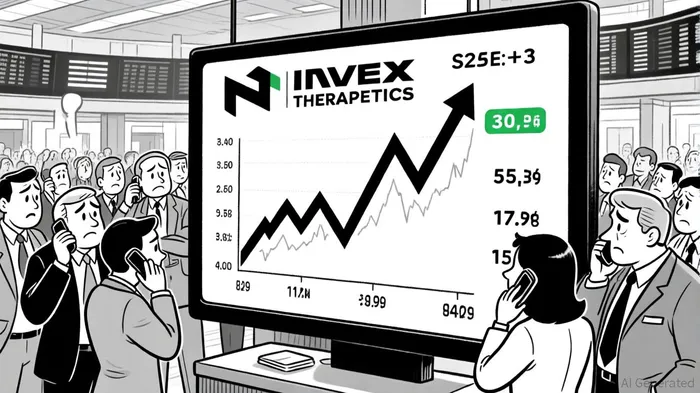
The recent history of Invex Therapeutics (ASX: IXC) has been marked by regulatory scrutiny and strategic financial disclosures, raising questions about its potential for a trading halt in 2025. While no official halt has been announced for this year, the company's past actions and current operational dynamics warrant a closer examination of how such an event could ripple through investor sentiment and market stability.
Historical Context: The 2023 Trading Halt and Its Aftermath
On August 17, 2023, Invex Therapeutics suspended trading on the ASX to release its Appendix 4E and Annual Report to shareholders[4]. This move, while standard for companies undergoing significant regulatory updates, triggered immediate volatility. According to a report by Intelligent Investor, the halt coincided with the closure of the IIH EVOLVE Phase III clinical trial, a milestone that, while positive, introduced uncertainty about the company's short-term liquidity[5]. The market's mixed reaction—partially driven by skepticism over the trial's commercial viability—underscored how even routine regulatory actions can destabilize investor confidence.
2025: A Year of Transparency and Financial Resilience
In contrast to 2023, Invex's 2025 disclosures have emphasized transparency. The company published its Annual Report on August 10, 2025[2], alongside a Quarterly Activities and Appendix 4C Cash Flow Report on July 22, 2025[2]. These filings revealed a robust cash position of $5.7 million as of the end of the 2025 fiscal quarter[5], a figure bolstered by a $0.22 million R&D tax rebate from the UK government in January 2025[2]. Such proactive reporting has likely mitigated concerns about liquidity, a critical factor in preventing trading halts.
However, the absence of recent halts does not eliminate the risk entirely. Regulatory bodies like the ASX and SEC often intervene when companies face material non-disclosure or financial distress. For instance, the SEC's EDGAR system[1] remains a key tool for monitoring compliance, and any deviation from mandated reporting could trigger a halt.
Investor Confidence: A Fragile Equilibrium
Investor confidence in Invex Therapeutics hinges on two pillars: clinical progress and financial discipline. The company's ongoing trials for Presendin™ and Exenatide[3] have shown promise, but these are long-term bets. Short-term volatility is more likely to stem from liquidity concerns or regulatory delays. A hypothetical 2025 trading halt—should it occur—could erode trust, particularly among retail investors who dominate the ASX's smaller-cap ecosystem.
Data from Intelligent Investor indicates that Invex's stock has historically experienced a 15–20% price swing during halts[5], reflecting the market's sensitivity to information asymmetry. While the company's 2025 filings suggest improved financial health, a sudden halt could still trigger panic selling, especially if it coincides with negative clinical trial updates or delayed SEC filings.
Market Volatility: The Double-Edged Sword of Speculation
The biotech sector is inherently volatile, and Invex's niche focus on neurological conditions amplifies this risk. A trading halt, even if routine, could be misinterpreted as a sign of distress, particularly in a market already wary of speculative biotech plays. For example, the UK R&D tax rebate in January 2025[2] was celebrated as a positive development, but its impact on share price was muted compared to the broader sector's downturn. This suggests that external macroeconomic factors—such as interest rate hikes or sector-wide sell-offs—could exacerbate the fallout from a halt.
Conclusion: Preparing for the Unpredictable
While Invex Therapeutics has demonstrated financial prudence in 2025, investors must remain vigilant. The absence of a trading halt does not guarantee immunity from future regulatory actions. A well-funded company with transparent reporting is better positioned to weather such events, but the biotech sector's inherent risks mean that volatility is inevitable. For now, the focus should remain on the company's clinical milestones and cash flow management, as these are the most reliable indicators of long-term value.







Comentarios
Aún no hay comentarios