
Re-evaluating Flibco Inc.'s Long-Term Value Proposition Amid Credit Downgrade
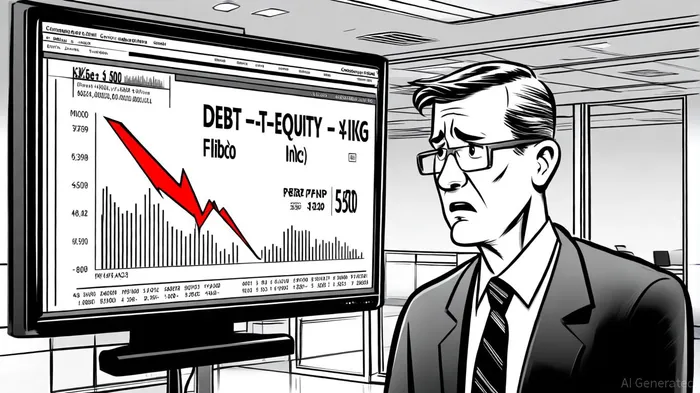
The recent credit downgrade of Flibco Inc. (FLBR) has cast a long shadow over its long-term value proposition, forcing investors to scrutinize its financial resilience in a macroeconomic environment already strained by broader fiscal challenges. While the precise catalyst for the downgrade remains opaque, the broader context of rising corporate debt levels, political dysfunction, and a deteriorating credit landscape in the U.S. provides critical clues. According to a report by AM Best, the downgrade was partly attributed to Flibco's reliance on unrated reinsurers and a decline in its risk-adjusted capitalization, as measured by Best's Capital Adequacy Ratio (BCAR) [1]. This, coupled with a debt-to-equity ratio of 4.78—significantly higher than the S&P 500 average—highlights structural vulnerabilities that demand closer examination [2].
The Macroeconomic Backdrop: A Perfect Storm
The U.S. credit rating downgrade in September 2025, orchestrated by Moody's and echoed by other agencies, underscores a systemic erosion of fiscal discipline. As stated by analysts at Breezy Invest, the downgrade reflected concerns over a $36 trillion national debt, a 124% debt-to-GDP ratio, and political gridlock that has rendered the debt ceiling a recurring crisis [3]. These macro forces have rippled through corporate balance sheets, with Flibco's situation mirroring broader trends. Data from CSIMarket reveals that leverage across the S&P 500 hit a new high in Q3 2025, with many firms struggling to deleverage amid stubbornly high interest rates [4]. For Flibco, this environment exacerbates its own challenges, as higher borrowing costs and tighter credit conditions threaten to amplify existing weaknesses.
Flibco's Financial Health: A Mixed Picture
Flibco's financials present a paradox. On one hand, the company reported a 19.1% EBITDA margin in Q3 2025, a 110-basis-point expansion year-over-year, and $171 million in EBITDA [5]. Its revenue of $7.1 million in 2025, with $140,000 generated per employee, suggests operational efficiency [6]. On the other, its debt burden is alarming. A debt-to-equity ratio of 4.78 not only signals aggressive leverage but also raises questions about its ability to service obligations in a higher-rate world. As noted by FasterCapital, companies with such ratios often face liquidity constraints, which could force asset sales or operational cutbacks [7].
Implications for Long-Term Value
A credit downgrade typically triggers a self-reinforcing cycle: higher borrowing costs, reduced access to capital, and eroding investor confidence. For Flibco, this could translate into steeper interest rates on new debt, limiting its capacity to fund growth initiatives. According to a case study by Strategence Capital, firms that navigate downgrades successfully often implement fiscal reforms, such as deleveraging through asset sales or restructuring [8]. However, Flibco's reliance on volatile reinsurance markets complicates this path. If its reinsurers face their own solvency issues, Flibco's risk profile could deteriorate further, creating a domino effect.
Strategic Considerations: Pathways to Recovery
Flibco's long-term value proposition hinges on its ability to address these challenges. First, it must diversify its reinsurance exposure to reduce dependency on unrated counterparties. Second, a deleveraging strategy—potentially through asset sales or equity raises—could stabilize its balance sheet. Third, capitalizing on its strong EBITDA margins to invest in high-growth segments might offset near-term headwinds. As highlighted by FathomHQ, companies that align operational efficiency with strategic reinvestment often outperform peers in post-downgrade scenarios [9].
Conclusion: A Test of Resilience
Flibco Inc. stands at a crossroads. Its recent downgrade is not merely a credit event but a stress test of its long-term strategy. While the macroeconomic headwinds are formidable, the company's operational strengths—particularly its EBITDA performance—offer a foundation for recovery. However, without decisive action to address leverage and reinsurance risks, its value proposition will remain fragile. For investors, the key question is whether Flibco can transform this crisis into an opportunity, much like the U.S. economy's historical resilience post-downgrade [10]. The answer will determine whether this company emerges as a phoenix or a cautionary tale.







Comentarios
Aún no hay comentarios