
Evaluating the Evolve Enhanced Yield Mid Term Bond Fund ETF: A High-Yield Contender in 2025?
In an era where traditional bond markets struggle to deliver compelling returns, income-focused investors are increasingly turning to innovative strategies to boost yields. The Evolve Enhanced Yield Mid Term Bond Fund ETF (MIDB-U.TO) has emerged as a standout option, offering a recent dividend of $0.165 per unit and a forward yield of 10.15% as of August 29, 2025[1]. This article examines whether MIDB's aggressive covered call strategy and high yield position it as a viable alternative to conventional bond ETFs like the Vanguard Total Bond Market ETF (BND) and iShares Core U.S. Aggregate Bond ETF (AGG).
A High-Yield Signal: The $0.165 Dividend and Its Implications
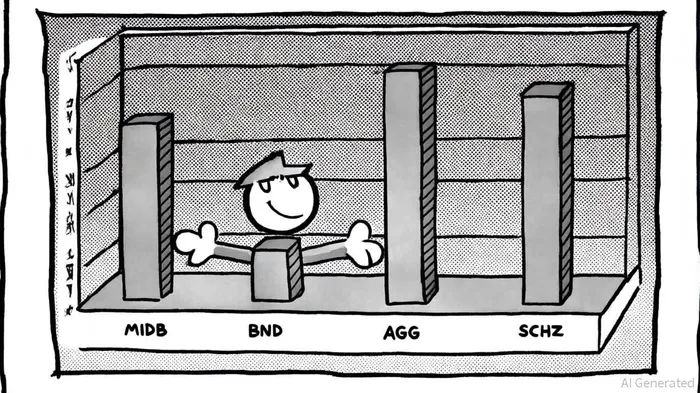
The Evolve Enhanced Yield Mid Term Bond Fund ETF's recent $0.165 per unit dividend[1] underscores its appeal for income-seeking investors. At a share price of $19.60[2], this translates to a forward yield of 10.15%, significantly outpacing the 4.3% yield of BND and the 3.0% yield of AGG[1]. Such a disparity raises critical questions: Is this yield sustainable, and what trade-offs does it entail?
MIDB's strategy hinges on an active covered call approach, which involves selling call options on its bond holdings to generate additional income[2]. This tactic not only enhances yield but also aims to reduce portfolio volatility by capping potential upside. However, the strategy's success depends on market conditions and the fund's ability to balance risk and reward. As of September 17, 2025, the fund's net asset value (NAV) stood at $19.49, with a daily decline of -0.13%, suggesting that while the yield is robust, price stability remains a concern[1].
Expense Ratio and Competitive Landscape
MIDB's expense ratio of 0.45% (plus applicable sales taxes) for certain classes[1] places it in a higher-cost bracket compared to passive bond ETFs like BND and AGG, which charge 0.03%[1]. This premium reflects the active management required to execute the covered call strategy. For investors prioritizing cost efficiency, this could be a deterrent. However, the fund's yield advantage may justify the higher fees for those willing to accept the associated risks.
When benchmarked against peers, MIDB's performance metrics remain unproven. The fund has not yet completed a full year of performance data[1], whereas BND, AGG, and SCHZ offer decade-long track records of approximately 1.8% annualized returns[1]. This lack of historical performance data limits investors' ability to assess MIDB's long-term viability.
Risk and Reward: A Balanced Perspective
While MIDB's yield is undeniably attractive, its strategy introduces unique risks. Covered call strategies can limit capital appreciation if bond prices rise sharply, and the fund's active management may lead to higher turnover and transaction costs[2]. Additionally, the fund's 8.06-year duration[1] exposes it to interest rate sensitivity, a critical factor in a rising rate environment.
For comparison, BND and AGG offer broader diversification and lower volatility, albeit with modest yields. Their liquidity metrics also favor them: AGG, for instance, trades an average of 11 million shares daily with a bid-ask spread of 0.01%[1], whereas MIDB's liquidity data is not explicitly disclosed.
Conclusion: A Niche Play for Yield-Oriented Investors
The Evolve Enhanced Yield Mid Term Bond Fund ETF presents a compelling case for investors prioritizing income over capital preservation. Its $0.165 dividend and 10.15% yield[1] position it as a rare high-yield option in a low-interest-rate environment. However, the fund's active strategy, higher expense ratio, and limited performance history necessitate a cautious approach. For those willing to accept these trade-offs, MIDB could serve as a strategic addition to a diversified portfolio. For others, established low-cost bond ETFs like BND and AGG remain the safer bet.







Comentarios
Aún no hay comentarios