
Evaluating Value Equity Fund Performance in Q2 2025: Lessons from Touchstone and the Broader Market
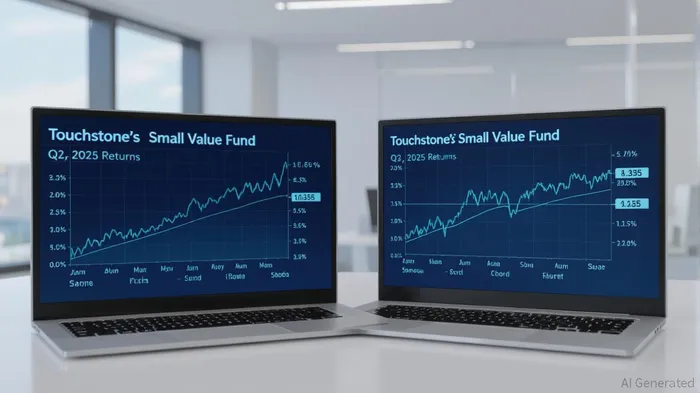
In Q2 2025, the performance of value equity strategies revealed stark contrasts between large-cap and small-cap approaches, as exemplified by Touchstone's fund lineup. While the Touchstone Value Fund (large-cap) outperformed its benchmark, the Russell 1000 Value Index[1], the Small Cap Value Fund lagged behind the Russell 2000 Value Index[2]. These divergent outcomes highlight the nuanced interplay of market dynamics, risk management, and strategy-specific challenges in value investing.
Benchmark Analysis: Divergent Paths in Large-Cap and Small-Cap Value
The Touchstone Value Fund's outperformance in Q2 2025 occurred amid a volatile market environment shaped by Liberation Day tariffs and geopolitical tensions[1]. This resilience suggests effective stock selection or positioning in large-cap value stocks, which often exhibit greater stability during macroeconomic shocks. Conversely, the Small Cap Value Fund's underperformance underscores the heightened risks inherent in smaller-cap equities, which are more susceptible to liquidity constraints and sector-specific downturns[2].
The International Value Fund's outperformance against the MSCIMSCI-- ACWI Ex-U.S. Index[3] adds another layer to this analysis, indicating that global diversification can mitigate some of the idiosyncratic risks faced by domestic small-cap strategies. However, the lack of risk-adjusted return metrics for the Value Fund complicates a direct comparison with the Small Cap Value Fund, which has a Sharpe ratio of 1.35[4]. This metric, while strong, does not fully offset the fund's underperformance relative to its benchmark[2].
Risk-Adjusted Returns: Sharpe Ratios and Alpha Generation
The Sharpe ratio of 1.35 for the Small Cap Value Fund[4] reflects its ability to generate returns relative to volatility—a critical consideration for investors prioritizing risk-adjusted performance. However, the absence of a Sharpe ratio for the Value Fund raises questions about its risk profile. While the fund's outperformance suggests positive alpha generation[1], its large-cap focus may inherently carry lower volatility, making direct comparisons with small-cap strategies less meaningful.
The Touchstone Large Cap Fund's underperformance against the Russell 1000 Index[5] further complicates the narrative. A negative alpha for this fund implies that active management failed to add value in a segment typically dominated by passive strategies. This contrast with the Value Fund's success highlights the importance of fund-specific factors, such as manager skill and portfolio construction, in determining outcomes.
Broader Market Context and Strategic Implications
The Q2 2025 market environment—marked by sudden tariff announcements and geopolitical volatility—exacerbated the challenges for small-cap value strategies. Smaller firms often lack the balance sheet strength to weather abrupt shifts in investor sentiment, as seen in the Small Cap Value Fund's struggles[2]. Meanwhile, the Value Fund's ability to outperform suggests that large-cap value stocks retained their appeal as defensive assets during periods of uncertainty[1].
Investors must also consider the role of benchmark composition. The Russell 1000 Value Index includes firms with stronger financial metrics and lower volatility compared to the Russell 2000 Value Index, which skews toward more speculative, less liquid stocks. This structural difference may partially explain the divergent performances of Touchstone's funds[6].
Conclusion: Lessons for Value Equity Investors
The Q2 2025 results underscore the need for a nuanced approach to value equity investing. While large-cap strategies can offer stability and alpha generation in turbulent markets, small-cap value requires careful risk management to navigate liquidity and volatility challenges. For investors, the key takeaway is to evaluate not just absolute returns but also risk-adjusted metrics and benchmark alignment.
As the market evolves, the ability to adapt to macroeconomic shifts—whether through global diversification, sector rotation, or active risk management—will remain critical. Touchstone's mixed performance serves as a case study in the complexities of value investing, offering valuable insights for both institutional and individual investors navigating an increasingly fragmented equity landscape.







Comentarios
Aún no hay comentarios