
Evaluating Dividend Stability in Regional Banking: A Strategic Lens on First Bancorp's Shareholder Commitment
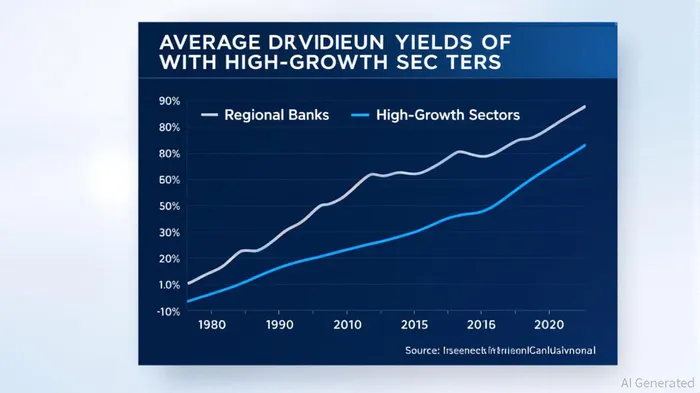
In the current investment landscape, where volatility in high-growth sectors like technology and biotechnology has left many income-focused investors seeking stability, regional banks have emerged as a reliable haven. These institutions, often characterized by mature business models and disciplined capital management, have historically maintained consistent dividend payouts—a trait that signals financial health and long-term shareholder value. While specific data on First BancorpFBNC-- remains elusive, broader industry trends and strategic frameworks in regional banking offer valuable insights into the dynamics of dividend stability and shareholder commitment.
The Case for Regional Banks: Strategic Discipline and Payout Ratios
Regional banks, such as Fleetwood Bank Corp. and Tri County Financial Group, Inc., are frequently cited for their ability to balance growth with capital preservation[2]. Unlike high-growth firms that reinvest earnings to fuel expansion, regional banks often operate in saturated markets, necessitating a focus on steady returns. This is reflected in their payout ratios—the proportion of net income distributed as dividends—which are typically lower and more sustainable compared to sectors with erratic cash flows[4]. For instance, a payout ratio below 60% is generally considered safe, ensuring that banks retain sufficient earnings to weather economic downturns[3].
According to a report by Bloomberg, regional banks have increasingly prioritized shareholder returns as a core component of their strategic discipline[4]. This approach not only rewards investors but also reinforces confidence in the institution's financial resilience. For First Bancorp, if it aligns with these industry norms, its dividend policy would likely emphasize consistency over aggressive growth, a hallmark of mature banking operations.
The Challenge of Assessing First Bancorp
Despite the broader sector's strengths, evaluating First Bancorp's specific dividend stability proves difficult due to a lack of publicly available data on its payout ratios, historical dividend adjustments, or shareholder commitments[4]. This opacity is uncommon for regional banks, which typically disclose such metrics to attract income-focused investors. Without granular data, investors must rely on indirect indicators, such as the bank's regulatory filings or peer comparisons, to infer its strategic discipline.
However, the absence of data does not negate the importance of due diligence. For example, a declining dividend yield or an increasing payout ratio could signal financial strain, while a stable or growing yield might indicate robust capital management[1]. Investors considering First Bancorp should prioritize transparency in its reporting practices, as this directly impacts the ability to assess long-term sustainability.
The Broader Implications for Income Investors
The appeal of dividend-paying regional banks lies in their compounding potential. Reinvested dividends have historically outperformed non-dividend-paying stocks by significant margins, particularly over decades-long horizons[4]. For instance, a $10,000 investment in a regional bank with a 3% annual dividend yield, compounded annually, would grow to over $26,000 in 30 years—assuming consistent payouts. This underscores the importance of selecting institutions with a proven track record of dividend discipline.
Conclusion
While First Bancorp's specific dividend practices remain unclear, the regional banking sector as a whole demonstrates a compelling case for income investors. Strategic discipline, reflected in prudent payout ratios and a focus on capital preservation, positions these institutions as a counterbalance to the volatility of high-growth markets. For First Bancorp to stand out, it must align with these industry standards and enhance transparency around its shareholder commitments. In an era where income generation is paramount, regional banks—when chosen wisely—offer a unique blend of stability and long-term value.





Comentarios
Aún no hay comentarios