
Evaluating Diversified Healthcare Trust's Dividend Strategy: Long-Term Income Potential in a Post-Pandemic Healthcare Sector
The post-pandemic healthcare real estate investment trust (REIT) sector has emerged as a compelling asset class, driven by demographic tailwinds and evolving care delivery models. Yet, for income-focused investors, the sustainability of dividends remains a critical concern. Diversified Healthcare Trust (DHC), a REIT specializing in senior housing and post-acute care properties, offers a case study in balancing long-term income potential with operational realities.
DHC's Dividend: A Fragile Foundation
DHC's current dividend yield of 0.94% as of October 2025 appears modest compared to sector peers like Ventas (3.16%) and National Health Investors (7.19%), according to a Reitlog analysis. However, the true challenge lies in the sustainability of its payout. The company's Q2 2025 financials reveal a negative operating free cash flow (OFCF) of -$8.1 million and an OFCF payout ratio of -33.3%, indicating that DHCDHC-- is not generating sufficient cash flow from operations to fund its dividend, as detailed in a Panabee report. Instead, it relies on asset sales and new financing to maintain its $0.01-per-share quarterly payout, and the Panabee report notes that this strategy, while temporarily propping up distributions, raises red flags about long-term resilience.
Historically, DHC has maintained a consistent quarterly dividend since 1999, but its annual dividend growth rate has plummeted by 63.8% over three years, per the StockAnalysis dividend history. A payout ratio of 100% based on earnings-paired with a negative earnings payout ratio of -2.6% in Q2 2025-suggests that the dividend is not earnings-supported but rather a function of balance-sheet engineering, according to the Panabee analysis. For context, industry leader Welltower maintains a payout ratio of 80%, reflecting a healthier alignment between earnings and distributions, as the Reitlog analysis highlights.
Sector Dynamics: Tailwinds and Headwinds
The healthcare REIT sector as a whole is buoyed by the "silver tsunami"-the aging U.S. population driving demand for senior housing and medical facilities. The sector's market value reached $178.5 billion in 2025, with the top five REITs accounting for 65% of capitalization, according to the Reitlog analysis. DHC's portfolio of 27,000 senior living units positions it to benefit from this trend, yet its smaller scale ($7.2 billion in assets) and geographic concentration in 36 states leave it vulnerable to regional economic shifts compared with peers like Welltower, as outlined in the DHC investor toolkit.
Simultaneously, the sector faces transformative pressures. The rise of telemedicine and outpatient care is reducing reliance on traditional inpatient facilities, potentially dampening demand for certain healthcare real estate. REITs like Ventas and Welltower are adapting by integrating telemedicine infrastructure and expanding outpatient-focused assets, a trend noted in the Reitlog analysis. DHC, however, has not demonstrated a comparable pivot, despite its exposure to senior housing-a segment that could face occupancy risks as telehealth enables remote monitoring for elderly patients, according to a PMC review.
Strategic Positioning: Diversification vs. Vulnerability
DHC's strategy emphasizes diversification across property types (senior housing, medical offices, life sciences) and tenants, which mitigates some risks. Its 500-tenant base and 92% occupancy rate as of 2025 (reported in the DHC investor toolkit) suggest operational stability. Yet, its reliance on asset sales-such as the recent $116 million management agreement sales for senior housing properties-highlights a dependency on non-recurring revenue streams, a point documented in a MarketBeat report. This contrasts with peers like Ventas, which prioritize disciplined capital recycling and long-term lease structures to ensure cash flow predictability, as noted by the Reitlog analysis.
Moreover, DHC's low Dividend Sustainability Score of 50% underscores its fragility relative to the sector average (per StockAnalysis). While its triple-net leases provide some insulation, the company's negative operating cash flow and lack of dividend growth since 2023-also shown in StockAnalysis data-indicate a precarious balance sheet. Rising interest rates, which increase borrowing costs for REITs, further exacerbate these risks.
Conclusion: A Cautionary Outlook for Income Investors
For investors seeking long-term income, DHC's dividend strategy appears more aspirational than sustainable. Its current yield of 0.94% lags behind sector averages, and its financial metrics-negative OFCF, reliance on asset sales, and a payout ratio exceeding 100%-signal a high risk of cuts or suspensions. In contrast, peers like Welltower and Ventas demonstrate stronger alignment between earnings, cash flow, and payouts, supported by strategic investments in outpatient care and telemedicine infrastructure, as the Reitlog analysis observes.
DHC's positioning in the aging population-driven senior housing market offers some optimism, but its operational and financial vulnerabilities cannot be ignored. Until the company addresses its cash flow challenges and diversifies into higher-growth segments like life sciences or outpatient facilities, its dividend remains a speculative bet rather than a reliable income source. 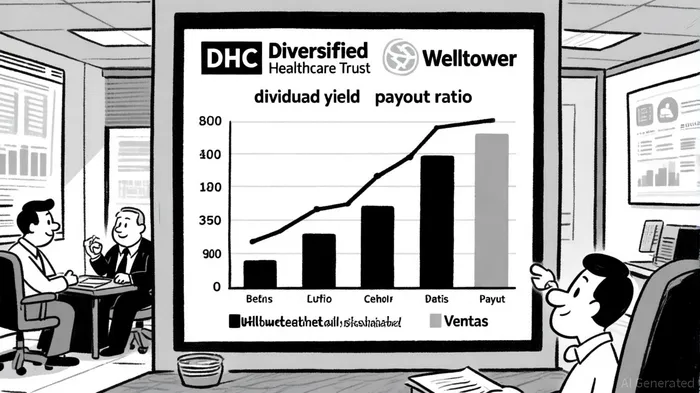





Comentarios
Aún no hay comentarios