
Evaluating DeFi Security Risks and Recovery Strategies in the Wake of the Yearn Finance $9M yETH Exploit
The DeFi ecosystem, once hailed as the future of finance, continues to grapple with the harsh realities of smart contract vulnerabilities. The recent $9 million exploit of YearnYFI-- Finance's yETH pool in November 2025 serves as a stark reminder of the risks inherent in decentralized systems. This incident, which involved the minting of 235 trillion yETH tokens and the subsequent draining of liquidity pools, underscores the urgent need for investors to adopt robust due diligence and risk mitigation strategies.
The Yearn FinanceYFI-- yETH Exploit: A Case Study in Smart Contract Vulnerabilities
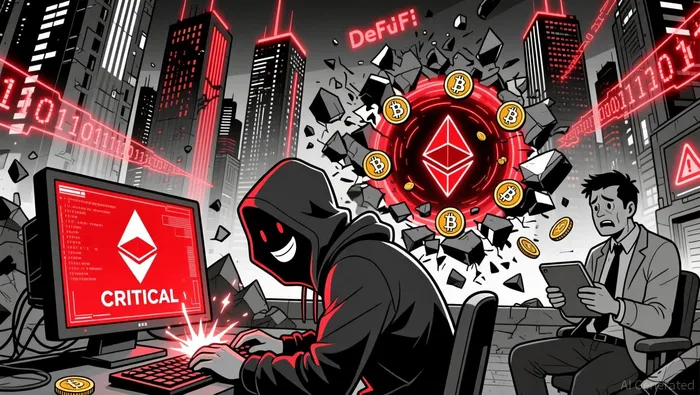
On November 30, 2025, an attacker exploited a critical flaw in Yearn Finance's yETH smart contract, enabling the creation of an infinite supply of yETH tokens. By deploying newly created smart contracts, the attacker bypassed safety checks and swapped the ill-gotten tokens for real assets like ETHETH-- and stETH in BalancerBAL-- and Curve pools. The exploit culminated in the theft of approximately $9 million in value, with 1,000 ETH (worth $3 million) funneled through the privacy mixer Tornado CashTORN-- to obscure the trail according to risk analysis.
Yearn Finance confirmed the breach was isolated to the legacy yETH contract, sparing its newer Vaults (V2 and V3) from damage. However, the incident exacerbated market volatility, with Ethereum's price dropping from $3,000 to $2,872 in a short span, triggering panic selling and liquidity pressures. This event also sparked a short-lived YFI price surge, attributed to short-covering amid initial panic.
Investor Due Diligence: Beyond the Hype
The yETH exploit highlights the importance of rigorous due diligence for DeFi investors. Here are key strategies to mitigate smart contract risks:
Diversification Across Protocols and Chains
Spreading investments across multiple protocols and blockchains reduces exposure to single-point failures. For instance, the attacker's focus on yETH left Yearn's Vaults untouched, emphasizing the value of compartmentalized risk.Prioritize Audited Protocols
Investors should favor protocols audited by reputable firms like CertiK or ChainSecurity. Yearn Finance's history of breaches-including a 2021 yDAI vault exploit and a 2023 treasury misconfiguration- demonstrates the cost of inadequate security measures.Leverage DeFi Insurance
Platforms like Nexus Mutual offer coverage against smart contract failures, albeit at a 2-5% annual premium. While insurance cannot prevent exploits, it can cushion financial losses, as seen in post-exploit recovery efforts.Real-Time Risk Monitoring Tools
Tools such as DeFi Safety, DeFiLlama, and Gauntlet provide real-time insights into protocol stability. These platforms could have flagged unusual activity in Yearn's yETH pool before the exploit escalated according to industry analysis.
Smart Contract Risk Mitigation: Technical and Operational Safeguards
Beyond investor actions, protocols must implement structural safeguards:
Multi-Signature Wallets and MPC Solutions
Institutional investors should use multi-sig wallets or multi-party computation (MPC) to prevent unauthorized transactions. The Enterprise EthereumETH-- Alliance (EEA) emphasizes the need for independent smart contract evaluators to avoid conflicts of interest.Automated Risk Mitigation Systems
Protocols should deploy tools that dynamically respond to market conditions. For example, automated liquidation mechanisms could have curtailed the attacker's ability to drain liquidity pools.
- Compliance Frameworks
Integrating KYC/AML procedures helps manage legal and reputational risks. While DeFi prides itself on pseudonymity, compliance can deter bad actors and ensure regulatory alignment.
Post-Exploit Recovery: Lessons for the Future
In the aftermath of an exploit, swift action is critical. Yearn Finance's response-isolating the breach and maintaining operational continuity-offers a blueprint for recovery. Investors should:
- Assess Damage and File Insurance Claims promptly.
- Reallocate Assets to protocols with stronger security track records.
- Advocate for Industry-Wide Standards, such as the EEA's risk assessment guidelines according to industry standards.
Conclusion: Building Resilience in a Fractured Ecosystem
The yETH exploit is a sobering chapter in DeFi's evolution. While the technology promises innovation, its vulnerabilities demand a mature approach to risk management. Investors must balance optimism with caution, prioritizing audits, diversification, and insurance. Protocols, in turn, must invest in robust security frameworks and transparency. As the DeFi space matures, resilience will be defined not by the absence of exploits, but by the speed and efficacy of recovery.






Comentarios
Aún no hay comentarios