
Evaluating AI Infrastructure Stocks: Why Nebius Outperforms CoreWeave Post-Q3 Earnings
CoreWeave: Growth at a Cost
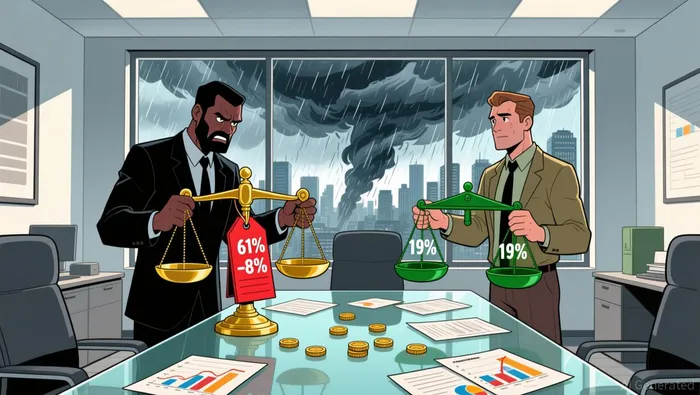
CoreWeave's Q3 2025 results reflect explosive revenue growth, driven by a $55.6 billion backlog and multi-year deals with Meta ($14.2 billion), OpenAI ($6.5 billion), and NVIDIA ($6.3 billion)CoreWeave Reports Strong Third Quarter 2025 Results. However, this growth comes at a steep price. The company reported a net loss of $110.1 million, with a net loss margin of -8%CoreWeave Reports Strong Third Quarter 2025 Results, a significant deterioration from the -62% margin in Q3 2024CoreWeave Achieves Impressive Q3 2025 Financial Results. Despite a robust adjusted EBITDA margin of 61%CoreWeave Reports Strong Third Quarter 2025 Results, the underlying operating income of $51.8 million (4% margin) reveals thin operational profitability.
The company's infrastructure expansion-adding 120 MW of active power to reach 590 MWCoreWeave Achieves Impressive Q3 2025 Financial Results-is impressive but raises questions about capital efficiency. CoreWeave's 2025 CapEx guidance was slashed by 40% to $12–$14 billion due to delivery delaysCoreWeave Earnings Call: 40% Reduction in This Year's Capital Expenditure Guidance Mainly Attributed to Delivery Delays; Prices for Older-Generation GPUs Remain Firm, yet it plans to double 2026 spending. This volatility in capital planning, coupled with a backlog concentrated in high-risk, long-term contracts, exposes investors to execution risks.
Nebius: Profitability and Strategic Discipline
Nebius Group, by contrast, demonstrated a more balanced approach. Its Q3 2025 revenue of $146 million-a 355% year-over-year increaseEarnings call transcript: Nebius Group reports strong Q3 2025 growth, stock rises-was accompanied by a core infrastructure business growing at 400% YoYEarnings call transcript: Nebius Group reports strong Q3 2025 growth, stock rises. Crucially, NebiusNBIS-- achieved an adjusted EBITDA margin of nearly 19%Earnings call transcript: Nebius Group reports strong Q3 2025 growth, stock rises, a stark contrast to CoreWeave's -8% net loss margin. This profitability is underpinned by strategic partnerships: a $3 billion, five-year deal with MetaEarnings call transcript: Nebius Group reports strong Q3 2025 growth, stock rises and a $17.4–$19.4 billion contract with MicrosoftEarnings call transcript: Nebius Group reports strong Q3 2025 growth, stock rises, which diversify revenue streams and reduce client concentration risks.
Nebius's capital allocation strategy further strengthens its case. The company raised 2025 CapEx guidance to $5 billionEarnings call transcript: Nebius Group reports strong Q3 2025 growth, stock rises, signaling confidence in scaling infrastructure while maintaining disciplined margins. Its AI cloud platforms, Aether and Nebius Token Factory, are positioned to capture long-term value in the AI-as-a-Service market. With a forecasted annualized run rate revenue of $7–$9 billion by 2026Earnings call transcript: Nebius Group reports strong Q3 2025 growth, stock rises, Nebius's trajectory suggests sustainable growth without sacrificing profitability.
Valuation and Risk Considerations
CoreWeave's valuation remains opaque, with no disclosed P/E ratio or enterprise value in its Q3 reportNebius Reports Bigger Q3 Net Income Loss, Announces Meta AI Deal. However, its $55.6 billion backlog-nearly double Q2's figureCoreWeave Earnings Call: 40% Reduction in This Year's Capital Expenditure Guidance Mainly Attributed to Delivery Delays; Prices for Older-Generation GPUs Remain Firm-raises concerns about contract sustainability. If demand for older-generation GPUs wanes or client commitments falter, the backlog could become a liability. Meanwhile, Nebius's stock price rose 1.68% in premarket trading post-earningsEarnings call transcript: Nebius Group reports strong Q3 2025 growth, stock rises, reflecting investor confidence in its scalable margins and diversified partnerships.
Nebius's strategic focus on profitability over aggressive expansion also mitigates risks. While CoreWeave's 2026 CapEx plans are ambitious, its 2025 guidance reduction due to vendor delaysCoreWeave Earnings Call: 40% Reduction in This Year's Capital Expenditure Guidance Mainly Attributed to Delivery Delays; Prices for Older-Generation GPUs Remain Firm highlights operational vulnerabilities. Nebius, by contrast, has shown agility in raising capital (via an ATM equity programNebius Reports Third Quarter 2025 Financial Results) and aligning CapEx with demand, reducing exposure to execution risks.
Conclusion: A Clearer Path to Long-Term Value
In the AI infrastructure arms race, Nebius Group emerges as the more compelling investment. Its ability to generate positive EBITDA margins, secure high-margin partnerships, and scale infrastructure profitably sets it apart from CoreWeave, which prioritizes revenue growth at the expense of profitability. While CoreWeave's $1.36 billion revenue is impressive, its persistent losses and valuation uncertainties make it a riskier bet. Investors seeking sustainable returns in the AI sector should favor Nebius's disciplined, margin-focused strategy.







Comentarios
Aún no hay comentarios