
EV Market Realities: Why Honda’s $15B Pause Signals a North American Investment Shift
The pause of Honda’s $15 billion electric vehicle (EV) and battery project in Ontario—a move rooted in slowing EV demand and punitive U.S. tariffs—is not merely a corporate hiccup. It’s a warning flare for investors overexposed to North American EV ventures. As geopolitical trade dynamics reshape the auto industry, projects reliant on Canada-U.S. trade stability now face existential risks. This article dissects the vulnerabilities and identifies where investors should pivot.
The Honda Pause: A Sector Bellwether
Honda’s decision to delay its Ontario EV plant by two years (pushing production start to 2030) exposes two critical realities:
1. EV Demand Lagging Projections: U.S. EV sales account for 7.5% of new vehicle purchases in early 2025—far below the 15–20% adoption rates many automakers assumed. Slower-than-expected consumer adoption has slashed projected returns on EV investments.
2. U.S. Tariffs as a Sword and Shield: The 25% tariff on non-U.S. content in vehicles, paired with expiring federal EV incentives, has created a “cost squeeze” for automakers. HondaHMC-- alone projects a $4.4 billion profit hit by 2026 due to these tariffs.
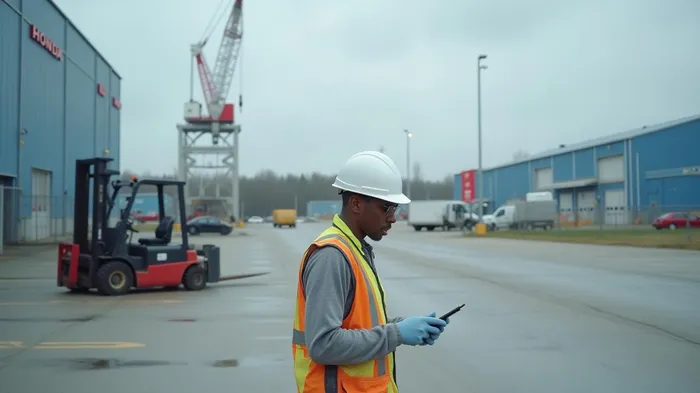
The pause also highlights a systemic flaw: overcapacity risks in North America. With GM, Ford, and Tesla already ramping up production, Honda’s delay may avert a near-term glut—but the broader sector remains vulnerable to projects that assumed rosy demand scenarios.
Trade Barriers: The New Supply Chain Landmine
The U.S.-Mexico-Canada Agreement (USMCA)’s rules of origin (ROOs) have turned regional trade into a compliance minefield. To avoid tariffs, automakers must source 75% of vehicle content from North America, including critical minerals like lithium and cobalt—materials rarely available in the region.
The result? A geopolitical supply chain arms race:
- Honda’s U.S. Shift: Already, Honda is relocating its Civic hybrid production from Mexico to Indiana to meet USMCA thresholds—a costly move but necessary to avoid tariffs.
- BMW’s Tariff-Efficient Play: BMW’s Spartanburg, SC plant, exporting SUVs to Europe, thrives under USMCA compliance. Its 11,000-worker facility avoids U.S. tariffs while skirting EU retaliation risks.
- Tesla’s Dilemma: Despite U.S. Gigafactories, Tesla’s reliance on Chinese-made batteries (non-compliant with USMCA steel/aluminum rules) leaves it exposed to tariffs.
Investment Risks: Overcapacity Meets Regulatory Whiplash
The combination of delayed projects and trade barriers creates a perfect storm for investors:
1. Overcapacity in the Pipeline: With GM’s $35B EV plan, Ford’s $23B investment, and Tesla’s Texas expansion, North America risks oversupply by 2028. Honda’s delay may buy time, but the sector’s capital intensity demands high demand to justify returns.
2. Regulatory Uncertainty: The 2026 USMCA review could tighten ROOs further, mandating North American sourcing for EV batteries—a near-impossibility today. Automakers unprepared for this shift face stranded assets.
Investor Playbook: Prioritize Tariff-Resistant Plays
To navigate this landscape, investors should:
1. Focus on USMCA-Compliant Production Footprints
Automakers with supply chains already meeting USMCA’s 75% regional content rule are insulated from tariffs and overcapacity risks:
- Recommended: BMW (Spartanburg plant), Ford (Michigan EV hub), Toyota (Texas/Mexico hybrids).
- Avoid: Firms relying on Canadian-U.S. cross-border supply chains (e.g., Honda’s paused Ontario project).
2. Diversify Beyond North America
Invest in automakers with global production flexibility:
- Tesla: Despite China ties, its U.S. Gigafactories and EU partnerships offer geographic hedging.
- Toyota: Its Mexico plants and Southeast Asia battery partnerships reduce reliance on any single region.
3. Short Overexposed EV Startups
Firms with no tariff-compliant production or access to critical minerals (e.g., lithium from South America) face a liquidity crunch as subsidies wane.
Conclusion: Act Now Before Overcapacity Hits
Honda’s pause is a clarion call: the EV sector’s golden age is over. Investors must abandon bullish assumptions about demand and tariffs. Instead, prioritize automakers with:
- USMCA-compliant production,
- Global supply chain diversification,
- Exposure to markets beyond Canada-U.S. trade tensions.
The window to pivot is narrowing. With overcapacity looming and trade rules tightening, investors who cling to North American EV projects tied to unstable trade deals risk becoming the next Honda.





Comentarios
Aún no hay comentarios