
Eurozone Deflation Dynamics: Navigating Recovery in a Downturn
The Eurozone's industrial producer prices declined by 0.6% in May 2025, marking the latest chapter in a broader deflationary narrative. While energy prices remain the primary driver of monthly volatility, sectors like non-durable consumer goods and capital goods are quietly defying the trend, offering clues about where recovery could take root. For investors, this divergence between sectors and countries presents a nuanced opportunity to position for resilience—and even outperform—as the European Central Bank (ECB) recalibrates its policy stance.
Energy's Drag vs. Consumer Goods' Resilience
The data underscores a stark divide: energy prices tumbled 2.1% month-on-month in May, extending a pattern of sharp swings since late 2022. This volatility is no surprise, as geopolitical risks and supply dynamics continue to shake global markets. However, non-durable consumer goods—a key pillar of everyday demand—have shown remarkable staying power. Prices for this sector rose 0.2% in May and 2.2% annually, outpacing all other categories.
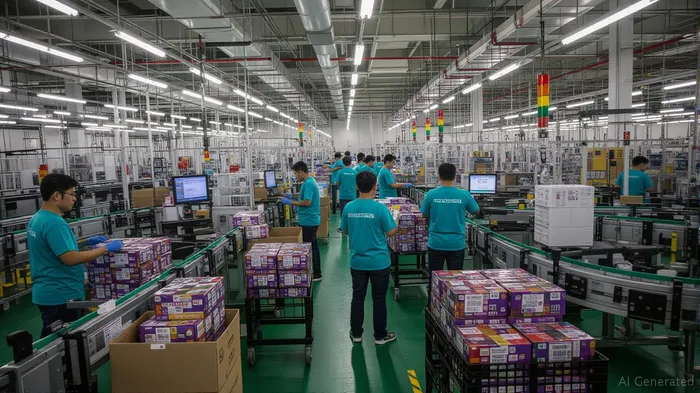
This divergence hints at a critical truth: deflation is not uniform. While energy's decline is weighing on headline metrics, consumer staples—driven by inelastic demand—remain a safe haven. For investors, this suggests opportunities in companies or ETFs exposed to food, beverages, and household products.
Country-Level Contrasts: Luxembourg's Stability vs. Slovakia's Struggles
Sectoral trends play out differently across Eurozone members, with Luxembourg and Slovakia serving as case studies:
Luxembourg: A Beacon of Stability
Luxembourg's industrial producer prices rose 0.1% in May, defying the euro area's broader decline. This resilience stems from:
- Non-durable consumer goods: Up 0.2% monthly and 2.2% annually.
- Capital goods: A 0.1% monthly increase, reflecting sustained investment in technology and infrastructure.
Annual growth of 2.9% in Luxembourg's total industrial prices—among the highest in the euro area—suggests a robust domestic economy. Investors might favor Luxembourgian equities in consumer staples or capital goods, or bonds with exposure to its stable fiscal policies.
Slovakia: Energy-Driven Decline, but Hidden Strengths
Slovakia's prices fell 0.6% month-on-month, dragged down by energy (-2.3%) and durable goods. Yet, its non-durable consumer goods sector grew 2.2% annually—a sign of underlying demand. This dichotomy creates a paradox: while energy's decline hurts headline figures, Slovakia's consumer sector could be primed for a rebound if energy prices stabilize.
Implications for ECB Policy and Investment Strategy
The ECB faces a dilemma: declining producer prices could signal deflation risks, yet core inflation remains sticky due to services. If the ECB softens its hawkish stance—through rate cuts or renewed quantitative easing—the resulting liquidity boost could favor:
1. Equities in non-durable consumer goods: Companies with pricing power and broad demand (e.g., UnileverUL-- equivalents in Europe).
2. Luxembourgian government bonds: A safe haven in a low-growth environment, benefiting from fiscal prudence.
3. Slovakia's consumer-focused firms: Undervalued stocks in sectors like food retailing or healthcare supplies.
Risks and Considerations
- Energy Rebound: A sudden spike in oil/gas prices could reverse deflationary trends, hurting equity valuations.
- ECB Inaction: If the ECB prioritizes inflation control over deflation fears, rates may stay elevated, penalizing bond-heavy portfolios.
- Sector Overconcentration: Overweighting consumer staples could backfire if demand weakens further.
Final Take: Position for Diversification
Investors should blend defensive and opportunistic bets:
- Short-Term: Shift toward non-cyclical sectors like healthcare and utilities.
- Medium-Term: Target Slovakia's undervalued consumer stocks and Luxembourg's stable equities.
- Hedging: Use ECB policy-sensitive bonds (e.g., Italian BTPs) as a barometer of sentiment.
The Eurozone's deflationary crossroads is a test of sectoral and regional resilience. Those who bet on consumer staples, fiscal stability, and ECB flexibility may find the next leg of growth in unlikely places.
Data sources: Eurostat's industrial producer price reports (May 2025), NACE Rev.2 sector classifications.





Comentarios
Aún no hay comentarios