
European Sectors to Watch Ahead of Supreme Court Tariff Ruling
The U.S. Supreme Court is set to rule on the legality of President Donald Trump's tariff regime, a decision expected as soon as Friday. The ruling could determine whether Trump's use of emergency powers to impose tariffs is unconstitutional. If the court invalidates the tariffs, it could lead to a significant shift in global trade dynamics and financial markets according to Bloomberg.
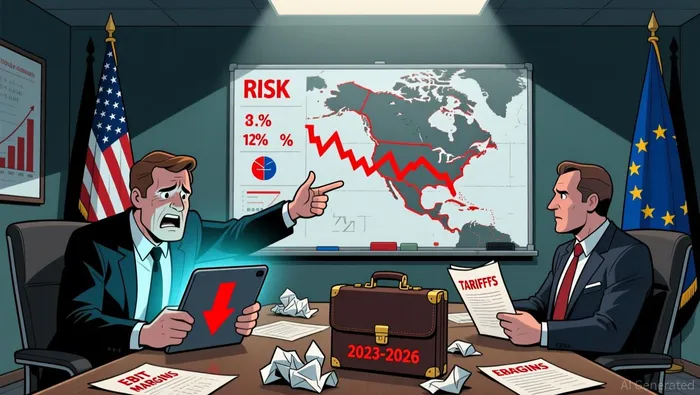
European stock investors are monitoring the potential fallout from the ruling, particularly for sectors exposed to U.S. trade policies. A 20% tariff on April 2 had already caused a significant drop in the Stoxx Europe 600 index, wiping over €1.7 trillion in market value. Although the tariff was later reduced to 15%, lingering uncertainty has weighed on European earnings.
Investors are also assessing the broader economic implications of the court's decision. CitigroupC-- and Goldman SachsGS-- analysts estimate that a 10% tariff on Europe could reduce earnings-per-share growth by 2–3 percentage points. Sectors like automotive, metals, and consumer goods are particularly vulnerable due to their exposure to U.S. levies according to Bloomberg.
How Will European Sectors React to the Ruling?
European automakers such as BMW and Mercedes-Benz are among the most exposed to U.S. tariffs. BarclaysBCS-- estimates that U.S. tariffs have been a 100 to 200 basis point EBIT margin burden for these firms in 2026. If the Supreme Court rules in favor of the Trump administration, these companies could face further margin pressures.
The metals and industrial sectors are also at risk. Commercial Metals, for example, has noted that the EU's Carbon Border Adjustment Mechanism (CBAM) and revised safeguard tariffs are likely to affect their European operations. These measures could delay the full benefits of CBAM credits but ultimately improve operational performance by the end of 2026.
What Are Analysts Watching Next?
Analysts are closely tracking the possibility of a U.S. backup plan should the Supreme Court rule against Trump. UniCredit suggests that uncertainty and delayed implementation of countermeasures could prolong market volatility even if tariffs are struck down. This would further complicate equity valuations and earnings visibility for European firms.
Pharmaceutical and consumer discretionary sectors are also under scrutiny. While these sectors have high U.S. sales exposure, analysts believe the impact of tariff policies on pharma companies is mitigated by existing agreements with the U.S. government. However, consumer goods and discretionary sectors may still face headwinds from ongoing trade uncertainty.
Investors are also watching for any administrative responses from the Trump administration. JPMorganJPM-- analysts suggest that a short-term universal tariff of 15% for 150 days could be introduced as a stopgap while the administration pursues sector-specific tariffs through other legal avenues.
The decision by the Supreme Court is expected to influence bond markets as well. A tariff reprieve could reduce U.S. dollar strength, steepen yield curves, and indirectly affect European sectors such as utilities and real estate, which are sensitive to interest rate changes according to Bloomberg.
Why This Matters for Investors
European equities have underperformed compared to the S&P 500 in 2025, with flat profit growth. Sectors like defense, luxury goods, and pharmaceuticals are in focus due to their high exposure to U.S. trade policies and global supply chains. A favorable ruling for the Trump administration could exacerbate these pressures, while an unfavorable outcome could offer short-term relief but leave long-term uncertainty.
Analysts from ING and Barclays emphasize that any relief from invalidated tariffs may be short-lived if the U.S. government seeks alternative legal grounds to impose similar measures. This could mean prolonged uncertainty for investors, especially in sectors like automotive and industrial manufacturing.
For now, investors remain cautious. The European defense sector has seen a rally due to transatlantic tensions, but this may reverse if the Supreme Court ruling introduces new clarity. The key takeaway is that European markets are bracing for a decision that could reshape trade dynamics, investor sentiment, and sector-specific earnings for months to come.





Comentarios
Aún no hay comentarios