
European Luxury Cruises: Navigating Post-Pandemic Growth Through Sustainability and Personalization
The European luxury cruise market is emerging as a beacon of resilience and innovation in the post-pandemic era, with operators leveraging sustainability, personalization, and demographic shifts to secure a dominant position in the global travel sector. By 2025, the global luxury cruise tourism market is valued at USD 7.7 billion, with projections indicating a meteoric rise to USD 24.29 billion by 2033-a compound annual growth rate (CAGR) of 13.61%, according to a Business Research Insights report Business Research Insights report. In Europe, the market is forecasted to expand from USD 2.1 billion in 2025 to USD 6.5 billion by 2034, driven by a 13.4% CAGR according to Dimension Market Research Dimension Market Research forecast. This growth is underpinned by a confluence of consumer demand for exclusive travel experiences, regulatory pressures to adopt greener practices, and technological advancements that redefine luxury at sea.
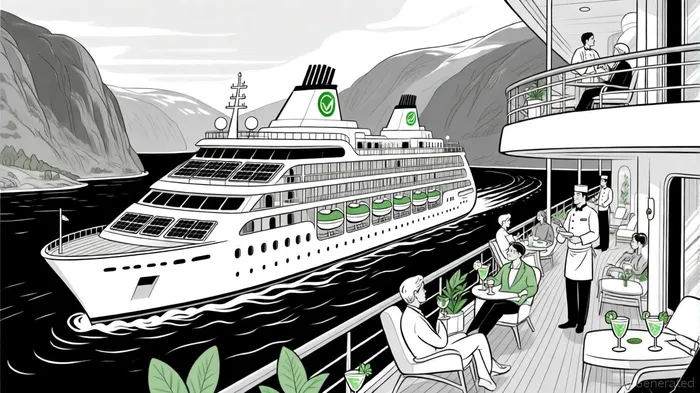
Strategic Rebranding: Sustainability as a Competitive Edge
European luxury cruise operators are redefining their value propositions by embedding sustainability into their core strategies. According to the World Luxury Chamber report World Luxury Chamber report, 80% of luxury travelers now prioritize responsible travel, prompting operators to invest in cleaner fuels (e.g., green methanol, bioLNG), zero-waste policies, and eco-excursions. For instance, major lines are adopting hybrid propulsion systems and energy-efficient technologies to align with EU environmental regulations, positioning themselves as leaders in the sustainable blue economy, as highlighted in Deloitte analysis Deloitte analysis. This shift is not merely regulatory compliance but a strategic differentiator: 73% of Millennials and Gen X travelers express interest in cruise vacations, with a strong preference for operators that demonstrate environmental stewardship, according to J.P. Morgan research J.P. Morgan research.
Personalization and Experiential Travel: Catering to Evolving Demographics
The post-pandemic traveler seeks more than opulent amenities-they demand hyperpersonalized, immersive experiences. European operators are responding by introducing AI-powered itinerary planners, wearable tech for seamless onboard navigation, and smart staterooms that adapt to passenger preferences, as highlighted in Cruise Industry Trends 2025 Cruise Industry Trends 2025. Themed cruises focused on wellness, culinary exploration, and cultural immersion are gaining traction, particularly among affluent, multi-generational families. For example, Royal Caribbean's Perfect Day at CocoCay and Carnival's Celebration Key exemplify how private destinations are being leveraged to create unique, shareable moments that drive repeat bookings, as discussed in Europe Luxury Cruise Forecasts Europe Luxury Cruise Forecasts.
Market Expansion: From Arctic Expeditions to River Cruising
Geographically, the European luxury cruise market is diversifying beyond traditional Mediterranean routes. Operators are capitalizing on the rising interest in remote and off-the-beaten-path destinations, such as Arctic and Antarctic expeditions, which offer exclusivity and adventure, according to Future Market Insights Future Market Insights. Simultaneously, river cruising is gaining popularity among older demographics, with smaller, eco-efficient ships providing access to culturally rich inland destinations like the Danube and Rhine, as noted in the World Luxury Chamber report. This dual strategy-combining grand, once-in-a-lifetime voyages with intimate, culturally immersive itineraries-ensures broad demographic appeal.
Financial Viability and Investment Potential
Despite challenges such as rising operational costs and geopolitical uncertainties, the sector's financial outlook remains robust. J.P. Morgan Research estimates that cruise travel will account for 3.8% of the $1.9 trillion global vacation market by 2028 (J.P. Morgan Research). For investors, the European luxury cruise market presents a compelling case: operators that integrate sustainability, leverage technology for personalization, and expand into niche markets are well-positioned to outperform broader industry trends.
Conclusion
The European luxury cruise industry is not merely recovering from the pandemic-it is reimagining itself for a future where sustainability, personalization, and exclusivity are non-negotiable. For investors, this transformation represents a golden opportunity to back operators that are pioneering the next frontier of travel. As the market continues to evolve, those who align with the values of today's discerning travelers-affluent, eco-conscious, and experience-driven-will dominate the high seas of tomorrow.







Comentarios
Aún no hay comentarios