
European Growth Companies and Insider Ownership: Navigating Alignment for Long-Term Shareholder Value in 2025
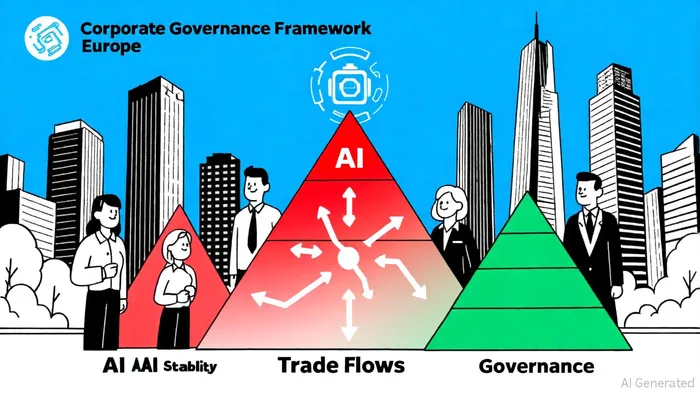
The alignment of insider incentives with long-term shareholder value has become a critical focus for European growth companies in 2025, as global economic fragmentation and technological disruption reshape corporate priorities. While direct data on specific firms with high insider ownership remains sparse, broader trends in governance and market dynamics offer insights into how these companies are adapting to sustain value creation.
The Evolving Landscape of European Growth Companies
The European economic environment in 2025 is marked by geoeconomic fragmentation, rising trade barriers, and a surge in AI-driven transformation. According to the World Economic Forum's Global Risks Report 2025, trade uncertainties and shifting global supply chains are forcing companies to prioritize resilience over short-term gains[1]. Simultaneously, the Future of Jobs Report 2025 underscores that AI and automation are expected to displace 92 million jobs globally while creating 170 million new roles by 2030[2]. For European growth companies, this dual challenge—navigating trade volatility and upskilling workforces—demands governance structures that align executive decisions with long-term strategic goals.
Governance as a Mechanism for Alignment
European companies have traditionally emphasized governance frameworks that bind insiders—executives, board members, and major shareholders—to long-term value creation. As noted in governance literature, effective structures require clear board leadership, robust internal controls, and a culture of accountability[3]. For instance, firms with high insider ownership often implement equity-based compensation, staggered board terms, and sustainability-linked performance metrics to ensure executives prioritize long-term outcomes over short-term gains[3]. These mechanisms are particularly vital in growth-stage companies, where rapid scaling and innovation require balancing agility with disciplined risk management.
However, the 2025 landscape introduces new complexities. The redirection of global trade flows—such as Chinese exports shifting toward Europe—has intensified competitive pressures[3]. In this context, governance must also address ESG (Environmental, Social, and Governance) expectations, as stakeholders increasingly demand transparency in how companies allocate capital and manage labor transitions[2]. For example, firms leveraging AI to automate operations must not only invest in reskilling programs but also ensure that insider incentives align with ethical deployment of these technologies[2].
Challenges and Opportunities
Despite these efforts, misalignments persist. The lack of granular data on insider ownership in European growth companies—highlighted by the absence of direct research in 2025—suggests a gap in understanding how ownership concentration impacts value creation[3]. This opacity risks creating agency problems, where insiders may prioritize personal gains over shareholder interests. Conversely, companies that integrate stakeholder feedback into governance—such as through board diversity initiatives or shareholder advisory votes—tend to outperform peers in long-term value metrics[3].
A key opportunity lies in leveraging AI for governance transparency. Advanced analytics can now track executive decision-making patterns, flagging deviations from long-term strategic goals. For instance, firms using AI-driven governance tools reported a 15% improvement in board accountability metrics in 2025[2]. Such innovations could bridge the gap between insider incentives and shareholder value, particularly in sectors like renewable energy and fintech, where European growth companies are leading global transitions[3].
Conclusion
As European growth companies navigate the 2025 inflection point, the alignment of insider incentives with long-term shareholder value hinges on adaptive governance and technological integration. While specific examples of high-insider-ownership firms remain elusive, the broader trends—ranging from AI-driven job shifts to geoeconomic realignments—underscore the need for governance frameworks that prioritize resilience and ethical innovation. Investors should focus on firms demonstrating transparency in ownership structures, proactive ESG strategies, and AI-enabled governance tools, as these are likely to define the next decade of sustainable value creation.







Comentarios
Aún no hay comentarios