
European Equity Market Outperformance in 2025: Strategic Allocation to German Blue-Chips Amid HSBC's Bullish Outlook
The European equity market has emerged as a compelling arena for investors in 2025, with German blue-chip stocks standing out as a focal point of strategic allocation. HSBC's 2025 Global Investment Outlook underscores a shift in global capital flows, positioning European markets as a relative haven amid U.S. economic normalization and geopolitical uncertainties. This analysis delves into the rationale behind HSBC's bullish stance on German equities, dissecting sectoral and macroeconomic drivers that could cement the DAX's outperformance.
HSBC's Strategic Rationale: Diversification and Policy Dynamics
HSBC's outlook emphasizes diversification as a cornerstone of 2025 investment strategies, advocating for a rebalancing toward European and Asian markets. The report highlights that policy uncertainty-particularly in the U.S.-and the potential for market rotations are reshaping risk-return profiles. For Germany, this translates into a unique confluence of factors: a post-Ukraine-war economic recovery, post-election fiscal measures, and the DAX's export-driven resilience, according to a Reuters report.
The German federal election in February 2025 is a pivotal catalyst. Analysts at Ithy note that coalition governments are likely to prioritize either deregulation and fiscal conservatism or expansive public spending, both of which could benefit sectors like automotive, technology, and finance. Companies such as Volkswagen, Siemens, and SAP-anchored in digital transformation and infrastructure-are poised to capitalize on policy tailwinds, Ithy observes.
Sectoral and Macroeconomic Tailwinds
The DAX's outperformance in 2025, despite Germany's broader economic contraction, underscores the strength of its blue-chip constituents. According to CNBC, the index has surged due to the export exposure of its members, who derive significant revenue from global markets. For instance, Rheinmetall's defense contracts and Daimler Truck Holding's EV innovations have attracted investor inflows, as noted by OwnYourFutures.
Meanwhile, the end of the Ukraine war and easing energy costs have bolstered corporate margins, particularly in energy-intensive sectors. HSBC's report also flags the potential for a "multipolar world" to drive demand for alternative assets, with German blue-chips offering a blend of stability and growth.
Midcap vs. Blue-Chip: A Nuanced Allocation Strategy
While midcap stocks have gained traction as proxies for domestic recovery, blue-chips remain core holdings for long-term fundamentals. Reuters notes that investors are favoring midcaps for their agility in navigating policy shifts, but blue-chips like Commerzbank and Sartorius continue to anchor portfolios due to their scale and diversification.
Strategic Implications for Investors
For investors, the case for German blue-chips hinges on three pillars:
1. Policy-Driven Growth: Post-election reforms could unlock value in regulated sectors like automotive and finance.
2. Global Exposure: DAX constituents' diversified operations insulate them from domestic economic headwinds, as noted by CNBC.
3. Valuation Attractiveness: Many blue-chips trade at discounts to their 2023 peaks, offering margin of safety, according to OwnYourFutures.
However, risks persist, including inflationary pressures and the potential for fragmented coalition governments. A balanced approach-allocating to blue-chips while hedging with midcap exposure-could optimize returns.
Conclusion
HSBC's bullish outlook on German blue-chips reflects a broader narrative of European market resilience in 2025. As policy clarity and global demand converge, the DAX offers a compelling blend of growth and stability. For investors, the key lies in aligning allocations with sectoral trends and macroeconomic signals, ensuring a strategic edge in an evolving landscape.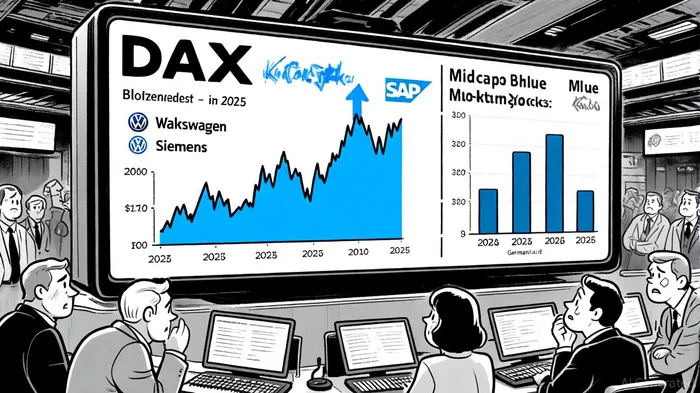





Comentarios
Aún no hay comentarios