
European Equities Under Pressure: Navigating Macroeconomic Headwinds and Sectoral Rotation Opportunities
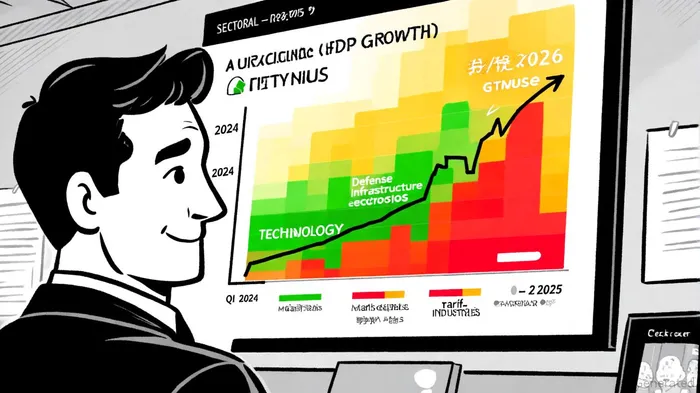
The European equity market is navigating a complex landscape in 2025, marked by macroeconomic fragility, trade tensions, and uneven sectoral performance. While the Eurozone's Q2 2025 GDP growth of 0.1% underscores the region's vulnerability—driven by contractions in Germany and Italy—policy-driven fiscal stimulus and strategic sectoral shifts are creating pockets of opportunity for investors. This analysis dissects the near-term headwinds and identifies actionable rotation opportunities, drawing on recent data and policy developments.
Macroeconomic Headwinds: A Fragile Foundation
The Eurozone's economic performance in Q2 2025 was the weakest since late 2023, with GDP growth decelerating to 0.1% from 0.6% in Q1[2]. This slowdown reflects divergent regional dynamics: while France and Spain posted robust growth of 0.3% and 0.7%, respectively, Germany and Italy contracted by 0.3% and 0.1%[2]. On a year-on-year basis, Eurozone GDP rose 1.5%, but this masks underlying fragility. The European Central Bank (ECB) has maintained a cautious stance, keeping key interest rates unchanged at 2.75% in September 2025, citing inflation's proximity to its 2% target and persistent trade uncertainties[4].
Inflation, though easing, remains a concern. The Harmonized Index of Consumer Prices (HICP) is projected at 2.2% for Q2 2025[2], with the ECB forecasting an average of 2.1% for 2025 and 1.7% for 2026[4]. However, trade tensions—particularly U.S. tariffs on EU goods—have introduced volatility. The average effective tariff rate on EU exports now stands at 11%, with retaliatory measures looming if a trade framework is not finalized[2]. These uncertainties have dampened business and consumer confidence, compounding the ECB's challenge of balancing inflation control with growth support.
Sectoral Rotation: Sovereignty-Driven Opportunities
Amid these headwinds, sectoral rotation is emerging as a critical strategy. European equities trade at a 5% discount to fair value estimates[1], presenting a compelling entry point for investors targeting long-term re-rating potential. The most compelling opportunities lie in sectors aligned with the EU's strategic priorities: capital goods, defense, infrastructure, and technology.
1. Defense and Infrastructure: Fiscal Stimulus Catalysts
The EU's Readiness EU package—a €800 billion initiative—aims to bolster industrial sovereignty and mitigate trade tensions[1]. Germany's €500 billion infrastructure fund, coupled with relaxed fiscal rules, is projected to add 1% to German GDP and 0.4% to Eurozone GDP by 2026[3]. These measures are directly boosting defense and infrastructure sectors. For instance, German defense spending, driven by NATO's 5% GDP target by 2035, is expected to deliver 2% annual EPS growth[1]. Similarly, infrastructure projects are set to add 1% annual EPS growth, with mid-cap industrials and materials firms benefiting from domestic demand surges[4].
2. Technology and Capital Goods: Sovereignty and Innovation
Structural reforms to reduce strategic dependencies—such as increased investment in semiconductors, green energy, and AI—are fueling growth in technology and capital goods. The EU's regulatory reforms, including the Critical Raw Materials Act and the Chips Act, are creating a favorable environment for domestic tech firms[1]. These sectors are also gaining from monetary and fiscal stimulus, with European Central Bank projections suggesting a 12% earnings acceleration in 2026[1].
3. Materials and Tariff-Exposed Sectors: Navigating Challenges
Conversely, the materials sector faces headwinds from U.S. tariffs on steel, aluminum, and chemicals. The 25% Section 232 tariffs on steel and aluminum have raised input costs for European manufacturers, particularly in construction and automotive industries[1]. While the July 2025 U.S.-EU trade framework agreement offers some relief—committing to reduce tariffs on automotive products—it remains unimplemented[4]. Investors should avoid overexposure to tariff-sensitive sectors and instead focus on firms with diversified supply chains or domestic production capabilities.
Strategic Implications for Investors
The current environment demands a nuanced approach. While macroeconomic risks persist, the ECB's data-dependent policy and the EU's fiscal stimulus are creating a floor for equity valuations. The MSCI Europe index's 16% rebound from April lows[1] suggests market resilience, but volatility is likely to continue until trade tensions abate.
For investors, the key is to overweight sectors aligned with sovereignty and innovation while hedging against trade-related risks. Defense and infrastructure equities, supported by Germany's fiscal boost and EU-wide initiatives, offer both defensive qualities and growth potential. Meanwhile, technology and capital goods are positioned to benefit from long-term structural trends. Conversely, materials and tariff-exposed industries require caution, given their sensitivity to geopolitical shifts.
Conclusion
European equities remain under pressure from macroeconomic and trade-related headwinds, but the landscape is not without opportunity. By leveraging sectoral rotation strategies—focusing on defense, infrastructure, and technology—investors can capitalize on policy-driven growth while mitigating exposure to vulnerable industries. As the ECB and EU governments continue to navigate this complex environment, a disciplined, data-informed approach will be essential for unlocking value in the coming quarters.







Comentarios
Aún no hay comentarios