
European Energy Infrastructure Investment in Central America: Strategic Opportunities in Grid Modernization and Regional Integration
Strategic Opportunities in Grid Modernization
Central America's energy systems face mounting pressure from rising industrial demand, particularly in sectors like data centers, where next-generation AI operations require scalable, reliable power solutions. The EIB's investment aims to alleviate grid reliability challenges by financing upgrades to transmission infrastructure and promoting modular generation and microgrid systems. For instance, the development of the second circuit of the Central American Electrical Interconnection System (SIEPAC) is a priority, as it will enhance redundancy and reduce the risk of outages, according to the European Commission's Global Gateway initiative.
A key innovation in this context is the integration of advanced technologies for grid monitoring and maintenance. While not specific to Central America, global trends-such as Entergy's use of drones and AI-driven predictive maintenance-highlight the potential for similar solutions to improve operational efficiency in the region. By adopting these tools, Central American utilities can transition from reactive to condition-based maintenance, minimizing downtime and extending infrastructure lifespans, as the EIB press release notes.
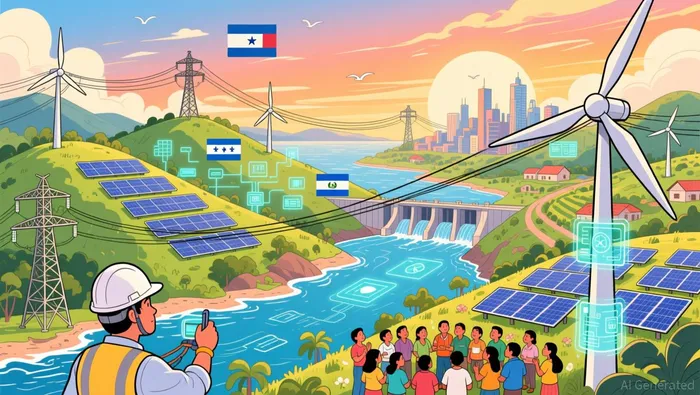
Regional Integration and the Central American Regional Electricity Market (MER)
The EIB's funding also underscores the EU's commitment to strengthening the Central American Regional Electricity Market (MER), a framework designed to facilitate cross-border electricity trade. As of 2025, the MER requires governance and regulatory reforms, including the establishment of an auxiliary services market and energy storage regulations, to ensure seamless integration of renewable energy sources, as noted in the EIB's 2025 press release. The EIB's support for these reforms will not only enhance energy security but also create opportunities for European firms specializing in grid-scale storage and smart grid technologies.
However, challenges persist. Bottlenecks in grid connection processes and rising interconnection costs have slowed renewable energy deployment, creating a backlog of project proposals. The EIB's investment could address these issues by funding transmission upgrades and streamlining regulatory frameworks, thereby accelerating the region's decarbonization trajectory, as the European Commission's Global Gateway initiative suggests.
Conclusion: A Win-Win for Europe and Central America
The EIB's €1 billion initiative represents a calculated bet on Central America's energy future. For European investors, the region offers a unique combination of high-impact climate action opportunities and growing markets for clean energy technologies. For Central American nations, the funding provides a lifeline to modernize aging infrastructure and foster regional cooperation. As the MER evolves, cross-border energy trade could become a cornerstone of economic integration, further solidifying the strategic value of this investment.







Comentarios
Aún no hay comentarios