
European Defense Tech Stocks: A Strategic Play on Geopolitical Shifts and Industrial Renaissance
The geopolitical landscape in Europe has undergone a seismic shift since the Russia-Ukraine war, catalyzing a defense spending boom that is reshaping the continent's industrial and strategic priorities. As NATO members pivot toward greater self-reliance and the European Union launches ambitious rearmament initiatives, defense technology stocks are emerging as a compelling investment opportunity. This analysis explores the drivers of this transformation, highlights key beneficiaries, and evaluates the long-term potential of the sector.
A Surge in Defense Spending: From Lagging to Leading
According to a report by the Stockholm International Peace Research Institute (SIPRI), European military expenditure surged by 17% in 2024, reaching $693 billion, driven by urgent modernization needs and geopolitical uncertainty[3]. Germany and Poland exemplify this trend, with Germany's defense budget rising by 28% to $88.5 billion and Poland allocating 4.2% of GDP—$38.0 billion—to defense[3]. These increases align with NATO's 2025 Summit pledge to raise spending to 5% of GDP by 2035[2].
However, higher budgets alone are insufficient. Decades of underinvestment have left European defense industries fragmented and reliant on foreign suppliers. The solution lies in joint procurement and industrial innovation, as emphasized by European Commission President Ursula von der Leyen[3]. This shift creates a fertile ground for defense technology firms capable of delivering scalable, interoperable solutions.
Key Players and Breakthrough Technologies
Several European defense technology companies are capitalizing on this renaissance, offering products that address critical capability gaps.
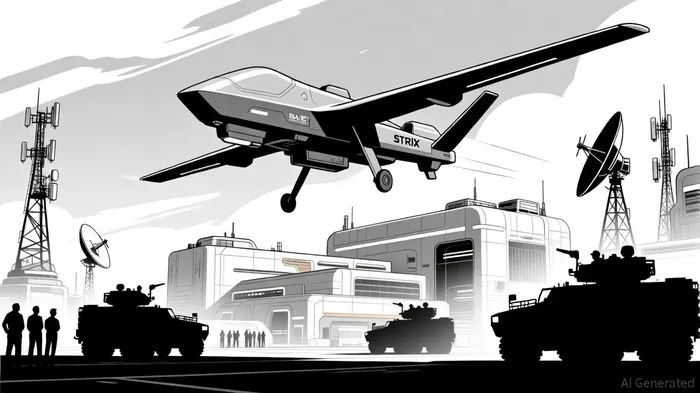
BAE Systems (UK): The company's attritable STRIX drone and Next Generation Adaptable Ammunition (NGAA) are designed to reduce costs and enhance flexibility in modern warfare[1]. STRIX, a low-cost, high-capability unmanned aerial vehicle, is already in advanced trials with NATO partners, while NGAA's modular design allows rapid adaptation to evolving threats[1].
Rheinmetall (Germany): A leader in armored vehicles and air defense, Rheinmetall's Panther KF51 main battle tank and SkyMaster radar systems are central to Germany's €100 billion rearmament plan[1]. The firm's focus on autonomous systems and AI-driven targeting further positions it to benefit from the EU's push for technological sovereignty[3].
Thales (France): Thales' 70mm Rocket System and SEACURE underwater warfare program are critical to the EU's air and missile defense priorities[1]. The company's expertise in digital identity and cyber security also aligns with the ReArm Europe plan's emphasis on hybrid warfare preparedness[3].
Leonardo (Italy): As a key partner in the Global Combat Air Program (GCAP), Leonardo's involvement in next-generation fighter jet development—alongside BAE Systems and Mitsubishi—highlights its strategic role in reshaping European air superiority[1].
The ReArm Europe Plan: A Catalyst for Collaboration
The EU's ReArm Europe initiative, a €800 billion mobilization plan, is accelerating joint procurement and industrial integration. By prioritizing domains such as drones, artillery, and cyber capabilities, the plan aims to reduce duplication and enhance interoperability among member states[3]. For example, the Security Action for Europe (SAFE) Instrument provides up to €150 billion in loans to fund collaborative projects, directly benefiting firms like Saab (Gripen fighter jets) and Airbus (Future Combat Air System)[1].
This structured approach not only addresses immediate operational needs but also fosters long-term industrial resilience. As noted by Goldman Sachs, the shift from fragmented national programs to pan-European initiatives could unlock efficiency gains of up to 30% in procurement costs[2].
Challenges and Considerations
While the outlook is optimistic, structural challenges remain. European defense industries must overcome legacy issues such as bureaucratic inertia and limited economies of scale. Additionally, geopolitical tensions with the U.S. over defense spending and supply chain dependencies could introduce volatility. Investors should monitor progress on the ReArm Europe plan and the pace of industrial consolidation, as these factors will determine the sector's long-term viability.
Conclusion: A Strategic Inflection Point
The convergence of geopolitical urgency, policy reforms, and industrial innovation is creating a unique inflection point for European defense technology stocks. Companies like BAE Systems, Rheinmetall, and Thales are not only addressing immediate security needs but also positioning themselves as pillars of Europe's strategic autonomy. For investors, this sector offers a compelling blend of growth potential and geopolitical tailwinds—provided they navigate the challenges of integration and execution.







Comentarios
Aún no hay comentarios