
European Defense Spending Surge: Geopolitical Tensions Reshape Investment Landscapes
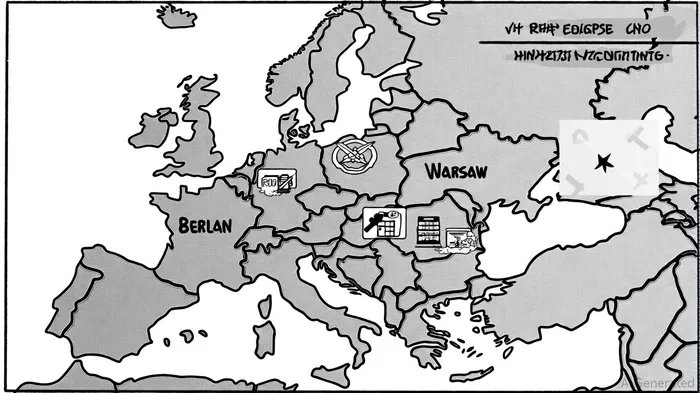
The geopolitical tremors rippling across Eastern Europe since Russia's 2022 invasion of Ukraine have ignited a seismic shift in defense spending patterns, transforming the continent into a hotbed of investment opportunities. From Poland's 31% surge in defense budgets to Germany's historic $88.5 billion allocation, Europe's military expenditures have surged to $693 billion in 2024—17% of the global total—marking a 11.7% real-term increase compared to 2023 [1]. This spending spree is not merely a reaction to immediate threats but a strategic recalibration of defense priorities, with profound implications for global security and markets.
Defense Spending: A New Era of Prioritization
The war in Ukraine has shattered decades of complacency. Eastern European nations, once content with post-Cold War austerity, are now racing to modernize. Poland, for instance, has committed 4.2% of GDP to defense—a level not seen since the 1980s—while Germany's 28% budget jump has propelled it to the fourth-largest global military spender [2]. These figures reflect a broader NATO trend: 18 members now meet or exceed the 2% GDP defense target, up from just three a decade ago [3].
The focus of this spending is shifting from traditional platforms to cutting-edge capabilities. Central and Eastern Europe are prioritizing uncrewed systems, air defense, and cyberCYBER-- resilience, while the EU's Readiness 2030 package and ReArm EU initiative aim to pool resources for joint procurement of advanced technologies [4]. This pivot is not just about quantity but quality—Europeans are no longer satisfied with patching gaps; they seek to close them with innovation.
Investment Opportunities: Where to Allocate Capital
The defense industrial base is the most obvious beneficiary. European defense stocks have outperformed broader markets in 2025, with Airbus, BAE Systems, and Leonardo SpA leading the charge. Airbus's Defence and Space division, for example, has secured record orders for its Future Combat Air System (FCAS) program, while BAE's involvement in the AUKUS submarine deal and Global Combat Air Programme (GCAP) underscores its strategic relevance [5].
Yet the most compelling opportunities lie in emerging technologies. The EU's ReArm Europe Plan—a €800 billion initiative—targets AI, quantum computing, and cybersecurity, with the European Defence Fund (EDF) allocating €8 billion to cross-border R&D projects [6]. Startups specializing in AI-powered battlefield analytics, quantum key distribution (QKD) for secure communications, and autonomous drones are attracting venture capital at unprecedented rates. In 2024 alone, European defense startups raised $5.2 billion—a 30% jump in two years [7].
Market Implications: A Fractured but Resilient Landscape
The surge in European defense spending is reshaping global arms trade dynamics. While the U.S. remains the dominant supplier (64% of NATO members' procurement in 2024), the EU's push for strategic autonomy is driving domestic production. Germany and France are consolidating their defense industries, while Poland and Sweden are investing in sovereign capabilities [8]. This shift could reduce U.S. dominance in the long term but also create bottlenecks due to Europe's fragmented industrial base.
Non-European contractors face a more constrained environment. The EU's proposed 65% local content rules for simpler defense products and stricter substitution thresholds for complex systems are effectively sidelining non-EU firms [9]. U.S. and U.K. companies, though excluded from EU defense loans, may still collaborate through joint ventures or memorandums of understanding, mitigating some of the exclusion [10].
Global Security and Market Effects
The implications extend beyond Europe. As the continent ramps up its defense capabilities, it is likely to export its military technologies and expertise, creating new markets in Africa, the Middle East, and Southeast Asia. This could disrupt the traditional U.S.-led arms trade and foster a more multipolar defense ecosystem.
For investors, the key is to balance short-term volatility with long-term resilience. While structural challenges—such as underinvestment in R&D and regulatory fragmentation—persist, the strategic imperative for European self-reliance is here to stay. The NATO Summit's 2035 5% GDP target and the EU's fiscal flexibility mechanisms suggest this spending surge is not a temporary spike but a generational shift [11].
Conclusion
The war in Ukraine has catalyzed a defense spending renaissance in Europe, driven by geopolitical urgency and a desire for strategic autonomy. For investors, this represents a unique window to capitalize on both established defense contractors and disruptive tech startups. However, success requires navigating a complex landscape of regulatory hurdles, industrial fragmentation, and shifting alliances. As Europe arms itself for an uncertain future, the markets that align with its vision for technological sovereignty—and its willingness to fund it—stand to reap the greatest rewards.







Comentarios
Aún no hay comentarios