
European Carmaker Shares Plummet as Trump Imposes Tariffs
Generado por agente de IATheodore Quinn
lunes, 3 de febrero de 2025, 3:40 am ET1 min de lectura
STLA--

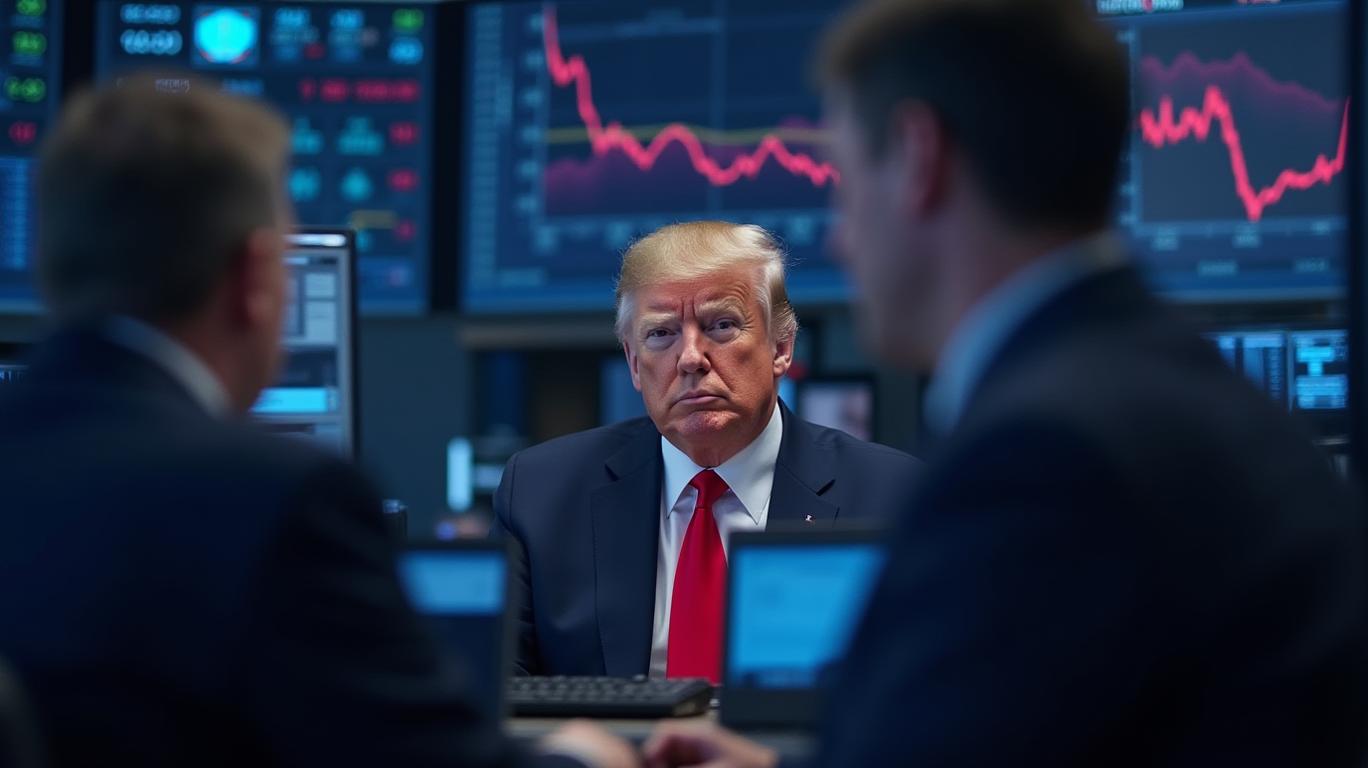
The U.S. President-elect Donald Trump's recent tariff announcements have sent shockwaves through the global automotive industry, with European carmakers bearing the brunt of the impact. Shares in some of the biggest European carmakers slumped on Monday, following Trump's imposition of new tariffs on goods from Mexico and Canada, and a 10% tariff on imports from China. Volkswagen, BMW, Porsche, Volvo Cars, Stellantis, and truckmaker Daimler Truck all fell between around 5% and 6%. French car parts supplier Valeo slumped 8%.
The tariffs, due to take effect at 12:01 a.m. ET (0501 GMT) on Tuesday, have raised concerns over possible duties on EU imports too. Analysts at investment bank Stifel estimated that around 8 billion euros ($8.18 billion) of VW's revenues are impacted by tariffs, which could lead to a 12% hit to its 2025 EBIT. Stellantis, meanwhile, could see around 16 billion euros of its revenues at risk, potentially leading to a 40% impact on its 2025 EBIT.
Volkswagen said on Sunday it was counting on talks to avoid trade conflict. However, the uncertainty surrounding the potential impact of these tariffs on European carmakers' earnings has led to a significant sell-off in their shares. The broader European auto sector fell 4.1% to more than two-week lows, leading losses among other sectoral indices on wider Europe's STOXX 600, which slipped 1.5%.
The potential retaliatory measures by the EU and other countries could further exacerbate the situation, potentially leading to a global trade war. European carmakers may consider renegotiating their supply chains to reduce their exposure to tariffs, investing in U.S. production, or lobbying for trade agreements to maintain their competitive edge. American and Asian carmakers, on the other hand, may benefit from reduced competition in the U.S. market and could choose to invest in increasing their production capacity in the U.S. or diversify their supply chains to avoid tariffs.
As the situation unfolds, investors should closely monitor the developments and assess the potential impact on their portfolios. The volatile nature of the market, coupled with the uncertainty surrounding the tariffs, may present both risks and opportunities for investors. By staying informed and maintaining a balanced view, investors can make strategic decisions to navigate the challenging landscape ahead.
VALE--
The U.S. President-elect Donald Trump's recent tariff announcements have sent shockwaves through the global automotive industry, with European carmakers bearing the brunt of the impact. Shares in some of the biggest European carmakers slumped on Monday, following Trump's imposition of new tariffs on goods from Mexico and Canada, and a 10% tariff on imports from China. Volkswagen, BMW, Porsche, Volvo Cars, Stellantis, and truckmaker Daimler Truck all fell between around 5% and 6%. French car parts supplier Valeo slumped 8%.
The tariffs, due to take effect at 12:01 a.m. ET (0501 GMT) on Tuesday, have raised concerns over possible duties on EU imports too. Analysts at investment bank Stifel estimated that around 8 billion euros ($8.18 billion) of VW's revenues are impacted by tariffs, which could lead to a 12% hit to its 2025 EBIT. Stellantis, meanwhile, could see around 16 billion euros of its revenues at risk, potentially leading to a 40% impact on its 2025 EBIT.
Volkswagen said on Sunday it was counting on talks to avoid trade conflict. However, the uncertainty surrounding the potential impact of these tariffs on European carmakers' earnings has led to a significant sell-off in their shares. The broader European auto sector fell 4.1% to more than two-week lows, leading losses among other sectoral indices on wider Europe's STOXX 600, which slipped 1.5%.
The potential retaliatory measures by the EU and other countries could further exacerbate the situation, potentially leading to a global trade war. European carmakers may consider renegotiating their supply chains to reduce their exposure to tariffs, investing in U.S. production, or lobbying for trade agreements to maintain their competitive edge. American and Asian carmakers, on the other hand, may benefit from reduced competition in the U.S. market and could choose to invest in increasing their production capacity in the U.S. or diversify their supply chains to avoid tariffs.
As the situation unfolds, investors should closely monitor the developments and assess the potential impact on their portfolios. The volatile nature of the market, coupled with the uncertainty surrounding the tariffs, may present both risks and opportunities for investors. By staying informed and maintaining a balanced view, investors can make strategic decisions to navigate the challenging landscape ahead.

Divulgación editorial y transparencia de la IA: Ainvest News utiliza tecnología avanzada de Modelos de Lenguaje Largo (LLM) para sintetizar y analizar datos de mercado en tiempo real. Para garantizar los más altos estándares de integridad, cada artículo se somete a un riguroso proceso de verificación con participación humana.
Mientras la IA asiste en el procesamiento de datos y la redacción inicial, un miembro editorial profesional de Ainvest revisa, verifica y aprueba de forma independiente todo el contenido para garantizar su precisión y cumplimiento con los estándares editoriales de Ainvest Fintech Inc. Esta supervisión humana está diseñada para mitigar las alucinaciones de la IA y garantizar el contexto financiero.
Advertencia sobre inversiones: Este contenido se proporciona únicamente con fines informativos y no constituye asesoramiento profesional de inversión, legal o financiero. Los mercados conllevan riesgos inherentes. Se recomienda a los usuarios que realicen una investigación independiente o consulten a un asesor financiero certificado antes de tomar cualquier decisión. Ainvest Fintech Inc. se exime de toda responsabilidad por las acciones tomadas con base en esta información. ¿Encontró un error? Reportar un problema


SOBRE NOSOTROS
Nuestra historiaAutores de noticiasBase de conocimientosPolítica de privacidadTérmino de usoDescargo de responsabilidad de corretaje de tercerosTérminos de uso de AIMEDivulgaciones de riesgos de AInvest AICarrerasCONTÁCTENOS
Email: support@ainvest.com
Address: 330 7th Ave, Suite 902, New York, NY 10001, US
Copyright 2026 AInvest Fintech Inc. All rights reserved.


Comentarios
Aún no hay comentarios