
European Bond Market Positioning: Tactical Reallocation Opportunities Amid Fed Rate Cut Outlook
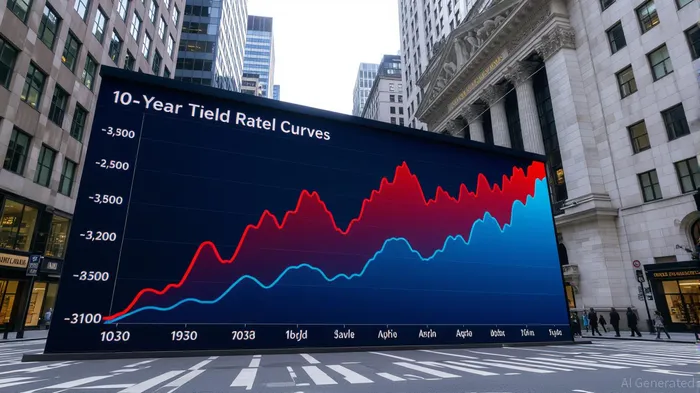
The European bond market is undergoing a strategic reallocation of capital as investors anticipate the U.S. Federal Reserve's rate cuts in Q3 2025. With the Fed poised to deliver a 25 basis point (bps) reduction in September and December 2025, followed by further easing in 2026, the yield curve dynamics and cross-border capital flows are reshaping fixed-income strategies[1]. This shift creates tactical opportunities for European investors to capitalize on divergent monetary policies, fiscal stimulus, and sector-specific resilience.
Fed Easing and the Yield Curve Steepening
The Fed's anticipated rate cuts, driven by a cooling labor market and political pressures, have already triggered a reassessment of U.S. bond yields. As of September 2025, the terminal rate is projected to reach 3.50% by mid-2026, creating a steeper yield curve compared to the European Central Bank's (ECB) more cautious approach[2]. European investors are increasingly favoring longer-duration bonds, particularly 10-year maturities, to lock in higher yields before the Fed's easing cycle fully materializes[3]. This trend is evident in the outflows from short-term instruments and inflows into intermediate and long-term European government bonds, as highlighted by a Reuters analysis[4].
ECB's Tightening Phase and Tactical Opportunities
While the ECB is nearing the end of its easing cycle, with a final 25 bps cut expected in September 2025 to bring the deposit rate to 1.75%, its subsequent pause and potential rate hikes in late 2026 contrast sharply with the Fed's trajectory[5]. This policy divergence amplifies the appeal of European bonds, particularly core government securities, which offer a balance of resilience and income potential. According to a BNP Paribas report, intermediate maturities (3–7 years) are gaining traction as investors seek to hedge against geopolitical uncertainties while capturing higher yields[6].
The UK's bond market, however, remains a wildcard. Political and fiscal volatility have driven gilts to elevated yields, making them an attractive option for risk-tolerant investors. A LSEG analysis notes that UK government bonds could outperform if the Bank of England follows through on its rate-cut projections, despite near-term uncertainties.
Corporate Credit and Sectoral Diversification
European investment-grade corporate bonds are emerging as a compelling asset class. Tight spreads and strong investor flows from money market funds have created a favorable environment, particularly for companies with manageable leverage and robust cash buffers. The German government's €500 billion infrastructure fund and increased defense spending are further bolstering corporate credit fundamentals, with AllianceBernsteinAFB-- highlighting the potential for GDP growth-driven returns by 2026.
High-yield markets, while more cautious, present opportunities for select sectors. With starting yields at 5.75%, the risk-reward profile is compelling if macroeconomic stability holds. However, external risks—such as U.S. tariff proposals—remain a drag on vulnerable sectors like automotive and construction.
Tactical Reallocation Strategies
- Duration Extension: Investors should extend duration in European government bonds to capitalize on the expected Fed easing and the ECB's tightening pause.
- Sector Rotation: Shift allocations toward investment-grade corporate bonds and UK gilts, which offer higher yields amid policy divergence.
- Geopolitical Hedging: Diversify across sectors and regions to mitigate risks from U.S. tariffs and fiscal shifts.
Conclusion
The European bond market's positioning ahead of the Fed's rate cuts underscores a strategic inflection pointIPCX--. By leveraging policy divergence, fiscal stimulus, and sectoral resilience, investors can reallocate capital to capture both income and capital appreciation. However, vigilance is required to navigate geopolitical and macroeconomic headwinds, ensuring a balanced approach to risk and reward.







Comentarios
Aún no hay comentarios