
The European Blockchain Industry's Talent Crisis and Path to Recovery
The European blockchain industry is at a crossroads. Despite its early promise as a global leader in decentralized innovation, the sector is grappling with a severe talent crisis. According to a 2023 McKinsey survey of 40 executives, only 16% felt confident in their access to technology talent, while 60% cited skills shortages as a key barrier to digital transformation. By 2025, the situation has worsened: blockchain-related job postings in Europe have plummeted by 90% since 2022, dropping from over 100,000 to just 10,000, according to a CryptoNews press release. This collapse is driven by high energy costs, regulatory complexity, and a lack of venture capital compared to the U.S. and Asia, as noted in an IT Experts Europe analysis.
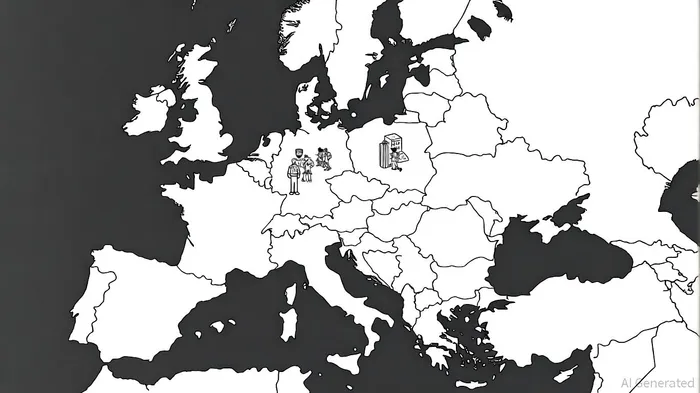
Yet, the crisis is not insurmountable. Strategic investments in workforce development and innovation hubs are emerging as critical pathways to recovery. The European Union has allocated €5 billion for the 2025 Erasmus+ call, with initiatives like the CHAISE project aiming to bridge blockchain skill gaps through vocational training and open online courses. Meanwhile, cities like Berlin and Amsterdam are leveraging regulatory clarity, startup-friendly policies, and global talent pipelines to rebuild the sector.
The Talent Gap: A Systemic Challenge
The European blockchain workforce faces three interlocking challenges: shortages of skilled professionals, regional disparities, and a shrinking talent pool.
Workforce Shortages: Over 500,000 tech jobs remain unfilled in Europe, with blockchain-specific roles particularly scarce, the McKinsey survey found. The sector's decline is stark: in 2025, only 10,000 blockchain-related jobs exist, down from 100,000 in 2022, according to the CryptoNews press release. This contraction is attributed to high compliance costs, regulatory uncertainty, and a lack of venture capital-factors that have driven talent abroad, as discussed by IT Experts Europe.
Regional Disparities: Innovation is concentrated in hubs like Germany, the UK, and Italy, while peripheral regions lag. The EU accounts for just 7% of global equity investments in blockchain, compared to 80% for the U.S. and China combined, according to the IT Experts Europe analysis. For example, Berlin hosts 81 blockchain companies, including Matter Labs (which raised $458 million) and Centrifuge, while smaller cities struggle to attract even basic infrastructure.
A Shrinking Talent Pool: The European Commission's AI Continent Action Plan highlights a widening gap between technologically advanced regions and those falling behind, a trend IT Experts Europe has also documented. Without investment, this divide could deepen, with peripheral areas losing access to blockchain-driven economic opportunities.
Strategic Investments: Building a Talent Pipeline
To reverse this trend, the EU and regional hubs are prioritizing education, reskilling, and regulatory alignment.
BlockchainED and CHAISE: Under the Erasmus+ program, the CHAISE project is developing a 5-semester vocational training program and a blockchain specialist occupational profile to standardize skills. While exact funding amounts for 2025 remain undisclosed, the €5 billion Erasmus+ budget underscores the EU's commitment to digital education.
Horizon Europe and AI/Blockchain Funds: The EU has allocated €180 million for blockchain research under Horizon 2020 and plans to increase this under Horizon Europe, according to the EU's blockchain funding page. The AI/Blockchain Investment Fund, aiming to leverage €500 million in the first phase, is another key player, supporting startups in scalability and IoT applications.
Innovation Hubs as Talent Magnets:
- Berlin: Home to 81 blockchain companies, Berlin's ecosystem thrives on affordability, libertarian culture, and government support. Startups like Parity Technologies and IOTA are advancing scalability and IoT use cases. In 2025, the city will host the 10. Blockchain@HTW Conference, focusing on tokenization and DeFi.
- Amsterdam: A 30% surge in its startup ecosystem in 2025, driven by €429 million in Q1 funding, highlights Amsterdam's growth. The city's Startup Visa program and smart city infrastructure make it a magnet for non-EU entrepreneurs, as detailed in a MindRefactor report.
- Tallinn: Estonia's e-Residency program and blockchain-based health records position Tallinn as a digital innovation leader. Atomic Wallet and Augur are among the startups benefiting from the country's favorable tax policies, according to a GreatWhale report.
The Path to Recovery: A Call for Collaboration
The European blockchain industry's recovery hinges on scaling education programs, streamlining regulations, and amplifying investment in innovation hubs.
Education as a Foundation: The CHAISE project's vocational training and open courses are critical for creating a standardized talent pipeline. However, without additional funding, these programs may struggle to meet demand, as the CHAISE team has warned.
Regulatory Clarity: The Markets in Crypto-Assets (MiCA) regulation has boosted investor confidence, but further simplification of compliance frameworks is needed to reduce costs and attract startups, a point also noted by GreatWhale.
Investment in Hubs: Berlin's 50+ patents and Amsterdam's €429 million in Q1 funding demonstrate the ROI of supporting innovation clusters. Scaling these models across Europe could mitigate regional disparities, leveraging the kinds of company lists and ecosystem analyses published on platforms like F6S.
Conclusion
The European blockchain industry's talent crisis is a symptom of broader tech challenges, but it is not a death knell. By investing in education, fostering innovation hubs, and aligning regulatory frameworks, Europe can reclaim its position as a global leader in blockchain. For investors, the path forward lies in supporting initiatives like CHAISE, Horizon Europe, and the dynamic ecosystems of Berlin, Amsterdam, and Tallinn. The future of blockchain in Europe is not just possible-it's being built today.







Comentarios
Aún no hay comentarios