
European Banking Consolidation and Shareholder Value: Strategic M&A Trends in Spain's Financial Sector
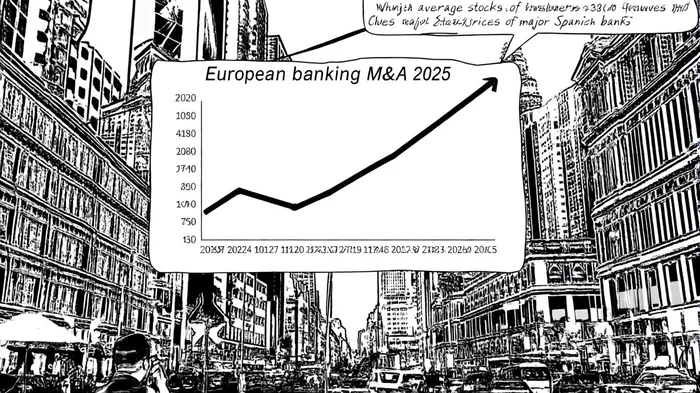
The European banking sector has undergone significant transformation since 2020, driven by a combination of regulatory pressures, economic uncertainties, and strategic imperatives to enhance competitiveness. While specific examples of mergers and acquisitions (M&A) in Spain's financial sector remain elusive in the current research, broader European trends suggest a clear trajectory toward consolidation. This analysis explores how these dynamics are reshaping shareholder value, with a particular focus on Spain's banking landscape.
The EU's Role in Shaping Consolidation
The European Union (EU) has long positioned itself as a key architect of economic stability and integration. Formed through the Maastricht Treaty in 1993, the EU's mission to create a unified market and harmonize regulatory frameworks has directly influenced banking sector strategies across member states [2]. From 2020 to 2025, the EU's emphasis on fostering a “prosperous and competitive Europe” has accelerated cross-border and domestic M&A activity, particularly in response to global economic volatility and evolving regulatory standards [1]. For Spain, a country with a historically fragmented banking sector, these pressures have created a compelling case for consolidation.
Strategic M&A and Shareholder Value
While granular data on Spanish banks' M&A activity is unavailable, European-wide patterns offer insights into potential impacts on shareholder value. Mergers often aim to reduce operational costs, expand market share, and improve risk management—factors that can positively influence metrics like earnings per share (EPS) and return on equity (ROE). For instance, post-merger synergies typically lead to cost savings, which can boost profitability and, in turn, stock prices. However, the success of such strategies depends on effective integration and alignment with market expectations.
In Spain, where banks like Banco SantanderSAN--, BBVA, and CaixaBank dominate the landscape, consolidation could theoretically enhance their global competitiveness. Larger entities may better withstand economic shocks, such as those caused by inflation or interest rate fluctuations, while also meeting stricter EU capital requirements. Yet, the absence of concrete examples from 2020–2025 suggests that either such deals have been rare or their impacts remain unquantified in public reports.
Challenges and Risks
Despite the potential benefits, M&A activity is not without risks. Shareholders may face short-term volatility if market participants question the strategic rationale behind a merger. Additionally, regulatory scrutiny in the EU—designed to prevent monopolistic practices—can delay or derail deals. For Spain, where regional banking cultures and customer expectations vary, integration challenges could further complicate value creation.
Looking Ahead
As the EU continues to prioritize economic resilience in its 2024–2029 agenda, the pressure for consolidation is likely to persist. For Spain's financial sector, this could mean a renewed focus on strategic partnerships or acquisitions that align with both national and EU-level objectives. Investors should monitor how banks balance cost-cutting ambitions with the need to maintain customer trust and regulatory compliance.
In conclusion, while specific Spanish cases remain underreported, the broader European context underscores the transformative potential of banking consolidation. For shareholders, the key will be to assess whether these strategic moves translate into sustainable value creation—or merely short-term gains.





Comentarios
Aún no hay comentarios