
European Bank Sector Re-rating Opportunities: Navigating Credit Recovery and Sovereign Risk Divergence
The European banking sector is at a pivotal juncture in 2025, with credit recovery and sovereign risk divergence creating both challenges and opportunities for investors. As the eurozone emerges from years of subdued lending growth, the interplay between macroeconomic shifts, fiscal policies, and credit rating dynamics is reshaping the landscape for banks. This analysis explores how evolving credit conditions and divergent sovereign risk profiles are driving re-rating opportunities, supported by granular data from central banks, rating agencies, and regulatory bodies.
Credit Recovery: A Mixed Picture of Growth and Risk
The ECB's Q1 2025 ECB bank lending survey reveals a nuanced recovery in credit markets. While corporate loan standards have tightened due to heightened economic uncertainty, housing loan conditions have eased as banks compete for market share amid declining interest rates, according to the same survey. Looking ahead, total eurozone bank lending is projected to grow by 3.1% in 2025 and 4.2% in 2026, driven by improved business confidence and falling borrowing costs, according to an EY forecast. However, this optimism is tempered by rising non-performing loan (NPL) ratios, which are forecast to reach 2.3% in 2024 and 2025. Countries like France, Spain, and Italy face elevated NPL risks due to variable-rate mortgages and weak economic fundamentals, a caveat EY also highlights.
S&P Global Ratings underscores that European banks remain resilient, with 86% of EMEA bank ratings stable and 9% positive. This stability is underpinned by strong profitability, liquidity, and capitalization, though KBRA warns of potential volatility from U.S. tariffs and fiscal challenges. The sector's ability to navigate these dual pressures-expanding credit growth and rising NPLs-will be critical to unlocking re-rating potential.
Sovereign Risk Divergence: A Double-Edged Sword
The eurozone's sovereign risk landscape has become increasingly fragmented in 2025. The ECB's Financial Stability Review highlights how geopolitical uncertainties, particularly U.S. trade policies, have amplified geoeconomic fragmentation and tested financial stability. This divergence is evident in recent credit rating actions, according to a Duna Press analysis: France, Finland, Austria, and Belgium faced downgrades in Q3 2025 due to high debt levels and fiscal deficits, while Spain, Portugal, and Italy saw upgrades reflecting structural reforms and improved fiscal discipline.
The interdependence between sovereign and bank risk is particularly pronounced. For instance, Fitch's downgrade of France's sovereign rating to A+ in September 2025 directly impacted major banks like BNP Paribas and Credit Agricole, which were downgraded by Moody's due to heightened fiscal risks. Similarly, Italy's sovereign upgrade to BBB+ by S&P in April 2025 enabled Intesa Sanpaolo to secure an A- rating from Fitch, as detailed in Fitch raises Intesa Sanpaolo's ratings. These examples illustrate how sovereign risk shifts can act as a catalyst for bank re-ratings, either constraining or enhancing creditworthiness.
Strategic Opportunities in a Fragmented Landscape
Investors seeking re-rating opportunities must focus on banks with strong balance sheets and diversified risk profiles. The ECB's revised fiscal framework for 2025-2026, which mandates debt sustainability analyses and medium-term fiscal plans, provides a structural tailwind for countries with robust fiscal policies. Banks in nations like Germany and the Netherlands, which maintain AAA ratings according to Duna Press, are less exposed to sovereign risk and offer safer havens.
Conversely, banks in high-risk jurisdictions like France and Spain present asymmetric opportunities. For example, BBVA's recent upgrade to A+ by S&P aligns with Spain's sovereign rating improvement, as noted in S&P upgrades BBVA's rating, signaling a potential re-rating cycle as economic resilience gains traction. Similarly, French banks with reduced sovereign exposure-such as those reallocating portfolios to safer assets-could benefit from improved credit metrics, according to the ECB's credit risk and bank lending conditions.
Conclusion: Balancing Risk and Reward
The European bank sector's re-rating trajectory in 2025 hinges on its ability to navigate divergent sovereign risks while capitalizing on credit recovery. While rising NPLs and fiscal fragility in weaker economies pose headwinds, structural reforms, improved fiscal frameworks, and proactive risk management create openings for value creation. Investors who prioritize banks with strong capital buffers, diversified portfolios, and favorable sovereign linkages are well positioned to capitalize on this dynamic environment.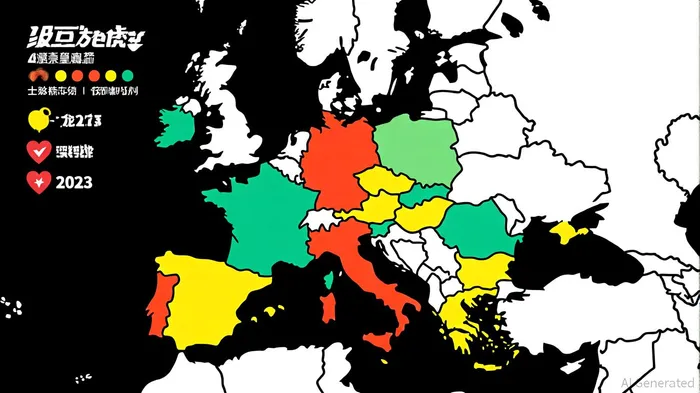







Comentarios
Aún no hay comentarios