
Europe's Energy Security Transition and Geopolitical Risks in Eastern Europe: Assessing Investment Opportunities in the Czech Republic
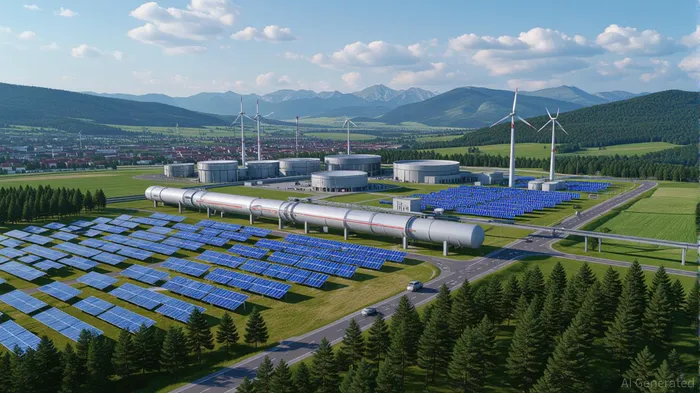
The Czech Republic's journey toward energy independence offers a compelling case study for investors navigating Europe's post-Ukraine energy transition. By April 2025, the country had achieved a historic milestone: complete liberation from Russian oil imports, a dependency that had persisted for over six decades[1]. This shift, driven by infrastructure upgrades like the TAL-PLUS pipeline expansion and strategic diversification of oil supplies, underscores the economic and geopolitical benefits of proactive energy policy. However, the broader Central European region remains a patchwork of progress and vulnerability, with lingering risks from delayed diversification and geopolitical volatility. For investors, the Czech Republic's experience highlights both the opportunities in renewable energy and infrastructure resilience and the persistent challenges posed by global supply chains and market instability.
Energy Independence: A Geopolitical and Economic Win
The Czech Republic's elimination of Russian oil imports by 2025 was no accident. The TAL-PLUS project, which doubled the Transalpine Pipeline's capacity to 8 million tonnes per year, ensured the country could meet its annual demand through Western suppliers[2]. This infrastructure triumph, coupled with the expiration of long-term Russian oil contracts, allowed the Czech government to declare itself “basically free” from Moscow's grip[3]. Such independence has reduced exposure to Russian geopolitical leverage, a critical factor in stabilizing the country's energy costs and trade relationships.
Natural gas diversification followed a similar trajectory. By 2025, the Czech Republic had phased out Russian pipeline gas, relying instead on LNG imports from Norway and Algeria, as well as expanded terminal capacity in Rotterdam[4]. This shift aligns with the EU's broader goal to eliminate Russian fossilFOSL-- fuel dependence by 2028[5]. For investors, the Czech model demonstrates how targeted infrastructure investments—such as LNG terminals and cross-border pipeline upgrades—can mitigate geopolitical risks while enhancing energy security.
Renewable Energy: A Booming Sector with Structural Risks
The Czech Republic's renewable energy sector has emerged as a key pillar of its energy transition. Solar power, in particular, has seen explosive growth, with photovoltaic installations accounting for 93% of new renewable capacity in 2023[6]. By 2025, the country's installed solar capacity reached 4,812 MW, with a target of 10,000 MW by 2030[7]. Government incentives, including the New Green Savings Light Programme—which reimburses up to 50% of hybrid solar-plus-battery system costs—have accelerated adoption among households and businesses[8].
However, renewable growth faces headwinds. Geopolitical risks, such as supply chain bottlenecks for critical raw materials (e.g., rare earth metals for solar panels and batteries), could delay projects[9]. Additionally, the integration of intermittent renewables has introduced electricity price volatility, with negative pricing events occurring when renewable generation exceeds demand[10]. Investors must balance these risks against long-term opportunities, such as the European Investment Bank's EUR 400 million loan to expand renewable hosting capacity by 2026[11].
Equity Market Dynamics: Volatility and Strategic Players
The Czech equity market reflects the dual pressures of energy transition and geopolitical uncertainty. CEZ, the country's largest energy utility, exemplifies this tension. While the company raised 2025 profit guidance due to higher electricity prices and operational efficiencies, it also faces a windfall tax that could cost 29–33 billion Czech crowns this year[12]. Such policies, aimed at redistributing energy transition gains, highlight the regulatory risks for investors.
Electricity price volatility remains a wildcard. Since 2021, the Czech Republic has experienced sharp price swings driven by geopolitical events, fossil fuel price shocks, and renewable integration[13]. While volatility moderated slightly in 2023–2024, it remains elevated compared to pre-Ukraine levels. For equity investors, this underscores the need for flexibility tools like battery storage and dynamic demand management to stabilize returns[14].
Geopolitical Risks: Beyond Energy Imports
Even as the Czech Republic reduces fossil fuel dependence, new risks emerge. Cybersecurity threats to energy infrastructure, particularly from Chinese firms involved in data transfers and remote management, have raised alarms[15]. The National Cyber and Information Security Agency (NUKIB) has warned that such vulnerabilities could disrupt critical systems during geopolitical crises[16]. Investors must factor in these risks when evaluating projects tied to foreign technology providers.
Moreover, the Czech Republic's reliance on Russian nuclear fuel—though declining—introduces another layer of complexity. The government's pivot to suppliers like France and the U.S. is a positive step, but nuclear fuel supply chains remain susceptible to geopolitical tensions[17].
Investment Opportunities: A Strategic Roadmap
For investors, the Czech Republic's energy transition presents three key opportunities:
1. Infrastructure Resilience: Projects like the TAL-PLUS pipeline and LNG terminal expansions offer stable returns, supported by EU funding and long-term energy security goals.
2. Renewables and Storage: Solar PV, energy storage (aided by a €279 million EU scheme[18]), and grid modernization are prime areas for growth, though supply chain risks require careful management.
3. Regional Equity Exposure: Companies like CEZ, despite regulatory challenges, offer exposure to Central Europe's energy transition, particularly as carbon pricing mechanisms (e.g., EU ETS II) reshape market dynamics[19].
Conclusion: Balancing Risks and Rewards
The Czech Republic's energy transition is a testament to the power of strategic infrastructure investment and policy foresight. Yet, the broader Central European context—marked by uneven progress in diversification and persistent geopolitical risks—demands a nuanced approach. Investors must weigh the long-term benefits of renewables and energy resilience against short-term volatility, supply chain vulnerabilities, and regulatory shifts. For those who navigate these challenges with diligence, the Czech Republic's energy landscape offers a compelling blend of stability and growth in an otherwise turbulent region.







Comentarios
Aún no hay comentarios