
Europe’s Battery Boom: Navigating Chinese Capital in a Geopolitical Minefield
The race to dominate electric vehicle (EV) supply chains is no longer confined to Asia. Chinese battery giants like Contemporary Amperex Technology Co. (CATL) are pouring billions into Europe, turning once-obscure locales like Debrecen, Hungary, and Zaragoza, Spain, into hubs of the global clean energy transition. For investors, this represents a rare opportunity to profit from a sector at the intersection of geopolitical ambition and technological necessity—provided they can parse the risks.
The Lithium Rush in Central Europe
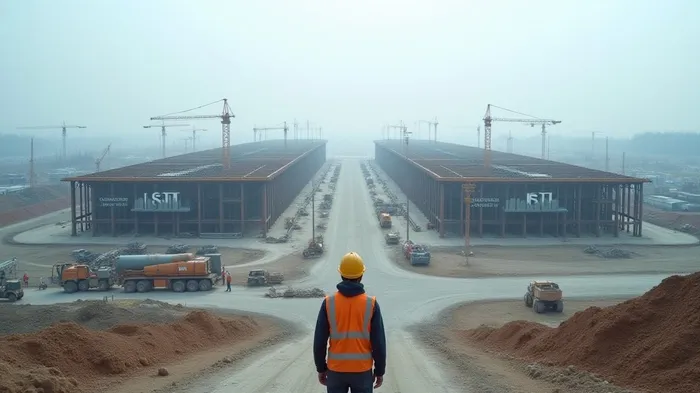
Hungary has emerged as Ground Zero for China’s EV ambitions. CATL’s €7.3 billion gigafactory in Debrecen, nearing completion, will produce 100 GWh annually by 2026, supplying batteries to European automakers like Mercedes-Benz and BMW. This project—funded in part by CATL’s record-breaking $4.6 billion Hong Kong secondary listing—is a masterstroke of strategic placement: its proximity to German manufacturing centers slashes logistics costs while dodging punitive tariffs on Chinese imports.
The data underscores the scale of this shift. reveals a 140% expansion, driven by its European expansion. Meanwhile, shows a 220% surge, with battery shortages threatening to bottleneck this boom. For investors, this creates a clear thesis: bet on companies enabling the localization of critical supply chains.
Spain, too, is a critical battleground. CATL’s 50-50 joint venture with Stellantis, a $4.3 billion LFP battery plant in Zaragoza, targets mass-market EV affordability. LFP batteries—cheaper than nickel-based alternatives—are a linchpin of Stellantis’ plan to slash BEV costs by 35% by 2027. The Spanish government has already pledged €300 million in subsidies, a sign of the geopolitical stakes: Europe cannot afford to rely on Chinese imports for its energy transition.
The Geopolitical Tightrope
Yet this boom is not without peril. The EU’s scrutiny of Chinese investments is intensifying. A leaked draft of the bloc’s “Critical Raw Materials Act” proposes caps on non-EU ownership of battery facilities—a direct challenge to CATL’s ambitions. Hungary’s cozy relationship with Beijing has also drawn criticism, with EU leaders accusing Prime Minister Viktor Orbán of undermining sanctions on Russia to attract Chinese capital.
show a 70% increase, signaling escalating enforcement. Investors must ask: Could a shift in political winds abruptly reverse this capital flow?
The answer lies in diversification. Instead of betting purely on Chinese firms, focus on European partners whose survival hinges on these projects. For instance:
- Materials suppliers: Spanish firms like Hydrabad’s lithium brine operations or German chemical giants BASF, which provide cathode materials for CATL’s Hungarian plant.
- Tech enablers: Companies like Sweden’s Northvolt, which collaborates with CATLCAT-- on recycling tech, or French firm Verkor, which licenses battery chemistry patents.
- Logistics: Stellantis’ acquisition of 2L Logistics highlights the need for control over supply chains—investors should favor firms with end-to-end visibility.
Why Act Now?
The window for capturing value is narrowing. The EU’s “Battery Regulation,” effective 2026, will mandate carbon footprint tracking for all batteries sold in Europe. CATL’s Debrecen plant, designed with 50% lower water use and carbon-neutral operations, is positioned to comply. Laggards will be priced out.
Meanwhile, U.S. competition is heating up. The Inflation Reduction Act’s $7,500 EV tax credit hinges on domestic battery sourcing—a carrot-and-stick approach forcing automakers to double down on regional supply chains. Europe’s advantage? Its auto industry’s century-old manufacturing prowess, now repurposed for EVs.
The Bottom Line
Investors ignoring China’s European battery play risk missing a generational shift. The key is to marry exposure to Chinese capital with hedging against geopolitical risk. Target firms whose fortunes are inextricably tied to these projects—suppliers, recyclers, and logistics partners—and avoid pure-play Chinese equities, which face regulatory crosshairs.
The lithium rush is here. The question is no longer if Europe will industrialize its EV supply chains—but who will profit most while the fuse is lit.







Comentarios
Aún no hay comentarios