
Euronext's Strategic Expansion into Greek Markets: A New Era for European Trading Infrastructure
A Strategic Play for Market Integration
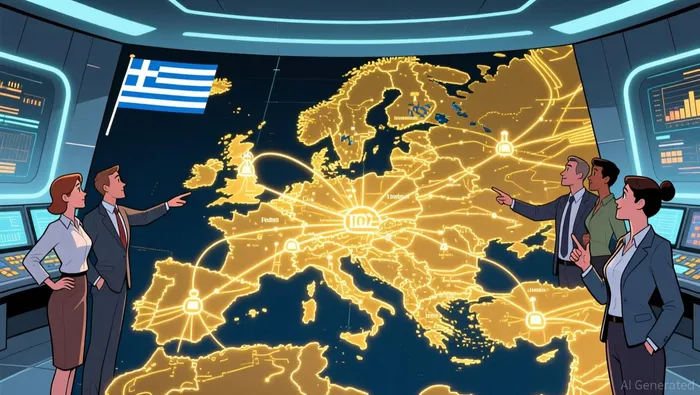
Euronext's acquisition of ATHEX is not just about scale-it's about creating a unified trading ecosystem. By integrating the Athens Stock Exchange, the Hellenic Energy Exchange, and related clearinghouses, Euronext aims to strengthen Greece's role as a financial hub in Southeast Europe according to official statements. This aligns with the EU's long-term vision of a more integrated capital market, where cross-border liquidity and access drive efficiency. For investors, the key question is whether this consolidation will translate into measurable cost savings, improved market depth, and regional economic growth.
Historically, cross-border exchange mergers have faced hurdles. Local stakeholders often resist ceding control to foreign entities, as seen in Euronext's challenge to persuade Greek banks and companies to accept its pan-European structure according to market analysis. Yet, the regulatory green light and Greek government support suggest that Euronext has navigated these political and cultural barriers effectively. If successful, this model could serve as a blueprint for future consolidations in other EU peripheries.
Benchmarking the Financial Impact
While specific EU case studies on exchange consolidations remain scarce according to , global cross-border mergers offer instructive parallels. For instance, according to industry reports. Similarly, Euronext's integration of ATHEX could unlock cost efficiencies through shared infrastructure and reduced redundancies.
However, the financial benefits of such consolidations are not guaranteed. A 2023 ECB report noted that EU stock market integration is more influenced by global trends than local policies, implying that Euronext's Greek expansion must compete with broader forces like the rise of US listings for European firms. Investors should monitor whether the deal attracts new listings from Southeast Europe-a key metric for assessing its success.
Risks and Rewards for Investors
according to official documents, with results announced two days later. This timeline creates short-term volatility for Euronext's stock, as market participants gauge the deal's completion probability. Long-term, the integration could boost Euronext's revenue through expanded market share and fee-based services. However, execution risks-such as integration delays or regulatory pushback-remain.
For now, the Greek finance ministry's endorsement according to market analysis and the HCMC's approvals according to signal strong tailwinds. If Euronext can replicate its Greek playbook in other EU markets, it may emerge as a dominant player in the post-MiFID II landscape. But investors must remain cautious: cross-border consolidation is a marathon, not a sprint.
Conclusion
Euronext's Greek expansion is a bold bet on the future of European capital markets. By leveraging regulatory momentum and strategic partnerships, the company is laying the groundwork for a more interconnected trading infrastructure. While the lack of EU-specific case studies with hard financial metrics makes precise predictions difficult according to ECB analysis, the broader trend toward consolidation suggests that Euronext is on the right side of history. For investors, the key will be to balance optimism with vigilance-monitoring both the integration's progress and the evolving competitive landscape.







Comentarios
Aún no hay comentarios