
Euro's Undervaluation Deepens as German Fiscal Delays and Chip Tensions Weigh on Markets
The U.S. dollar remained steady ahead of a critical surge of economic data, with analysts at UOB Group forecasting a tight trading range for the USD/CNH pair between 7.1100 and 7.1220 in the short term. The bank's FX analysts, Quek Ser Leang and Peter Chia, noted that while upward momentum has slightly increased, a clear break above 7.1220 is unlikely without significant catalysts. This stability contrasts with broader market volatility, as the euro continues to trade at a 2% undervaluation against the dollar despite optimism surrounding Ukraine peace talks, according to ING's Francesco Pesole.
The euro's underperformance has been attributed to weak German economic sentiment, with the Ifo business confidence index slipping in November. Pesole highlighted that delayed fiscal stimulus in Germany and the eurozone's broader economic challenges have kept the EUR/USD pair below 1.160, despite expectations of a rebound by year-end. "The euro remains undervalued, and while dips below 1.1500 may occur, sustained movement in that direction would require either a hawkish re-rating in U.S. policy or negative news affecting the euro," he added in his analysis.
Meanwhile, geopolitical tensions in the semiconductor sector have added layers of complexity to global markets. 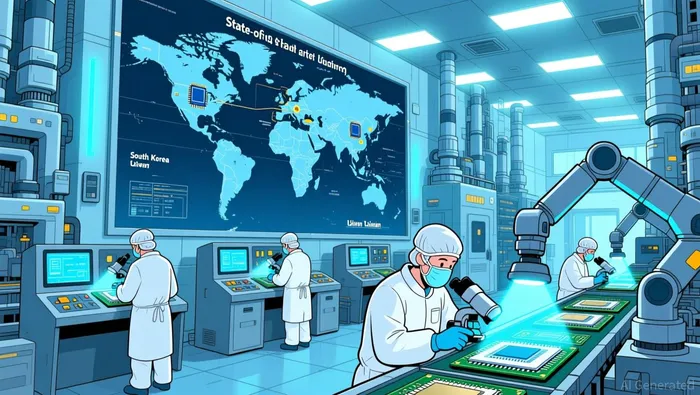 . NXP Semiconductors (NXPI) maintained its quarterly dividend of $1.014 per share, signaling financial resilience amid supply chain disruptions. However, the sector faces headwinds from the ongoing Sino-Dutch dispute over Nexperia, a Chinese-owned chipmaker whose headquarters in the Netherlands suspended export licenses earlier this month. The Dutch government's use of Cold War-era laws to seize control of Nexperia has raised concerns about supply chain stability, with German automakers scrambling to mitigate potential shortages.
China's push for semiconductor self-reliance further complicates the landscape. The South China Morning Post reported that Chinese firms are increasingly focusing on AI-driven innovation and RISC-V architecture to reduce dependence on foreign technology. Alibaba's recent expansion of its "super AI cloud" infrastructure and SMIC's record revenue projections underscore this strategic shift. Analysts warn that these developments could reshape global trade dynamics, particularly as the U.S.-China tech rivalry intensifies.
Looking ahead, the interplay between currency valuations and geopolitical factors will remain pivotal. ING's Pesole reiterated that EUR/USD could see a return above 1.160 in the near term, though sustained movement above 1.1650 may hinge on mid-December data releases. UOB Group similarly emphasized the USD/CNH's potential to trade within a 7.1020–7.1285 range over the coming weeks according to their analysis. For now, market participants are bracing for a data-rich period that could tilt the balance between the dollar and euro, with semiconductor supply chains and geopolitical tensions serving as critical undercurrents as noted in recent reports and China's strategic developments.







Comentarios
Aún no hay comentarios