
Euro's Slide: Bets on ECB Rate Cuts Spark Currency Decline
Generado por agente de IAWesley Park
viernes, 22 de noviembre de 2024, 5:05 am ET1 min de lectura
SAP--
The Euro has plummeted to its lowest level since 2022, a decline fueled by escalating bets on ECB rate cuts. This shift in market expectations, driven by inflation dynamics and economic indicators, is reshaping the global currency landscape and impacting international trade. Let's delve into the factors behind the Euro's depreciation and its implications for the Eurozone and the broader economy.
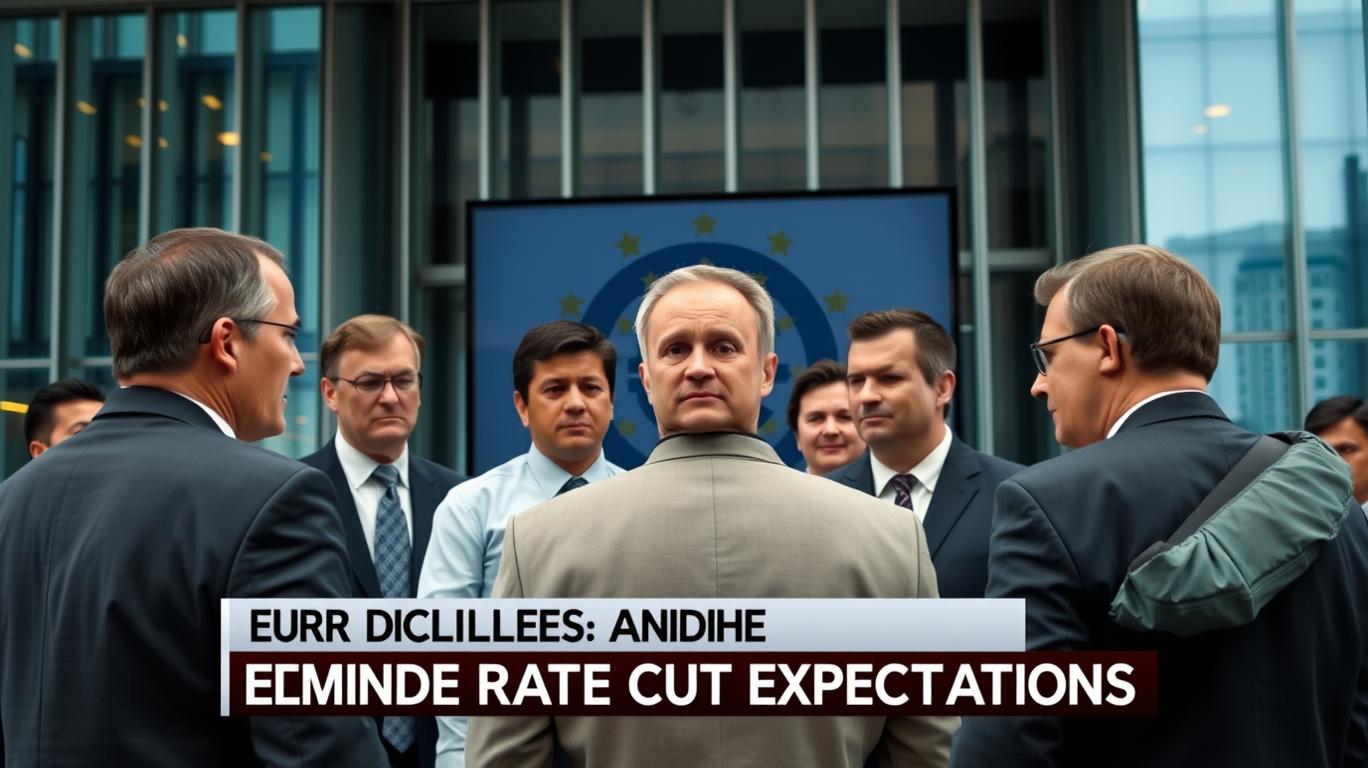
The Euro's fall can be attributed to a combination of inflation dynamics and economic indicators in the Eurozone. Inflation, which peaked in 2022, has been gradually declining, reaching 2.6% in May 2024. Core inflation, excluding volatile food and energy prices, has also accelerated, reflecting rapid wage growth. Concurrently, economic indicators show signs of recovery, with manufacturing and services output hitting a 12-month high in May 2024 and business confidence reaching its strongest level in over two years. These dynamics suggest a slowing inflation rate and a recovering economy, influencing market expectations and leading to bets on ECB rate cuts.
The ECB's recent rate cuts have further weakened the Euro, as investors anticipate easier monetary policy. However, the ECB's cautious approach, as indicated by President Christine Lagarde, suggests a data-dependent strategy, meaning that further rate cuts are not guaranteed. This uncertainty contributes to the Euro's volatility and may impact the currency's future trajectory.
Geopolitical factors and risk sentiments have also played a significant role in the Euro's decline. The ongoing energy crisis, exacerbated by Russia's invasion of Ukraine, has strained the European economy, increasing inflation and driving up interest rates. Concerns about Europe's economic resilience and potential political instability have contributed to a risk-off sentiment, leading to a decline in the Euro's value.
The Euro's recent decline has both positive and negative implications for European equities and corporate earnings. A weaker Euro makes European exports more competitive globally, potentially boosting earnings for companies like SAP, BMW, and Lufthansa. However, European companies with significant overseas operations will pay more to repatriate profits in Euros, potentially decreasing their earnings. Additionally, European companies with high debt levels may face increased financing costs due to the Euro's depreciation, as interest rates in Euro-denominated debt tend to rise when the currency weakens.
In conclusion, the Euro's decline amidst bets on ECB rate cuts is a complex interplay of inflation dynamics, economic indicators, geopolitical factors, and risk sentiments. While the ECB's rate cuts may boost consumer spending and business investment in the Eurozone, the extent of their impact remains to be seen. The Euro's depreciation also raises concerns about import costs and inflation, warranting vigilance from policymakers. As the global economy navigates these shifting dynamics, investors must remain agile and adapt their strategies to capitalize on the opportunities and challenges that arise.
The Euro's fall can be attributed to a combination of inflation dynamics and economic indicators in the Eurozone. Inflation, which peaked in 2022, has been gradually declining, reaching 2.6% in May 2024. Core inflation, excluding volatile food and energy prices, has also accelerated, reflecting rapid wage growth. Concurrently, economic indicators show signs of recovery, with manufacturing and services output hitting a 12-month high in May 2024 and business confidence reaching its strongest level in over two years. These dynamics suggest a slowing inflation rate and a recovering economy, influencing market expectations and leading to bets on ECB rate cuts.
The ECB's recent rate cuts have further weakened the Euro, as investors anticipate easier monetary policy. However, the ECB's cautious approach, as indicated by President Christine Lagarde, suggests a data-dependent strategy, meaning that further rate cuts are not guaranteed. This uncertainty contributes to the Euro's volatility and may impact the currency's future trajectory.
Geopolitical factors and risk sentiments have also played a significant role in the Euro's decline. The ongoing energy crisis, exacerbated by Russia's invasion of Ukraine, has strained the European economy, increasing inflation and driving up interest rates. Concerns about Europe's economic resilience and potential political instability have contributed to a risk-off sentiment, leading to a decline in the Euro's value.
The Euro's recent decline has both positive and negative implications for European equities and corporate earnings. A weaker Euro makes European exports more competitive globally, potentially boosting earnings for companies like SAP, BMW, and Lufthansa. However, European companies with significant overseas operations will pay more to repatriate profits in Euros, potentially decreasing their earnings. Additionally, European companies with high debt levels may face increased financing costs due to the Euro's depreciation, as interest rates in Euro-denominated debt tend to rise when the currency weakens.
In conclusion, the Euro's decline amidst bets on ECB rate cuts is a complex interplay of inflation dynamics, economic indicators, geopolitical factors, and risk sentiments. While the ECB's rate cuts may boost consumer spending and business investment in the Eurozone, the extent of their impact remains to be seen. The Euro's depreciation also raises concerns about import costs and inflation, warranting vigilance from policymakers. As the global economy navigates these shifting dynamics, investors must remain agile and adapt their strategies to capitalize on the opportunities and challenges that arise.

Divulgación editorial y transparencia de la IA: Ainvest News utiliza tecnología avanzada de Modelos de Lenguaje Largo (LLM) para sintetizar y analizar datos de mercado en tiempo real. Para garantizar los más altos estándares de integridad, cada artículo se somete a un riguroso proceso de verificación con participación humana.
Mientras la IA asiste en el procesamiento de datos y la redacción inicial, un miembro editorial profesional de Ainvest revisa, verifica y aprueba de forma independiente todo el contenido para garantizar su precisión y cumplimiento con los estándares editoriales de Ainvest Fintech Inc. Esta supervisión humana está diseñada para mitigar las alucinaciones de la IA y garantizar el contexto financiero.
Advertencia sobre inversiones: Este contenido se proporciona únicamente con fines informativos y no constituye asesoramiento profesional de inversión, legal o financiero. Los mercados conllevan riesgos inherentes. Se recomienda a los usuarios que realicen una investigación independiente o consulten a un asesor financiero certificado antes de tomar cualquier decisión. Ainvest Fintech Inc. se exime de toda responsabilidad por las acciones tomadas con base en esta información. ¿Encontró un error? Reportar un problema


SOBRE NOSOTROS
Nuestra historiaAutores de noticiasBase de conocimientosPolítica de privacidadTérmino de usoDescargo de responsabilidad de corretaje de tercerosTérminos de uso de AIMEDivulgaciones de riesgos de AInvest AICarrerasCONTÁCTENOS
Email: support@ainvest.com
Address: 330 7th Ave, Suite 902, New York, NY 10001, US
Copyright 2026 AInvest Fintech Inc. All rights reserved.


Comentarios
Aún no hay comentarios