
The Euro-Backed Stablecoin Ecosystem: A Catalyst for Disruption and Investment in Digital Finance
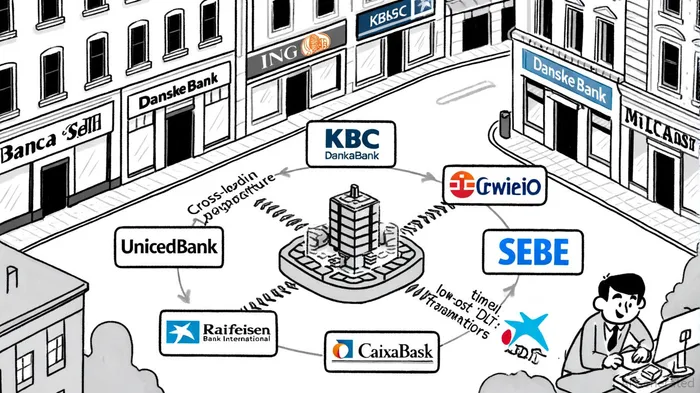
The emergence of a euro-backed stablecoin ecosystem, spearheaded by a consortium of nine major European banks, marks a pivotal shift in global digital finance. This initiative, aligned with the European Union's Markets in Crypto-Assets (MiCA) regulation, aims to challenge the dominance of U.S.-denominated stablecoins and redefine cross-border payment systems. For investors, the implications span blockchain infrastructure, fintech innovation, and currency risk management, offering a unique opportunity to capitalize on the convergence of regulatory clarity, technological advancement, and financial sovereignty.
Strategic Alignment and Regulatory Foundations
The consortium—comprising INGING--, Banca Sella, KBC, Danske Bank, DekaBank, UniCredit, SEB, CaixaBank, and Raiffeisen Bank International—has established a Netherlands-based entity to issue a euro-backed stablecoin under the supervision of the Dutch Central Bank (DNB) as an e-money institution [1]. This structure ensures compliance with MiCA, which mandates full reserve backing, transparency, and stringent security standards [2]. By leveraging distributed ledger technology (DLT), the stablecoin will enable near-instant, 24/7 cross-border transactions with programmable features to streamline supply chain management and asset settlements [3].
The strategic alignment of these banks reflects a broader push for European financial autonomy. As stated by a report from CoinDesk, the initiative seeks to reduce reliance on the U.S. dollar in global transactions and position the euro as a competitive force in digital payments [4]. This is further supported by the European Central Bank's (ECB) recognition of stablecoins as a potential threat to monetary sovereignty, prompting proactive regulatory frameworks to foster homegrown alternatives [5].
Disrupting Traditional Cross-Border Payments
The euro-backed stablecoin ecosystem threatens to upend traditional cross-border payment systems dominated by SWIFT and correspondent banking. Current systems are plagued by high fees, slow settlement times, and limited accessibility, particularly in emerging markets. In contrast, the new stablecoin promises near-zero transaction costs, real-time settlement, and interoperability across blockchains like EthereumETH-- and SolanaSOL-- [6].
For example, Société Générale's EURCV stablecoin, already operational on multiple blockchains, demonstrates the viability of programmable finance in reducing friction for international trade [7]. According to a McKinsey analysis, tokenized cash could reduce cross-border payment costs by up to 70% while enhancing transparency and traceability [8]. This shift is not merely speculative: the European fintech partnership Next Generation and Decta recently launched a MiCA-compliant EURT on the StellarXLM-- blockchain, signaling growing institutional confidence in the ecosystem [9].
Investment Opportunities in Blockchain Infrastructure
The rise of euro-backed stablecoins creates fertile ground for investment in blockchain infrastructure. Key areas include:
1. DLT Platforms: Providers of scalable, secure blockchain networks (e.g., Ethereum, Solana, Stellar) stand to benefit from increased demand for cross-border transaction processing.
2. Custody Solutions: As institutional adoption grows, firms like Fireblocks, which offer secure custody and compliance tools for stablecoins, are positioned for expansion [10].
3. Regulatory Tech (RegTech): Startups specializing in MiCA compliance, anti-money laundering (AML) monitoring, and real-time transaction reporting will see heightened demand.
A report by the World Economic Forum highlights that reserve-backed stablecoins could drive a 30% annual growth in blockchain infrastructure spending by 2028 [11]. This is further reinforced by the projected €2 trillion market capitalization for euro-backed stablecoins by 2028, driven by regulatory clarity and institutional adoption [12].
Fintech Innovation and Currency Risk Management
Fintech firms are uniquely positioned to leverage euro-backed stablecoins for financial inclusion and operational efficiency. In regions with underdeveloped banking infrastructure, these stablecoins can enable instant, low-cost remittances and access to global markets. For instance, EURT's listing on Binance has already generated €800 million in monthly trading volumes, illustrating the appetite for euro-pegged digital assets [13].
However, currency risk management remains a critical challenge. Unlike U.S. dollar-backed stablecoins, euro-backed alternatives must navigate reserve management strategies that balance liquidity and profitability. Overly conservative reserves could inflate issuance costs, while aggressive investments risk credit exposure [14]. Additionally, regulatory divergence between the EU and the U.S. (e.g., the GENIUS Act) complicates cross-border operations, necessitating robust compliance frameworks [15].
Investors in this space should prioritize firms with expertise in algorithmic reserve optimization, multi-signature smart contracts, and real-time risk analytics. The ECB's emphasis on systemic resilience further underscores the importance of technical safeguards, such as formal verification of smart contracts and time-delayed critical operations [16].
Forward-Looking Perspective
The euro-backed stablecoin ecosystem is poised to become a cornerstone of the digital euro strategy, with the potential to rival U.S. dollar-based stablecoins. By 2026, the launch of the nine-bank consortium's stablecoin could catalyze a wave of innovation in programmable finance, tokenized assets, and decentralized identity systems.
For investors, the key lies in identifying early-stage infrastructure providers, fintech enablers, and RegTech firms that align with MiCA's long-term vision. While risks such as regulatory shifts and technical vulnerabilities persist, the strategic alignment of European banks and the ECB's proactive stance suggest a resilient trajectory for the ecosystem.





Comentarios
Aún no hay comentarios