
EUR/USD: Seizing Dovish Fed Divergence and Strategic Pullback Opportunities
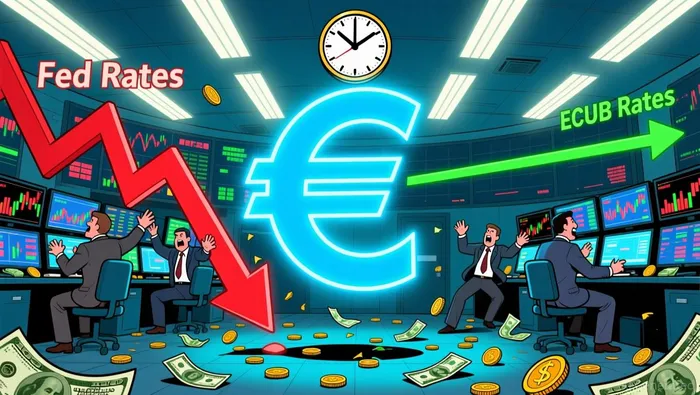
The EUR/USD cross stands at a pivotal juncture, shaped by divergent monetary policy trajectories between the U.S. Federal Reserve (Fed) and the European Central Bank (ECB). With the Fed signaling a dovish bias amid a weakening labor market and elevated inflation, while the ECB adopts a cautious pause, the structural underpinnings for a euro-supportive environment are emerging. For position traders, this divergence presents opportunities to capitalize on both technical pullbacks and macroeconomic imbalances, provided risks are carefully managed.
Fed Easing Bias and ECB Caution: A Structural Tailwind for the Euro
The Fed's November 2025 decision to cut rates by 25 basis points-bringing the target range to 3.5%-3.75%-reflects a shift toward accommodative policy, albeit with internal dissent. Chair Jerome Powell's assertion that the current rate is "within the range of plausible estimates of neutral" suggests a potential pause in further cuts, limiting upside pressure on the dollar. Meanwhile, the ECB's decision to hold rates steady, with inflation nearing its 2% target, underscores a preference for stability. This policy divergence-a Fed easing cycle juxtaposed with ECB inaction-creates a widening yield gap, historically a catalyst for euro strength.
The U.S. economy's stronger growth (projected at 2.7% in 2025) compared to the Eurozone's 1.1–1.3% expansion further reinforces this dynamic. While the Fed's rate cuts may initially weaken the dollar, the ECB's reluctance to follow suit could amplify the euro's appeal, particularly as European investors seek higher-yielding assets outside the Eurozone.
Technical Setup: Key Levels and Strategic Entry Points
From a technical perspective, EUR/USD faces critical support and resistance levels that position traders can exploit. As of November 20, 2025, the pair is testing key support at 1.1500 and 1.1440, with a breakdown below 1.1380 signaling a deeper correction toward 1.1040. Conversely, resistance at 1.1590 and 1.1650 remains a psychological barrier, with a sustained break above 1.1780 potentially invalidating the bearish bias.
Historical patterns during Fed-ECB divergence offer instructive parallels. For instance, in 2025, the ECB's aggressive rate cuts (reducing the deposit rate to 2.25%) contrasted with the Fed's measured easing, creating a 150–200 bps rate gap that kept EUR/USD contained within 1.1450–1.16. This suggests that while short-term volatility is likely, the euro's structural support could manifest as the Fed's easing bias deepens.
Position Trading Strategy: Balancing Risk and Reward
For long-term position traders, the current environment favors a strategic approach:
1. Entry at Key Support Levels: Aggressive buyers may target 1.1380–1.1440, where historical rebounds have occurred. A stop-loss below 1.1350 would limit downside risk while capturing potential euro strength.
2. Hedging Against Volatility: Given the Fed's internal dissent and the ECB's cautious stance, hedging via options or smaller position sizes near 1.1590–1.1650 resistance could mitigate risks from unexpected policy shifts.
3. Leveraging Yield Divergence: The widening gap between U.S. Treasuries (4.00%) and German bunds (2.30%) offers a tailwind for dollar-long positions, but euro bulls may find value in underweighting dollar assets as the ECB's pause persists.
Risks and the Path Forward
While the euro's structural support is compelling, risks remain. A sharper-than-expected U.S. slowdown could force the Fed into more aggressive easing, temporarily weakening the euro. Conversely, if inflation in the Eurozone surprises to the upside, the ECB may pivot to tightening, creating short-term headwinds. Position traders must remain agile, monitoring inflation data and policy signals from both central banks.
In conclusion, the EUR/USD cross is poised for a strategic inflection point. By combining the Fed's dovish bias with the ECB's pause-and leveraging technical pullbacks-position traders can navigate this complex landscape with discipline and foresight. The key lies in balancing macroeconomic fundamentals with precise technical execution, ensuring that today's volatility becomes tomorrow's opportunity.







Comentarios
Aún no hay comentarios