
EU-US Trade Deal Passage and Its Impact on Global Markets: Sector-Specific Opportunities and Cross-Border Capital Flows
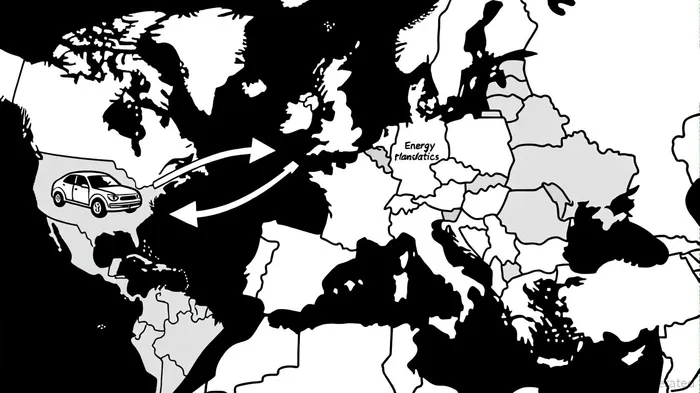
The EU-US Trade Deal, finalized on July 27, 2025, marks a pivotal reset in transatlantic economic relations. By capping US tariffs on most EU goods at 15% and eliminating retaliatory measures, the agreement has injected stability into global markets while reshaping sector-specific dynamics and capital flows. This analysis explores the deal's implications for key industries and cross-border investment, offering insights for investors navigating this new landscape.
Sector-Specific Opportunities: Winners and Losers
1. Automotive and Industrial Goods
The automotive sector is a standout beneficiary. The US tariff on EU cars and auto parts has been capped at 15%, down from the initially threatened 27.5%[1]. This provides relief to German automakers like Volkswagen and BMW, which now face a more predictable cost structure for US exports. Conversely, the US automotive industry gains access to the EU market at near-zero tariffs, creating asymmetrical advantages[2]. For investors, this suggests a shift in competitive dynamics, with European manufacturers needing to innovate to offset higher export costs.
2. Pharmaceuticals and Semiconductors
The pharmaceutical sector avoids a 15% tariff ceiling due to its strategic importance, preserving supply chains for critical drugs[3]. However, European firms like Roche and NovartisNVS-- face pressure to localize production in the US to mitigate costs, as seen in recent investment announcements[4]. Similarly, semiconductors are largely exempt from tariffs, reflecting their role in advanced manufacturing. The EU's commitment to purchase €40 billion in AI chips from the US further underscores this sector's strategic value[5].
3. Energy and Industrial Investment
The energy sector emerges as a major winner. The EU's pledge to purchase $750 billion in US energy products—primarily LNG and nuclear fuel—positions US energy firms like ExxonMobil and Chevron for long-term growth[6]. Meanwhile, the EU's $600 billion investment commitment by 2028 is expected to boost US infrastructure and manufacturing[7]. For investors, this signals a structural shift toward energy diversification and industrial reshoring.
4. Steel and Aluminum: Lingering Challenges
Despite the deal, steel and aluminum remain under 50% US tariffs, though negotiations for quota systems are ongoing[8]. This creates uncertainty for EU producers in packaging and construction sectors. Investors should monitor quota allocations, as even limited access could reshape supply chains.
5. Aviation and Agriculture
The aviation sector benefits from a “zero-for-zero” tariff arrangement, ensuring stability for Airbus and Boeing[9]. In agriculture, the EU's preferential access for US seafood and dairy products could disrupt traditional EU producers, particularly in France and Spain[10].
Cross-Border Capital Flows: A New Era of Integration
The deal has already spurred a surge in cross-border capital flows. According to the US Treasury's TIC data, net foreign purchases of long-term US securities reached $49.2 billion in July 2025[11]. The EU's $600 billion investment pledge is expected to further bolster US capital inflows, particularly in energy and technology.
Global cross-regional investment between North America and Europe hit $26.7 billion in H1 2024, with a 30% year-over-year increase[12]. The EU's focus on renewable energy has also shifted capital flows: EU investments in renewables surged 63% year-over-year, while US renewable energy investment declined 36% due to policy uncertainty[13]. This trend highlights the EU's growing role as a hub for green technology, attracting capital from both sides of the Atlantic.
Strategic Implications for Investors
The EU-US Trade Deal creates a dual narrative: short-term stability and long-term uncertainty. While the agreement reduces the risk of a trade war, it also introduces asymmetries in sectoral access and regulatory compliance. For example, the EU's digital regulations and potential carbon border taxes could complicate US tech firms' operations in Europe[14].
Investors should prioritize sectors with clear tailwinds—such as energy, semiconductors, and aviation—while hedging against risks in steel and agriculture. Additionally, the deal's emphasis on supply chain resilience suggests opportunities in logistics and industrial automation.
Conclusion
The EU-US Trade Deal of 2025 is a foundational agreement that redefines transatlantic economic integration. By stabilizing tariffs and boosting capital flows, it opens new avenues for growth in energy, technology, and manufacturing. However, sector-specific challenges and regulatory complexities require a nuanced approach. For investors, the key lies in balancing the deal's immediate benefits with its long-term uncertainties, positioning portfolios to capitalize on the evolving transatlantic landscape.





Comentarios
Aún no hay comentarios